Glossy Wall Tiles with Matte Floor Tiles: Modern Tile Combination Guide
February 18, 2026 32
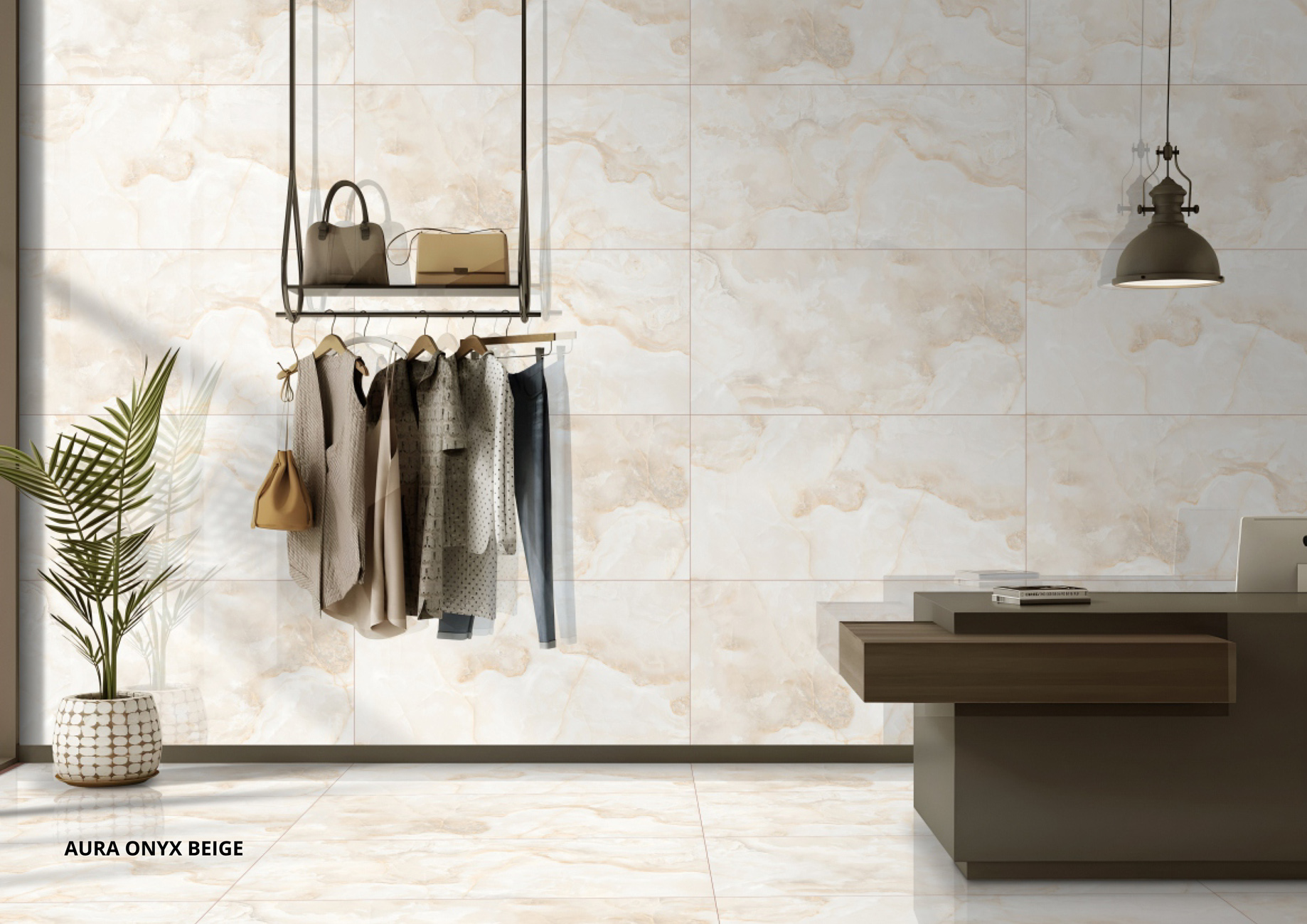
Get the perfect balance: Glossy walls for easy cleaning and matte floors for anti-slip safety. A bright, practical design for any modern room.
Why is the glossy wall and matte floor combination considered technically superior?
The science is simple: walls need light reflection, floors need grip. Glossy wall tiles (typically Glazed Vitrified Tiles — GVT) have a smooth, low-porosity surface. Soap residue, shampoo splashes, and hard-water marks sit on the glaze instead of penetrating it, so cleaning requires wiping, not scrubbing. Because they reflect light, even a 7×5 ft bathroom looks visually wider.
Floors deal with water and body weight, which is why traction matters more than shine. Matte floor tiles provide friction; their micro-texture increases the Coefficient of Friction. For wet areas, a COF above 0.42 is considered safe for barefoot walking. This is why hotels, hospitals, and modern homes avoid glossy bathroom flooring despite its appearance.
What are the ISO standards for floor tile durability in high-traffic areas?
A durable floor tile depends on selecting the correct abrasion rating. PEI ratings measure how resistant a tile surface is to wear caused by foot traffic.
PEI Rating Comparison
| PEI Class | Usage Area | Durability Level |
| Class 3 | Bedrooms & low traffic homes | Moderate residential use |
| Class 4 | Living rooms, kitchens, and offices | Heavy residential & light commercial |
Additional durability indicators:
ISO 10545-6: Abrasion resistance test
Tile Body Types:
- Full-Body Vitrified tiles in matte colour run through the entire tile
- GVT: The colour and design are on a glazed surface layer, while the inner tile body remains plain.
For bathrooms and kitchens, PEI 4 matte flooring is usually ideal.
How to coordinate grout lines between different tile textures?
Installation matters as much as tile choice. Glossy wall tiles are usually rectified (machine-cut edges), allowing narrow 1–2 mm grout joints. Matte flooring often has slightly cushioned edges and uses 2–3 mm joints. To prevent moisture staining near showers, epoxy grout is preferred because cement grout absorbs water and discolours.
Which specific colour ratios work best for small vs. large bathrooms?
A balanced interior follows the 60-30-10 design rule: 60% of the space is walls, 30% is flooring, and 10% is accents. This proportion is widely used in modern tile layouts because it prevents the room from looking either top-heavy or too dark. Using darker matte floor tiles anchors the space, while lighter walls extend the perceived height.
Working Colour Palettes
- Industrial Chic — White glossy walls + charcoal matte floor + black fittings
- Spa Minimalist — Warm beige walls + sand matte floor + wood accents
- Classic Luxury — Statuario glossy walls + grey matte floor + brass fixtures
Buyer’s Checklist: What technical specs should I verify before purchase?
When you buy tiles online in India, specifications matter more than photos:
- Water absorption below 0.5% for floor vitrified tiles
- MOHS hardness above 6 for scratch resistance
- Same batch number (tone & calibre match)
- Minimum thickness: 8–10 mm for flooring
- Preferred sizes: 600×600 mm tiles, 600×1200 mm tiles , 800×1600 mm tiles
Maintenance Guide: How do cleaning protocols differ for glossy vs. matte surfaces?
Cleaning should match the surface. A mixed wall-floor tile combination cannot use one cleaner for both areas.
Glossy Walls
- Wipe with a microfiber cloth
- Avoid abrasive scrubbers
- Mild liquid cleaners only
Matte Floors
- Use a pH-neutral cleaner
- Avoid soap residue (reduces friction)
- Rinse after mopping in hard-water regions
FAQs
Not recommended. Glossy surfaces have low traction and can become slippery when wet. Bathrooms should use tiles meeting slip-resistance guidelines (COF ≥ 0.42 or R9 rating).
No. Proper lighting and light-coloured walls maintain openness. The floor visually recedes while the reflective walls expand the perceived space.
Instead of a fixed percentage, pricing usually varies by surface finish. Within GVT itself, multiple finishes come at different rates; regular matte is the base price, posh matte and GHR matte are typically about ₹10 per sq.ft. Higher, while carving matte is around ₹4 extra. PGVT generally costs more due to the polishing process and the deeper glaze, which gives a brighter shine and easier maintenance.
