

Geometric Tiles: Pattern, Application, and Design Guide for Indian Homes
Loading designs...
-
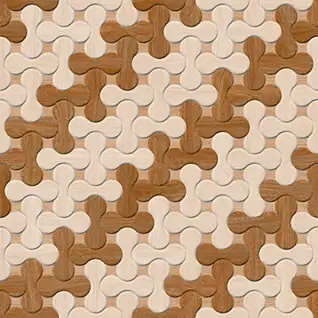 Magic 006
 -
 Maker 135
 -
P 2903
-
P 3201
-
P 3203
-
Zic Zak 01
-
Zic Zak 002
-
Crystal 17 HL 1
-
Crystal 17 HL 1
-
Crystal 001
-
Daimond 024
-
KDT 190
-
KDT 209
-
Magic 006
-
Daimond 001
-
Daimond 024
-
Crystal 001
-
P 2903
-
Crystal 17 HL 1
-
Magic 006
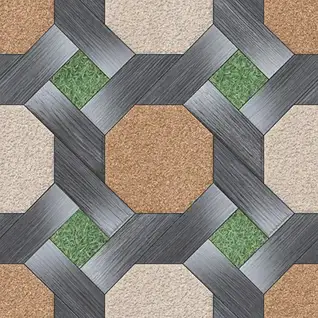
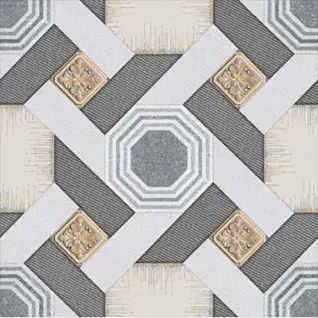
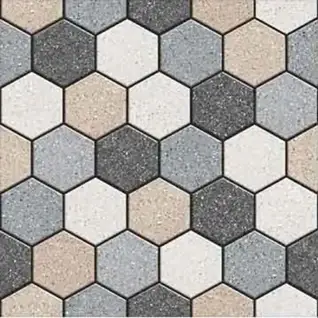
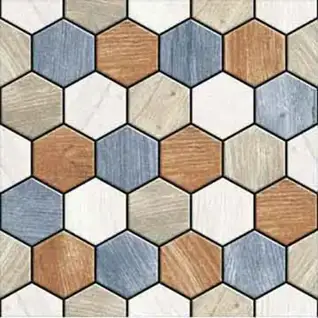
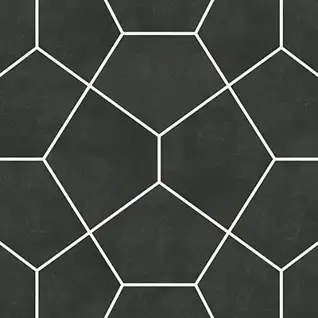
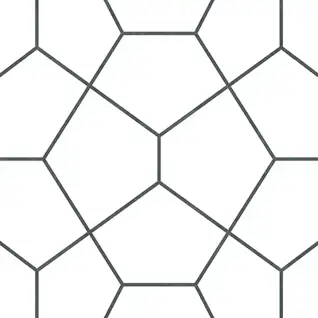
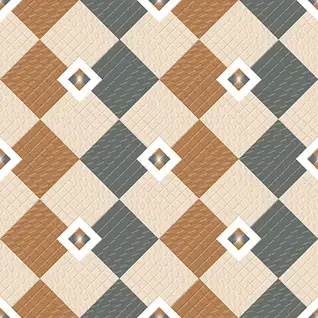
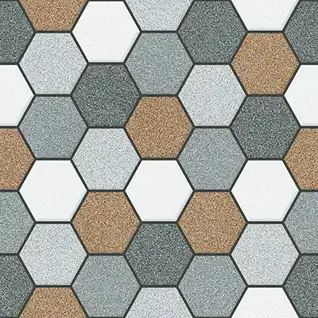
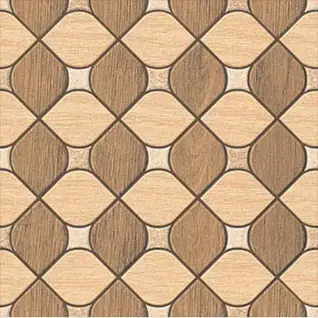
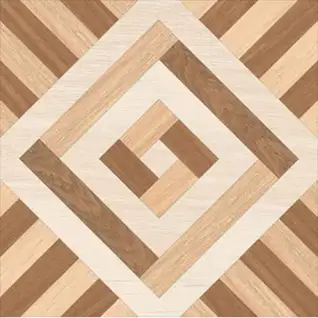
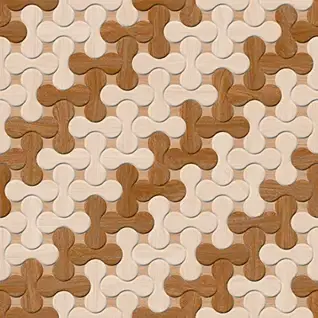
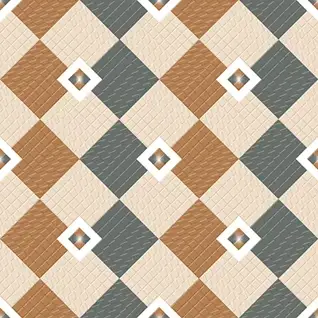
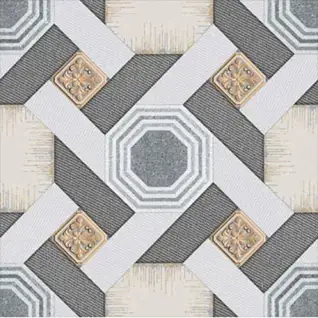
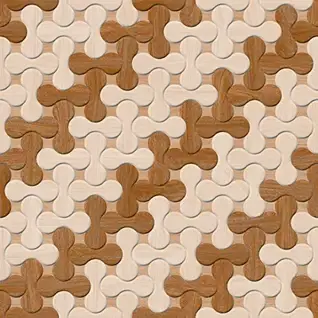
Geometric tiles occupy a distinct position in the tile design spectrum: they are pattern tiles, but unlike florals or pictorial prints, they derive their character entirely from mathematical structure. A geometric tile is defined by the repetition of one or more geometric shapes across the tile face in a way that creates a larger pattern when multiple tiles are laid together. In Indian interior design, geometric pattern tiles have a particularly deep cultural resonance: the interlocking star and polygon patterns of Islamic geometric design have been part of Indian architectural decoration since the Mughal period, and the encaustic-look geometric tile popular across Mediterranean and Spanish design traditions shares a common mathematical ancestry with the same Islamic geometry. GVT tiles from Morbi now reproduce these and contemporary geometric pattern traditions as digital print and relief surface designs on standard-size tiles, making the full range of geometric tile aesthetics accessible in the Indian market.
In the Indian tile market, geometric tiles are standard-size GVT, ceramic, and PGVT tiles with a geometric surface design on the tile face. The geometric pattern is a printed, pressed, or relief-carved design on the tile body. What this means in practice: a geometric tile installs as a standard tile with standard wall tile adhesive or floor tile adhesive, and grouts with standard cement or epoxy grout. The geometric appearance of the finished surface comes from the tile's surface design, not from laying individual geometric-shaped pieces. The exception on this platform is the herringbone and chevron surface looks, which can also be achieved through the laying pattern of standard rectangular tiles rather than as a printed design.
This page covers geometric tiles across the full range available in the Indian market: the pattern types from Islamic star geometry to contemporary graphic grids, the applications from bathroom feature walls to foyer floors, the design decisions around scale and grout colour, and the specific Indian interior contexts where geometric tiles work most effectively.
Geometric Tile Pattern Types
Islamic Geometric Tiles
Islamic geometric patterns, the interlocking star, polygon, and arabesque compositions that define the decorative traditions of Mughal, Persian, Ottoman, and Andalusian architecture, are the most mathematically sophisticated geometric tile designs produced in the Indian tile market. GVT tiles from Morbi in this tradition are digital print tiles with eight-pointed star (khatam), twelve-pointed star, and interlocking polygon patterns in combinations of navy and white, terracotta and cream, black and ivory, and gold and deep blue. These are available in 300x300mm, 300x600mm, and 600x600mm formats as surface designs on standard GVT bodies. The designs have a strong identity in Indian interior spaces beyond the obvious mosque and heritage building associations: in contemporary Indian homes with a traditional or eclectic design sensibility, a focused panel or an accent wall in this tile tradition gives a room a richly layered, culturally resonant decorative quality.
The mathematical basis of this geometric tradition is the circle: all patterns are generated by dividing a circle into equal segments and connecting the intersection points with straight lines. This origin means the patterns interlock precisely without gaps or overlaps and scale proportionally across formats. A 300x300mm GVT tile with a four-tile star repeat creates the same pattern at 600x600mm that the original four tiles create at full scale, which is why these surface designs translate effectively across a range of tile formats.
Moroccan and Spanish Encaustic-Look Geometric Tiles
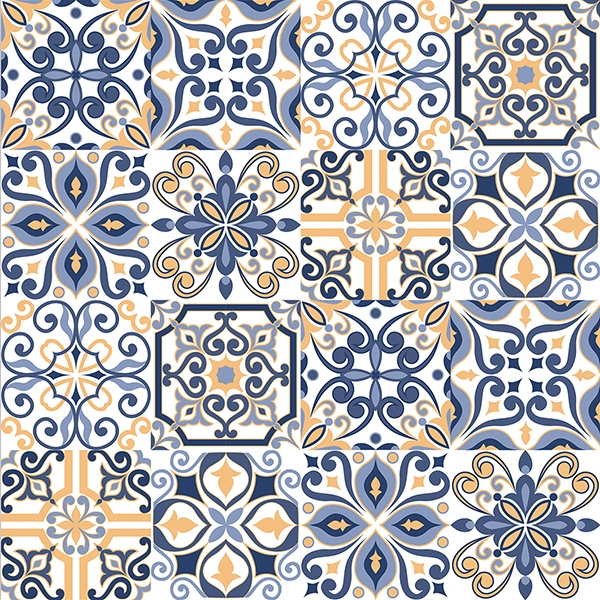
Moroccan and Spanish encaustic-look geometric tiles are GVT digital print tiles that replicate the hand-pressed cement tile traditions of North Africa and the Iberian Peninsula. Encaustic cement tiles are individual tiles made by pressing pigmented cement into moulds, creating a pattern that runs through the full tile depth rather than sitting on the surface as a glaze. GVT encaustic-look tiles replicate this appearance with a digital print on the tile face, giving the same visual quality at a lower cost and with higher surface durability than actual cement tiles in Indian conditions.
Moroccan geometric patterns in terracotta, blue, white, and green, and Spanish geometric patterns in terracotta, cream, and black are available as GVT digital print tiles in 200x200mm, 300x300mm, and 300x600mm from Morbi. These tiles are most effective as focused accent panels, backsplash tiles behind the kitchen hob, bathroom feature walls, and foyer floor medallion panels. Full floor or wall coverage in a Moroccan or Spanish geometric tile in a small Indian room can be visually overpowering: the pattern density of a traditional encaustic geometric tile requires enough space to be read as a composed surface. Price range: Rs. 50 to Rs. 95 per sq.ft.
Contemporary Modern Geometric Tiles
Modern geometric tiles in the Indian market cover a wide range from minimal two-colour grids to complex multi-element abstract geometric compositions. The defining character of modern geometric tiles is the reduction of pattern to its essential elements: clean lines, strong contrast (usually black and white, grey and white, or two complementary colours), and geometric shapes that read clearly from the normal viewing distance of the room.
Contemporary geometric tile directions popular in Indian interior design: black and white chequerboard in 300x300mm diagonal (the most classic contemporary geometric floor tile direction in Indian cafes and restaurants), grey and white interlocking diamond or harlequin pattern in 300x600mm (a contemporary Indian bathroom and kitchen backsplash direction), chevron and arrow-head geometric in matte GVT for bedroom feature walls, and large-format graphic geometric in 600x600mm with bold single-colour geometric overprint on a neutral ground (the most architectural modern geometric direction for living rooms and office feature walls). Price range: Rs. 42 to Rs. 90 per sq ft.
Art Deco Geometric Tiles
Art Deco geometric tiles reference the 1920s and 1930s decorative tradition: fan shapes, sunburst patterns, stepped pyramids, and stylised floral-geometric combinations in warm gold, black, cream, and deep green. In Indian homes and commercial spaces, Art Deco geometric tiles are used in entrance foyers, hotel lobbies, restaurant bar tops, and bathroom feature walls where the glamorous, formal quality of the Art Deco aesthetic suits the design intention. GVT digital print tiles in Art Deco geometric patterns in 300x300mm and 300x600mm from Morbi are available in black and gold, deep green and cream, and midnight blue and gold combinations. Price range: Rs. 52 to Rs. 98 per sq ft.
Hexagon-Look Geometric Tiles
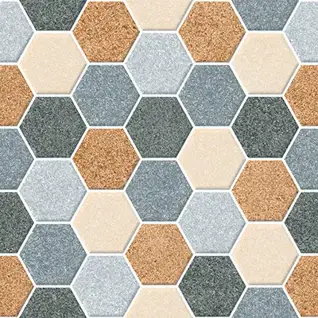
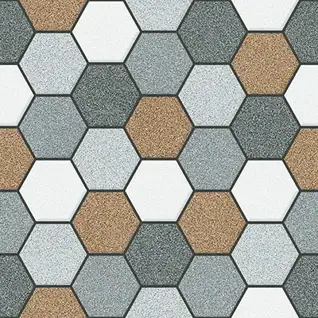
Hexagon-look geometric tiles are GVT or ceramic tiles with a hexagonal grid surface design on a standard-size tile body. The hexagonal pattern on the tile face creates the visual impression of a honeycomb hexagonal tile floor or wall from the standard room viewing distance. These tiles install as standard square or rectangular tiles and achieve the hexagonal pattern through the surface design rather than individual hexagonal pieces. Hexagon-look GVT in black and white, grey and white, and terracotta and cream is used in Indian bathrooms, cafe floors, and kitchen backsplash panels. Price range: Rs. 45 to Rs. 85 per sq ft.
Geometric Tiles on Floors
Geometric pattern floor tiles work most effectively in spaces where the floor is seen as a complete composition from a standing or elevated viewing angle. A living room tile floor in a geometric pattern tile reads across the full room from the entrance and creates a designed character that a plain tile cannot achieve. The chequerboard geometric pattern in 300x300mm or 600x600mm is the most used geometric floor tile direction in Indian contemporary residential and commercial design: black and white diagonal gives a cafe or foyer a timeless, graphic quality.
The scale of the geometric pattern relative to the room size is the most important design decision for geometric floor tiles. A large geometric pattern repeat (covering 600mm or more before repeating) reads well in rooms above 150 square feet, where the full pattern repeat is visible across the floor. A small geometric pattern repeat (150mm to 300mm repeat) reads as a texture rather than a composed pattern in a large room, but gives a small bathroom or compact foyer a richly decorated floor quality.
Grout colour dramatically changes how a geometric floor tile reads. A black and white geometric tile with white grout creates a softer, more blended surface where the tile edges blur slightly. The same tile with dark grey or black grout creates a harder, more defined geometric grid where every tile edge is sharply delineated. For geometric floor tiles, grouting in a colour that enhances the contrast of the geometric pattern is the standard approach: matching one of the pattern's colours rather than choosing a neutral that sits between them.
Geometric Tiles on Walls
Geometric wall tiles work as accent panels and feature walls rather than as full-room coverage in most Indian residential applications. A single wall in a geometric GVT tile in a bathroom, behind the kitchen hob, or in a bedroom gives the room a composed, artisan quality. The bathroom tiles application for geometric wall tiles is the most common: a geometric tile feature wall behind the basin or on the shower wall, with plain coordinating tiles on the other three walls, gives the bathroom a designed character without the visual intensity of four geometric walls in a compact space.
The foyer or entrance hall is the second most effective wall application for geometric tiles in Indian homes. A geometric tile panel on the entrance hall wall is the first thing seen on entering the home and gives the house a designed, curated first impression that plain tiles cannot create. For an Indian home with a traditional or eclectic interior sensibility, an Islamic or Moroccan geometric panel on the entrance hall wall connects to a deep Indian architectural decorative tradition in a contemporary tile product.
Geometric Tile Backsplash
A geometric tile panel as a kitchen backsplash tile treatment is one of the most effective and most contained uses of geometric pattern tiles in an Indian home. The backsplash zone behind the kitchen hob (typically 600mm to 900mm wide and the full backsplash height) is a focused panel where a geometric tile reads as a composed, framed composition rather than a repeating wall surface. A Moroccan or Islamic geometric GVT panel behind the hob with a plain white ceramic tile on the rest of the backsplash gives the kitchen a richly decorative focal point at the cooking zone without overwhelming the full kitchen wall.
Geometric backsplash tile directions for Indian kitchens: blue and white Moroccan geometric in 300x300mm as a hob surround panel (the most popular geometric backsplash direction in Indian contemporary kitchen design), black and white chequerboard in 300x300mm as a full backsplash coverage (gives the kitchen a bistro, European cafe quality), and bold graphic geometric GVT in two-colour contrast in 300x600mm landscape as the full backsplash (contemporary, graphic quality that reads clearly from across the kitchen). Price range: Rs. 48 to Rs. 95 per sq ft for geometric backsplash tiles from Morbi.
Geometric Tiles in the Foyer
The foyer is the single most effective floor location for geometric pattern tiles in an Indian home. A geometric floor tile in the entrance area creates a composed, deliberately designed welcome that plain floor tiles cannot achieve. In Indian homes where the foyer floor transitions to a different flooring material in the adjacent living room, a geometric tile panel in the foyer functions as a natural visual boundary between spaces. Foyer tiles in geometric GVT in 300x300mm or 600x600mm in an Islamic star, chequerboard, or encaustic-look pattern give the entrance the most designed first impression possible in a contained tile area. Price range: Rs. 48 to Rs. 95 per sq.ft.
Modern Geometric Tiles: The Contemporary Indian Interior
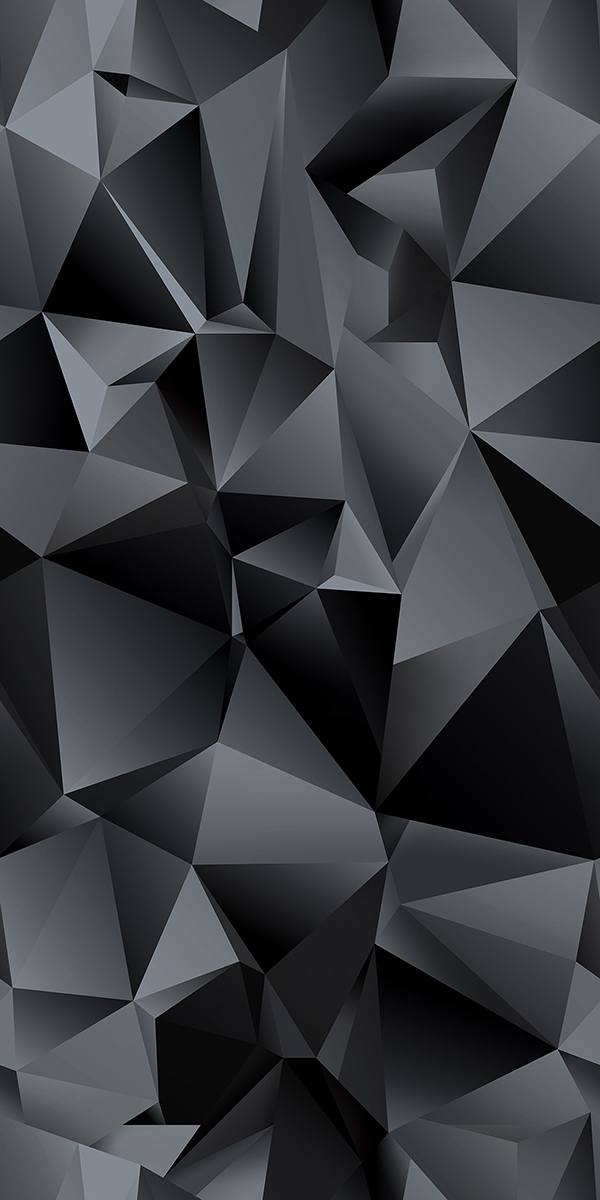
Modern geometric tiles in the Indian home are characterised by clean lines, strong colour contrast, and geometric shapes that read as architectural rather than decorative. The distinction from traditional Islamic or Moroccan geometric is the reduction of complexity: a modern geometric tile uses fewer colours, cleaner line weights, and simpler geometric shapes than the intricate interlocking patterns of the historical traditions.
The most used modern geometric tile directions in contemporary Indian interior design: a medium-format 600x600mm tile in GVT with a bold single-colour geometric overprint (triangle, diamond, or graphic linear pattern) on a neutral white or cream ground gives a living room or office feature wall a contemporary, architectural quality. A grey and white interlocking diamond pattern in 300x600mm on a bathroom wall gives the space a contemporary hotel-quality geometric character without the cultural specificity of an Islamic or Moroccan pattern. A chevron or arrowhead GVT in matte black and warm grey on a bedroom feature wall gives the room a strong directional graphic quality.
Scale, Pattern, and Room Size: Geometric Tile Design Rules
Geometric tiles have specific scale considerations that plain tiles do not. The pattern repeat size relative to the room size and the tile application area determines whether the geometric reads as a composed design or disappears into visual noise.
| Pattern Scale | Pattern Repeat | Best Room Size | Best Application | Visual Effect |
|---|---|---|---|---|
| Small geometric | 50mm to 150mm repeat | Any room size, including compact bathrooms and corridors | Bathroom feature walls, kitchen backsplash panels, and small foyers | Reads as rich texture from room distance; full pattern visible at close range |
| Medium geometric | 150mm to 400mm repeat | Rooms above 60 square feet | Bathroom walls, kitchen backsplash, bedroom accent wall, foyer floors | Reads as a clear pattern from room distance; individual geometric elements are visible |
| Large geometric | 400mm to 900mm repeat | Rooms above 150 square feet | Living room floors, office walls, hotel lobby panels, and large bathroom feature walls | Bold architectural statement; full pattern repeat visible from across the room |
| Oversized geometric | 900mm and above | Rooms above 300 square feet | Hotel lobbies, restaurant floors, open-plan commercial spaces | Maximum graphic impact; requires enough floor area for the full repeat to be legible |
Grout Colour and Geometric Tiles
The grout colour for a geometric tile is a design decision, not just a finishing choice. The grout lines between geometric tiles become part of the geometric pattern: they define the tile edges and either enhance or soften the geometric's contrast.
Grout matching pattern colour 1: The grout colour matches the lighter colour in the geometric pattern (white grout with a black and white geometric tile). This softens the tile edges and gives the geometric pattern a blended, woven quality where the tiles appear to flow together.
Grout matching pattern colour 2: The grout colour matches the darker colour in the geometric pattern (dark grey or black grout with a black and white geometric tile). This hardens the tile edges and creates a more defined, sharply gridded geometric surface. The geometric pattern reads with maximum clarity and contrast.
Contrasting neutral grout: A mid-grey grout between a multi-colour geometric tile (terracotta, cream, navy, and black) sits between the colours and does not emphasise any single colour in the pattern. This is the most practical approach for complex multi-colour geometric tiles where no single background colour dominates.
A Note on Geometric Vinyl Tiles and Small Geometric Tile Pieces
Two geometric tile categories that appear in searches but fall outside the standard GVT and ceramic tile range from Morbi: geometric vinyl tiles and individual small geometric tile pieces.
Geometric vinyl tiles are a separate flooring product: thin polymer sheets or self-adhesive planks with a geometric print surface. They are not ceramic or vitrified tiles and are not available in the standard tile range on this platform. The geometric pattern quality achievable in GVT digital print tiles is visually comparable to or better than vinyl geometric tiles and is available on a durable, non-porous tile body with a much longer service life than vinyl.
Individual small-shaped geometric tile pieces (individual hexagons, triangles, diamonds, or pentagons in small formats) are specialist mosaic products not in the standard Morbi GVT production range. The geometric shapes and patterns associated with these products are available as surface designs on standard-size GVT tiles, where the full hexagonal, triangular, or diamond pattern is printed or pressed on the tile face as a single piece.
Geometric Tiles Pricing from Morbi
| Tile Direction | Body Type | Format | Finish | Retail Price (Rs./sq.ft) |
|---|---|---|---|---|
| Islamic geometric (star and polygon) | GVT | 300x300mm, 300x600mm | Glossy or Matte | Rs. 52 to Rs. 98 |
| Moroccan encaustic-look geometric | GVT | 200x200mm, 300x300mm | Matte or Satin | Rs. 50 to Rs. 95 |
| Spanish encaustic-look geometric | GVT | 200x200mm, 300x300mm | Matte or Satin | Rs. 50 to Rs. 92 |
| Contemporary black and white geometric | GVT or Ceramic | 300x300mm, 300x600mm | Glossy or Matte | Rs. 42 to Rs. 85 |
| Art Deco geometric | GVT | 300x300mm, 300x600mm | Glossy or Polished | Rs. 52 to Rs. 98 |
| Hexagon-look geometric | GVT or Ceramic | 300x300mm, 300x600mm | Glossy or Matte | Rs. 45 to Rs. 85 |
| Large format modern graphic geometric | GVT | 600x600mm, 600x1200mm | Matte or Polished | Rs. 55 to Rs. 110 |
| Chevron or arrowhead pattern GVT | GVT | 300x600mm | Matte or Satin | Rs. 45 to Rs. 88 |
Choose the Right Geometric Tile
Geometric tile selection starts with the pattern tradition (Islamic, Moroccan, Spanish, contemporary graphic, Art Deco), then the scale of the geometric relative to the room and the application area, then the colour palette and grout colour that define how the geometric reads. Browse GVT and ceramic geometric pattern tiles in Islamic, Moroccan, contemporary graphic, and Art Deco directions across all formats and colour combinations on TilesFinders.


FAQs
Geometric tiles are GVT, ceramic, or PGVT tiles with a geometric pattern surface design on the tile face. The geometric pattern, whether an Islamic star, Moroccan interlocking polygon, contemporary chevron, or graphic black and white grid, is achieved through digital printing, relief pressing, or carving on the tile surface. In the Indian tile market, geometric tiles are standard-size tiles that install with standard adhesive and grout. The geometric pattern is on the tile face, not achieved by laying individual geometric-shaped pieces.
Islamic geometric tiles and Moroccan tiles share the same mathematical origin: both are based on geometric patterns derived from circle division and the interlocking of regular polygons. The distinction is primarily one of colour and cultural context. Islamic geometric tiles in the Indian design context reference the Mughal and Persian architectural tradition and tend to use navy, terracotta, and gold colour combinations. Moroccan tiles reference North African architectural tradition and often use a brighter, more varied colour palette with stronger terracotta and cobalt blue tones. In GVT digital print from Morbi, both are available as surface designs in similar tile formats.
Yes. GVT geometric pattern tiles in matte or satin matte finish are suitable for dry indoor floors in living rooms, bedrooms, foyers, and commercial spaces. The geometric surface design is on the tile face and does not affect the tile's structural floor performance. For wet areas such as bathroom floors, the finish must be matte or textured for anti-skid. Polished or high-gloss geometric tiles must not be used on any wet floor surface. Ceramic geometric tiles are suitable for light-traffic indoor floors.
The four most effective locations for geometric tiles in an Indian home: the entrance foyer floor (geometric floor tile creates a composed, designed welcome in a contained area), the kitchen backsplash hob panel (a focussed geometric panel behind the cooking zone is the strongest single design statement in an Indian kitchen), the bathroom feature wall (one geometric accent wall with plain tiles on the others gives a small bathroom a rich, designed quality), and the dining room or living room accent wall (a large geometric panel on one wall gives the room architectural character without requiring complex furniture or accessory styling).
The grout colour for a geometric tile is a design choice. Grout matching the lighter pattern colour (white grout with a black and white geometric) softens the tile edges and gives the pattern a blended quality. Grout matching the darker pattern colour hardens the edges and makes the geometric read with maximum clarity and contrast. For multi-colour geometric tiles in Moroccan or Islamic patterns, a mid-neutral grey grout that sits between the colours without emphasising any single one is the most balanced approach.
Geometric tiles refer to tiles with a geometric surface design printed or pressed on the tile face. Herringbone refers to a specific V-shaped laying pattern where rectangular tiles are placed at 45-degree angles to create a zigzag. Herringbone can be achieved as a surface design on a single GVT tile (a printed herringbone pattern on the tile face) or as an actual laying pattern using standard rectangular tiles. Both are geometric in the broad sense, but herringbone as a category focuses on the V-pattern specifically, while geometric tiles cover the full range of geometric pattern designs.
Spanish encaustic-look geometric tiles are available as GVT digital print tiles from Morbi. These are tiles with a surface design that replicates the geometric patterns of traditional Spanish handmade cement tiles, typically in terracotta, cream, black, and blue colour combinations. They are digital print tiles on a GVT body, not authentic hand-pressed Spanish cement tiles. The visual result from the normal room viewing distance is comparable to actual cement tiles, and GVT tiles are more durable and easier to maintain in Indian conditions than actual cement tiles, which can be sensitive to Indian cleaning chemicals. Price range: Rs. 50 to Rs. 92 per sq.ft.