

Terrace Tiles: Outdoor Floor and Wall Tile Guide for Indian Homes
Loading designs...
-
 Calacutta Bianco
 -
 Sea Wave Grey
 -
Carrara Classico
-
Cruto Statuario Grey
-
Slimy Beige
-
Venezia Bianco
-
Supra White
-
P 1201
-
P 1207
-
P 1203
-
Cotto Sealine Musterd Decor (800x1600)
-
Quartzite Beige (800 x 1600)
-
P 1201
-
P 1207
-
P 1203
-
Versace Grey (800 x 1600)
-
Ant Bianco (800 x 1600)
-
P 1201
-
P 1203
-
P 1207
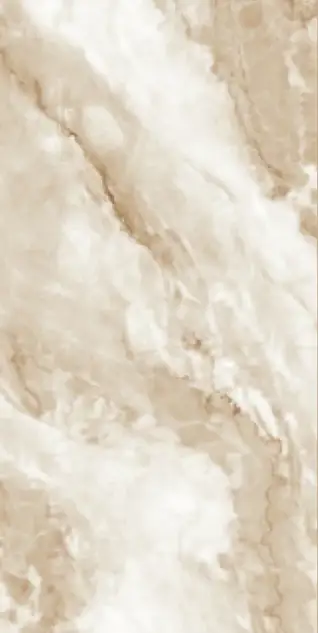
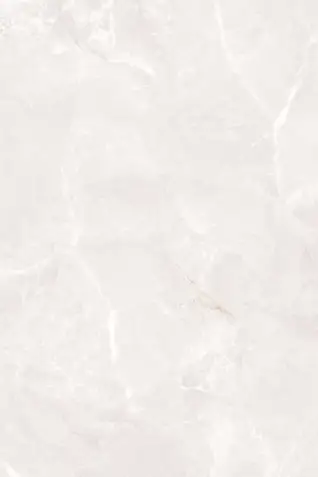



A terrace is the most demanding tile surface in any Indian home. It is fully open to the sky, taking direct sun for six to eight hours a day in summer and monsoon rain for four to five months of the year. It experiences the widest temperature range of any tiled surface in the house: from below 10 degrees Celsius on winter nights to above 50 degrees Celsius at the tile surface on a May afternoon. The tile specification for a terrace cannot be borrowed from any indoor application. Terrace tiles need a water absorption rate below 0.05%, a textured surface that retains grip when wet, a finish that does not absorb solar radiation excessively, and a grout system that holds through years of thermal expansion and monsoon cycling.
Most tile failures on Indian terraces are specification failures, not product failures. A well-made ceramic tile that performs perfectly in a living room will crack, delaminate, and stain on an open terrace within two to three monsoon seasons because ceramic absorbs 12% to 16% water and expands and contracts with temperature changes in a way that breaks the adhesive bond. A polished vitrified tile on a terrace floor is a safety concern on wet surfaces regardless of its water absorption. The two correct body types for open terrace floors are GVT in textured or matte finish and full body vitrified tiles, both with water absorption below 0.05% under IS 15622:2006.
This page covers the complete terrace tile specification: why the tile body type and finish matter more on a terrace than anywhere else, how to read the heat absorption implications of tile colour, what the difference between an open and a covered terrace means for tile selection, the waterproofing requirement beneath the tile that the tile itself cannot provide, and the full range of design options available in correctly specified outdoor terrace tiles from terracotta-look to stone-look, brick-look, mosaic-look, and grey or white matte panels.
Why Terrace Tile Specification Is Different from Every Other Surface
Water Absorption: The Baseline Requirement
Any tile fixed to an open terrace floor must absorb less than 0.05% water, certified under IS 15622:2006. This is the water absorption rate of GVT and full-body vitrified tiles. At 0.05%, the tile takes in no measurable moisture even after months of monsoon rain. Ceramic tiles absorb 12% to 16%. Porcelain tiles absorb 2% to 5%. Neither is the correct specification for an open-to-sky terrace floor. On a terrace that gets direct monsoon rain, a ceramic tile will absorb water, carry it into the adhesive layer, and the adhesive will fail through repeated wet-dry-heat cycling. Full-body vitrified tiles and GVT in textured or matte finish are the two correct body types for open terrace floors.
Anti-Skid Requirement for Terrace Floors
Anti-skid tiles for a terrace are not optional. A terrace floor gets wet from rain, from cleaning, and from planters that overflow. A smooth, polished or glossy surface on a wet terrace floor creates a genuine fall risk. The correct finish for a terrace floor is textured, rough, or matte GVT that provides surface grip when wet. The Indian standard for slip resistance on outdoor surfaces requires a coefficient of friction (CoF) above 0.6 in wet conditions. Textured and rough-surface GVT tiles from Morbi, designed for outdoor use, meet this requirement. Matte GVT also provides adequate wet grip. Polished, high-gloss, satin matte, and sugar finish tiles must not be used on terrace floors.
Thermal Expansion and Joint Specification
Tiles on an open terrace experience temperature changes of 40 to 50 degrees Celsius between a summer noon and a winter night. Every material expands when heated and contracts when cooled. Tiles are no exception. A terrace tile laid with no expansion joints will eventually crack or push against adjacent tiles as the cumulative thermal expansion across the floor area builds up.
The correct approach: leave expansion joints at every 3 to 4 metres across the terrace floor, filled with a flexible sealant rather than grout. At every abutment with a wall, parapet, column, or drain, leave a 10mm gap filled with flexible sealant. All remaining joints between tiles should be filled with epoxy grout, which is waterproof and more resistant to thermal cycling than cement grout. These are not optional details on a terrace: they are the difference between a terrace tile installation that holds for fifteen years and one that begins to crack and lift within three monsoon seasons.
Waterproofing and Terrace Tiles: What the Tile Does Not Do
The single most important thing to understand about terrace tiles is that the tile is not the waterproofing. A roof terrace in an Indian home sits above the living space. Any water that passes through the tile layer and the adhesive will reach the structural slab and eventually find its way into the ceiling of the room below. Tiles are not waterproof membranes: even GVT with 0.05% water absorption allows a small amount of moisture through the grout joints, the adhesive, and the tile-slab interface over time.
The correct construction sequence for a terrace tile installation in India: (1) ensure the structural slab has adequate slope toward the drain, minimum 1 in 100; (2) apply a waterproofing membrane to the full slab surface, taken up behind the parapet wall by at least 300mm; (3) protect the waterproofing membrane with a screed or protection layer; (4) fix the tile onto the screed with outdoor tile adhesive. The tile is the final wear surface, not the waterproofing layer. If the waterproofing membrane is absent or inadequate, no tile choice will prevent leakage to the floor below.
Tile Body Types for Terrace Floors
| Body Type | Water Absorption | Open Terrace Floor? | Finish Options for Terrace | Price Range (Rs./sq.ft) |
|---|---|---|---|---|
| GVT (Glazed Vitrified) | Below 0.05%, IS 15622:2006 | Yes | Matte, GHR, Textured, Rough | Rs. 40 to Rs. 110 |
| Full Body Vitrified | Below 0.05%, IS 15622:2006 | Yes | Matte, Textured | Rs. 50 to Rs. 120 |
| Porcelain | 2% to 5% | Covered terrace only | Matte, Satin Matte | Rs. 38 to Rs. 85 |
| Ceramic | 12% to 16% | No, not suitable for an open terrace | Matte, Glossy | Not recommended |
| PGVT (Polished GVT) | Below 0.05% | No, not suitable for any floor where the surface gets wet | Polished Glossy | Not recommended for terrace floors |
Note: PGVT and any polished or glossy finish tile must not be used on terrace floors. Even though PGVT absorbs very little water, its polished surface provides inadequate grip on a wet surface. Matte, textured, and rough-surface GVT are the correct finish specifications for terrace floors.
Heat-Resistant Tiles for Terrace: What This Actually Means
Heat-resistant tiles for a terrace are a commonly searched term, but it does not correspond to a specific tile classification in Indian standards. All ceramic and vitrified tiles resist heat in the sense that they do not melt or deform under normal outdoor temperatures. The relevant question is not whether the tile resists heat but how much heat it absorbs and retains.
Dark tiles absorb more solar radiation than light tiles. A deep black or charcoal tile on an open terrace in Indian summer will reach a surface temperature of 65 to 70 degrees Celsius in direct afternoon sun, making it uncomfortable or impossible to walk barefoot. A light grey, cream, or white tile on the same terrace in the same conditions will reach 45 to 52 degrees Celsius, still warm but significantly more manageable.
Finish also affects heat absorption: a matte surface reflects more diffuse light and absorbs slightly less radiation than a glossy surface in the same colour. This is a secondary effect compared to colour, but it reinforces the recommendation for matte finish on open terrace floors. A light-coloured matte GVT tile is the specification that minimises surface temperature on an Indian summer terrace.
| Tile Colour | Approximate Surface Temp (Direct Sun, May Afternoon) | Barefoot Comfort | Finish Effect |
|---|---|---|---|
| White or cream, matte | 43 to 50 degrees C | Warm but manageable | Matte reflects marginally more than glossy in the same colour |
| Light grey, matte | 46 to 53 degrees C | Warm, brief contact possible | Matte preferred over glossy |
| Mid grey or beige, matte | 50 to 58 degrees C | Hot, short contact only | Matte finish recommended |
| Terracotta red, matte | 52 to 60 degrees C | Very hot in peak summer hours | Traditional choice, matte essential |
| Dark charcoal or black, matte | 62 to 70 degrees C | Not recommended for barefoot use in summer | Matte reduces heat vs glossy but still very hot |
Terrace Tiles Design Options
Terracotta Tiles for Terrace
Terracotta is the oldest terrace tile material in Indian construction. Traditional fired terracotta tiles have been used on Indian roof terraces, courtyards, and outdoor floors for centuries. Their warm red-orange colour, rough surface, and organic character are well-suited to Indian architecture and climate. The problem with actual terracotta on a modern terrace is water absorption: traditional terracotta absorbs 15% to 20% water, which is higher than ceramic. On an open terrace, this means staining, moss growth in shaded zones, and eventual cracking from the pressure of absorbed water expanding in summer heat. Traditional terracotta tiles require annual or biannual sealing to maintain weather resistance.
GVT terracotta-look tiles replicate the warm red-orange colour and rough surface texture of terracotta at water absorption below 0.05%. They are outdoor-rated, do not require sealing, do not develop moss in shaded zones, and maintain their colour and texture through monsoon seasons without the maintenance burden of actual terracotta. Terracotta look tiles in GVT textured finish in 300x300mm, 300x600mm, and 600x600mm are available from Morbi at Rs. 40 to Rs. 75 per sq.ft. The difference in long-term performance between GVT terracotta-look and actual terracotta on an open Indian terrace is significant.
Stone Look Terrace Tiles
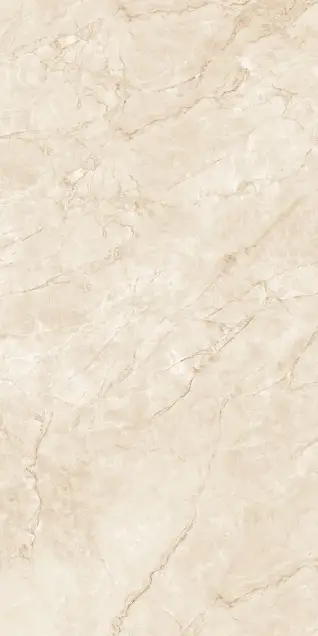
Stone-look GVT tiles in matte or GHR finish are one of the most used directions for Indian terrace floors, particularly in garden terraces and rooftop seating areas. Sandstone-look, slate-look, and grey limestone-look GVT tiles in 300x600mm or 600x600mm give the terrace the visual weight and natural texture of cut stone at water absorption below 0.05%. Stone look tiles in rough or GHR finish for terrace applications provide adequate surface grip while replicating the appearance of natural stone. Sandstone-look in buff and beige tones and grey slate-look are the two most used stone-look directions for Indian garden terraces. Price range: Rs. 45 to Rs. 90 per sq ft.
Brick Look Terrace Tiles
Brick tiles for a terrace, specifically GVT tiles with a brick-face surface design, are used on terrace floors and terrace parapet walls to give an outdoor space the textural warmth of brick coursing without the irregular surface of actual brick. On a terrace floor, brick-look GVT in 300x600mm horizontal bond in terracotta-red or charcoal-grey gives the space a casual, garden-party character. On terrace parapet walls, the same tile in vertical stack creates a consistent outdoor material theme. Price range: Rs. 40 to Rs. 80 per sq.ft for brick-look GVT terrace tiles from Morbi.
White and Grey Terrace Tiles
White terrace tiles and grey terrace tiles in GVT matte or textured finish are the most practical direction for heat management on Indian terraces. A light grey or off-white GVT tile in 600x600mm matte finish is the lowest surface-temperature option available for an open terrace, keeps the terrace usable in morning and evening hours even in peak summer, and provides the neutral background that lets potted plants, outdoor furniture, and string lights carry the visual character of the space. Grey terrace tiles also show less surface staining from soil, leaves, and rain-borne dirt than lighter cream or white options. Price range: Rs. 40 to Rs. 85 per sq ft.
Mosaic Look Terrace Tiles
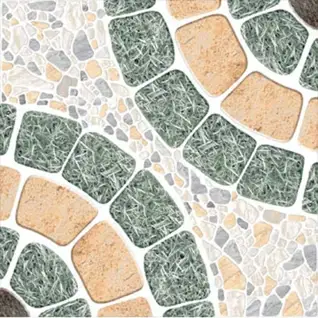
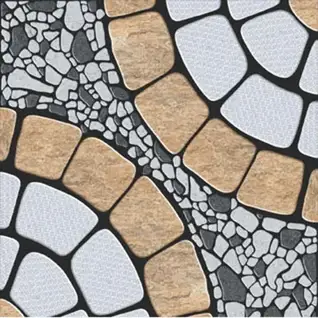
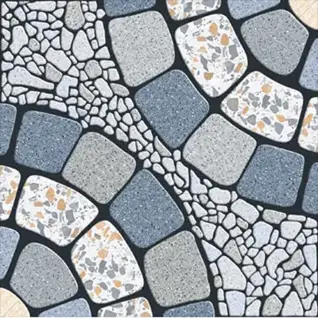
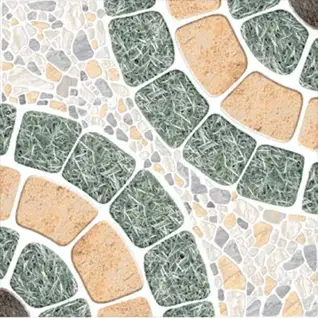
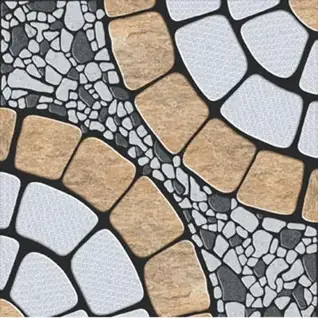
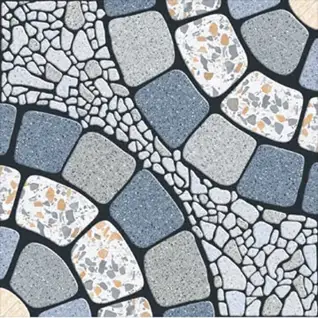
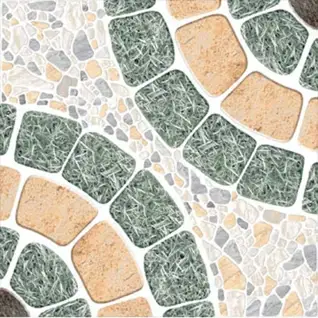
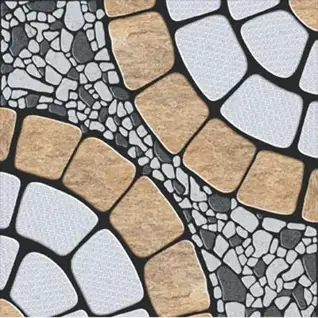
Mosaic tiles for a terrace are GVT tiles with a mosaic-pattern surface design on a standard tile body. These are not individual small mosaic pieces but standard-size tiles (300x300mm or 300x600mm) where the tile face carries a multi-colour geometric or pebble mosaic print. Mosaic-look GVT tiles for terraces give a garden terrace or rooftop seating zone a decorative quality without the installation complexity of actual individual mosaic pieces. The tile installs as a standard floor tile with adhesive and epoxy grout. Outdoor-rated GVT mosaic-look in textured or matte finish: Rs. 45 to Rs. 80 per sq.ft.
Granite Look Terrace Tiles
Granite tiles for a terrace in the Indian context refer most often to GVT tiles with a granite-grain surface print, not actual cut granite. Actual granite has high variation in water absorption depending on the grade and finish: polished granite at 0.1% to 0.5% is borderline for an open terrace, while flamed or brushed granite provides adequate grip. GVT granite-look tiles in matte or rough finish deliver the stone grain appearance of granite at consistent water absorption below 0.05%, with a surface texture that provides outdoor grip without the cost variability of natural stone. Price range: Rs. 50 to Rs. 95 per sq.ft.
Terrace Wall Tiles: Parapet and Boundary Walls
Wall tiles for a terrace cover the parapet walls (the low boundary walls at the edge of a roof terrace), any boundary or compound walls visible from the terrace, and any vertical surfaces such as equipment enclosures or staircase walls on the terrace level. All of these are outdoor surfaces exposed to direct rain, and they require the same outdoor tile specification as the terrace floor: GVT in matte or GHR finish with water absorption below 0.05%. Terrace wall tiles on parapet walls are most commonly in 300x600mm format in a stack or running bond. The colour is usually coordinated with or complementary to the terrace floor tile.
A common terrace design uses a textured stone-look GVT on the parapet wall in a slightly darker tone than the floor tile. This gives the parapet visual weight and draws a clear edge to the terrace space. On shorter parapets under 3 feet, the full height of the parapet face is typically tiled. On taller parapets, the lower section (below seating level) is tiled, and the upper section, which is at eye level when seated, may carry a contrasting or more decorative tile.
Covered vs Open Terrace: How Tile Specification Changes
An open terrace is directly exposed to rain, sun, and temperature extremes. Only GVT and full body vitrified in matte or textured finish are correct for open terrace floors. A covered terrace, under a pergola, shade structure, or partial roof, has lower direct rain and UV exposure. On a covered terrace floor, porcelain tiles (2% to 5% absorption) in matte finish are acceptable. The parapet and exposed wall sections of a covered terrace still require GVT outdoor specification. Outdoor tiles guidance covers the full outdoor surface specification hierarchy for all exposure conditions, from fully open to partially covered.
Anti-Skid Tiles for Terrace: Finish and Surface Grade
Anti-skid tiles for a terrace are GVT tiles with a surface that provides adequate friction when wet. Three surface types are used for terrace floors in India: rough-surface GVT (also called rock-texture or split-face look), GHR (Glossy High Relief, where a raised surface texture is pressed into the tile face), and matte GVT (which provides adequate wet grip without a pronounced texture). All three meet the outdoor slip resistance requirement for terrace floors.
The surface texture choice also affects cleaning: a rough or GHR surface provides better grip but collects more dust and soil in the texture pockets, requiring more frequent sweeping on a terrace that has potted plants or is near trees. A matte flat-surface GVT is easier to clean but has slightly less grip than a rough-surface tile under heavy rain. For terraces used primarily as seating areas with contained planters, matte GVT is the lower-maintenance specification. For terraces with extensive garden planting or areas adjacent to soil, a rough or GHR textured tile is more practical.
Terrace Tiles Design by Zone
| Terrace Zone | Recommended Tile | Format | Finish | Price Range (Rs./sq.ft) |
|---|---|---|---|---|
| Open seating area | GVT matte or textured | 600x600mm, 300x600mm | Matte or Rough | Rs. 40 to Rs. 90 |
| Garden planter zone | GVT rough texture or stone-look GHR | 300x300mm, 300x600mm | GHR or Rough | Rs. 45 to Rs. 85 |
| Steps and staircases | GVT anti-skid, full body vitrified | 300x600mm nosing format | Rough or Matte with a carborundum strip | Rs. 50 to Rs. 100 |
| Parapet and boundary walls | GVT matte or GHR | 300x600mm | Matte or GHR | Rs. 40 to Rs. 85 |
| Covered terrace or pergola zone | GVT or Porcelain matte | 600x600mm, 600x1200mm | Matte or Satin Matte | Rs. 40 to Rs. 95 |
| Water feature or pool surround | GVT rough or anti-skid | 300x300mm, 300x600mm | Rough, textured | Rs. 45 to Rs. 90 |
Terrace Tile Installation: Key Points
Slope: the terrace floor must slope a minimum of 1 in 100 (10mm per metre) toward the drain. Tiles must be laid following the slope, not against it. A flat or reverse-sloped terrace will pond water, which accelerates adhesive failure.
Adhesive: Use a polymer-modified outdoor tile adhesive on a terrace, not standard interior tile adhesive. The outdoor adhesive is formulated to withstand the higher thermal cycling and water exposure of an open terrace application.
Back-buttering: all terrace tiles should be back-buttered, meaning adhesive is applied both to the floor screed and to the back of each tile. This ensures full coverage and eliminates voids behind the tile that collect water.
Grout: epoxy grout for all terrace tile joints. Cement grout on a terrace joint will absorb water, stain from soil and mineral deposits, and crack from thermal expansion. Epoxy grout is waterproof and holds its colour and bond through years of monsoon and summer cycling.
Expansion joints: flexible sealant every 3 to 4 metres across the terrace floor and at every wall abutment. This is mandatory on any terrace tile installation. Without expansion joints, thermal expansion of the tile bed will eventually cause tiles to crack or lift.
Terrace Tiles Pricing from Morbi
GVT terrace tiles from Morbi, Gujarat, certified under IS 15622:2006, are available in all sizes and surface textures used for Indian outdoor terrace floors. Ex-factory prices: Rs. 35 to Rs. 50 per sq ft for 300x300mm and 300x600mm in matte and rough-texture GVT, Rs. 40 to Rs. 65 per sq.ft for 600x600mm in matte and GHR finish, and Rs. 55 to Rs. 95 per sq.ft for 600x1200mm in outdoor-rated matte GVT. Terracotta-look and stone-look GVT for terrace: Rs. 40 to Rs. 85 per sq.ft. Brick-look GVT for terrace floor and walls: Rs. 40 to Rs. 80 per sq ft. Retail prices across Indian cities are 25% to 40% above ex-factory. Installation cost for terrace tiles: Rs. 40 to Rs. 65 per sq.ft, including adhesive but excluding waterproofing membrane and screed.
Choose the Right Terrace Tile
Terrace tile selection starts with the surface exposure (open or covered), then the grip requirement, the heat management priority, and the design direction. Browse outdoor-rated GVT terrace tiles in terracotta-look, stone-look, grey, white, brick-look, and mosaic-look directions on TilesFinders and confirm matte or textured finish and GVT body type before shortlisting any tile for an open terrace application.



FAQs
GVT in matte or textured finish with water absorption below 0.05%, certified under IS 15622:2006, is the correct tile for an open terrace in India. Full body vitrified tiles in matte or rough finish are the alternative. Both handle monsoon rain, temperature cycling, and UV exposure without adhesion failure or surface degradation. Sizes most used for terrace floors: 300x600mm and 600x600mm. Price range: Rs. 40 to Rs. 90 per sq.ft from Morbi.
Ceramic tiles with 12% to 16% water absorption must not be used on open terrace floors. On an open terrace that receives direct monsoon rain, ceramic tiles will absorb water, expand and contract with temperature cycling, and the adhesive bond will fail within two to three monsoon seasons. Ceramic is suitable only for covered or shaded terrace surfaces that do not receive direct rain. For any open terrace surface, GVT in matte or textured finish is the minimum correct specification.
Heat-resistant tiles for a terrace are not a standard tile classification. All vitrified tiles resist heat in the sense that they do not deform under outdoor temperatures. The practical consideration is heat absorption: dark tiles reach 65 to 70 degrees Celsius on an Indian summer afternoon, while light grey or cream matte tiles stay closer to 45 to 52 degrees Celsius in the same conditions. For a barefoot-usable terrace in Indian summer, choose light-coloured matte GVT. Matte finish absorbs marginally less radiation than glossy in the same colour.
Yes. Any terrace floor tile must have a surface that provides adequate grip when wet. A terrace gets rain, cleaning water, and overflow from planters. Textured GVT, rough-surface GVT, GHR finish, and matte GVT all provide adequate outdoor wet grip. Polished, high-gloss, satin matte, and sugar finish tiles must not be used on terrace floors. The outdoor slip resistance standard requires a coefficient of friction above 0.6 in wet conditions, which textured and matte GVT tiles meet.
PGVT and all polished or high-gloss finish tiles must not be used on terrace floors. Despite PGVT's low water absorption, its polished surface provides inadequate grip on a wet outdoor floor. On a terrace that gets rain and cleaning water, a polished surface creates a fall risk regardless of the body type. PGVT and polished tiles are for indoor walls only. Even on a covered terrace, polished tiles are not recommended on the floor surface.
Epoxy grout is the correct specification for all terrace tile joints. Terrace joints experience direct monsoon rain, soil contamination from planters, and temperature cycling between summer highs and winter lows. Cement grout in a terrace joint absorbs water, stains from mineral deposits and soil, and cracks from thermal expansion. Epoxy grout is waterproof, does not stain, and holds its bond through years of outdoor cycling. Expansion joints at every 3 to 4 metres, filled with flexible sealant rather than grout, are also mandatory on any terrace tile installation.
Traditional terracotta tiles with 15% to 20% water absorption are not the correct specification for a modern open terrace in India. They absorb rain, develop moss in shaded zones, and require annual sealing to maintain weather resistance. GVT terracotta-look tiles replicate the warm red-orange colour and rough surface of terracotta at water absorption below 0.05%, with no sealing requirement. For an open terrace, GVT terracotta-look is the better specification. Traditional terracotta tiles work in covered or semi-covered terrace and courtyard applications where direct rain exposure is limited.
Yes. A waterproofing membrane beneath terrace tiles is mandatory on any roof terrace above a living space. The tile is the wear surface, not the waterproofing layer. Even GVT with 0.05% water absorption allows moisture through grout joints and the adhesive layer over time. Without a waterproofing membrane, moisture will reach the structural slab and eventually seep into the ceiling of the room below. The membrane is applied to the structural slab before the screed and adhesive layers, and must be taken up behind the parapet wall by at least 300mm.