Minimalist Bedroom Tile Designs for Modern Homes
March 31, 2026 13
Create a serene minimalist bedroom. Discover how large-format matte tiles, wood-look planks, and seamless colour drenching reduce visual noise for a calming modern sanctuary.
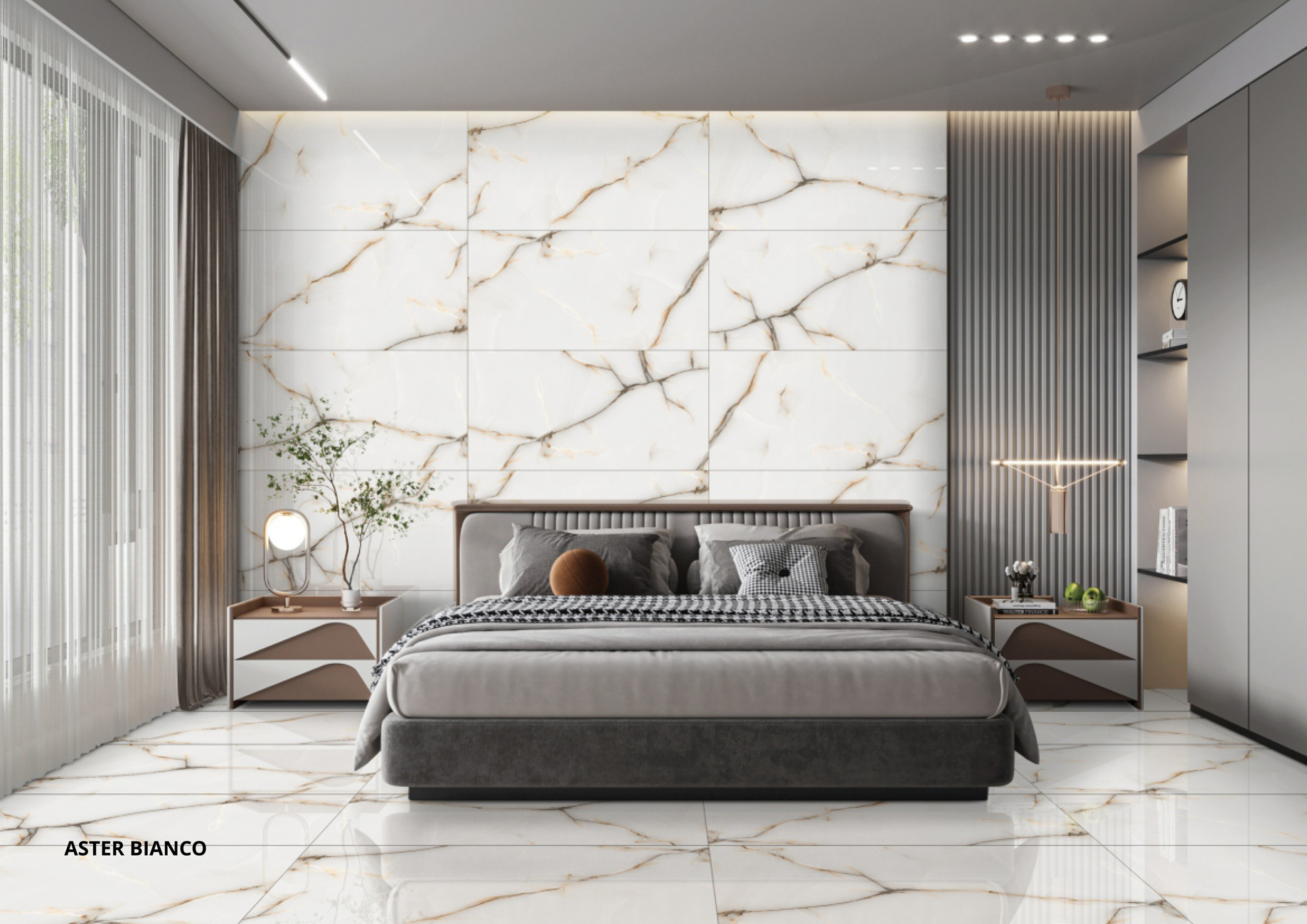
Minimalist bedrooms rely on reducing visual clutter to create a serene, restful environment. By using large-format matte slabs or warm wood-look vitrified planks with colour-matched grout, designers create a seamless, distraction-free canvas that balances modern aesthetics with deep comfort. This approach is now widely seen in minimalist bedroom tiles and modern bedroom floor tiles, where simplicity defines the entire space.
Why Are Large-Format Tiles the Absolute Foundation of Minimalist Design?
Minimalism is fundamentally the absence of unnecessary detail. Standard 300×300mm or 600×600mm tiles create a dense grid of grout lines, which designers call visual noise. In a bedroom, this constant pattern makes the space feel busy instead of calm, affecting the overall bedroom tile design.
Upgrading to larger tile formats completely changes that.
- 600×1200mm tiles → Medium-format, practical entry point for minimalist flooring
- 800×1600mm tiles → Medium-large format, near-seamless and more architectural
With fewer joints and colour-matched grout (ideally 1.5mm), the floor stops looking like a patchwork and starts reading as a single continuous surface. For example, 600x1200 bedroom floor tiles are often used to create a clean and balanced layout, while 800x1600 large tiles for bedroom spaces deliver a more seamless, premium look.
The result is a calm, expansive environment where the flooring recedes into the background and allows furniture and proportions to stand out.
Visual Impact by Tile Size
| Tile Format | Joints per 10 sq.m (approx.) | Visual Effect | Best For |
| 300×300mm | ~95 joints | High visual noise | Feature walls only |
| 600×600mm | ~42 joints | Moderate grid | Budget minimalist builds |
| 600×1200mm | ~22 joints | Low visual noise | Standard minimalist floors |
| 800×1600mm | ~12 joints | Near-seamless | Premium minimalist spaces |
Japandi vs. Industrial: Choosing Between Wood-Look Planks and Stone-Look Slabs
Minimalism in 2026 isn’t one style; it splits into two clear directions.
Warm Minimalism (Japandi)
Uses 200×1200mm wood-look vitrified planks
Mimics natural wood textures like oak, walnut, and ash
No warping, no maintenance headaches like real wood
You get warmth, softness, and a grounded vibe, without sacrificing durability. These are often paired with neutral colour bedroom tiles to maintain a soft and calming palette.
Industrial / Contemporary Minimalism
Uses matte concrete-look or stone texture tiles for the bedroom floor
Colours: soft greys, warm beiges, muted tones
This is where beige and grey bedroom floor tiles become popular, as they create a balanced and timeless look that works beautifully under warm lighting (2700K–3000K). The result is a clean, architectural space that feels premium and calm, not cold.
How Does a Matte Finish Enhance the Psychological Serenity of a Bedroom?
Glossy tiles look fancy, but they’re honestly a terrible idea for bedrooms.
They reflect too much light, creating glare from windows and lamps. That subtle brightness actually keeps your brain more alert instead of relaxed.
What Actually Works: Matte Finish
Diffuses light softly
Eliminates harsh reflections
Creates a warm, ambient glow
This is why most designers now prefer a matte texture bedroom tile design for modern interiors.
Understanding LRV (Light Reflectance Value)
Scale: 0 (black) → 100 (white)
Glossy tiles → High LRV (more glare)
Matte tiles → Balanced LRV (30–60 ideal for bedrooms)
A matte surface doesn’t just look better, it feels better too. It’s warmer underfoot and provides slight grip (R9–R10), making it more comfortable and safer.
The “Colour Drenching” Technique: Extending Floor Tiles to the Headboard Wall
This is where minimalist design levels up.
Instead of mixing materials, you use the same tile on the floor and the wall behind the bed.
Why It Works
Creates a cocoon-like, immersive space
Removes the need for headboards or accent walls
Makes the room feel taller and more cohesive
How to Execute It
Use 600×1200mm tiles
Install vertically on the headboard wall
Align grout lines with the floor (or offset intentionally)
This approach works especially well with neutral colour bedroom tiles design, where continuity enhances the overall calmness of the space.
The vertical layout visually increases ceiling height while keeping everything clean and unified.
Bonus: Way easier to clean than fabric or painted walls, especially in dusty environments.
Buyer’s Checklist: Selecting Minimalist Bedroom Tiles
Before locking your tiles, run through this:
- Format: Minimum 600×1200mm (800×1600mm for premium)
- Finish: Matte finish only
- LRV: 30–60 for balanced lighting
- Body: Full-body vitrified (<0.5% water absorption)
- Slip Rating: R9 minimum
- Grout: Colour-matched epoxy + 1.5mm spacing
Thickness:
Floor → 9–10mm
Wall → ~6mm
Lighting Test: Always check under warm light (2700K), not showroom lighting
FAQs
Pure white tiles can often appear clinical and overly harsh under typical bedroom lighting. A better approach is to choose warm whites, ivory, or light greige tones, which maintain brightness while creating a softer, more inviting atmosphere.
The grout colour should match the tile as closely as possible to eliminate visible grid lines. Using colour-matched epoxy grout along with ultra-thin 1.5mm spacers ensures a seamless, continuous surface that aligns with minimalist design principles.
Yes, vitrified tiles can feel slightly cooler than natural wood due to their material properties. However, they are fully compatible with underfloor heating systems, unlike solid wood, which may warp under temperature changes, making them a more stable and adaptable option.
A PEI rating of 3 is generally sufficient for bedrooms, as they are low-traffic areas. However, if the same flooring extends into adjacent spaces such as wardrobes or corridors, opting for PEI 4 provides better durability and long-term performance.
Yes, large-format tiles are highly suitable for small bedrooms. By reducing the number of grout lines, they create a more continuous surface, making the room appear larger and more open. This effect works best with plain, matte finishes rather than heavily patterned designs.
