Top 25 Tile Design Trends India Will Follow in 2027
July 13, 2026 58
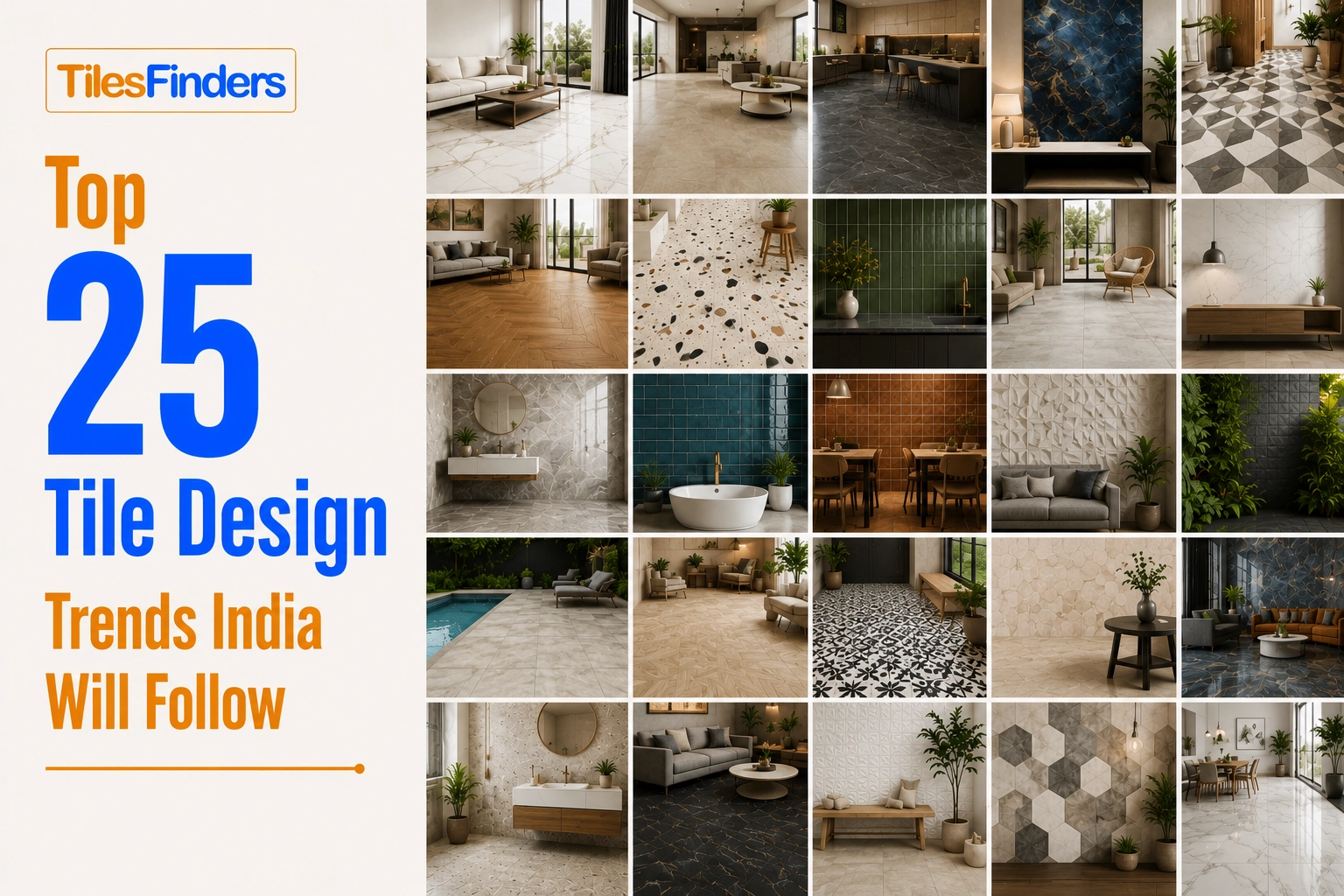
Indian tile design in 2027 moves toward warm earth tones, fluted textures, large-format slabs, and heritage revivals like Athangudi, with matte anti-skid finishes becoming a design feature rather than a compromise.
Indian tile design in 2027 moves toward warm earth tones, fluted textures, large-format slabs, and heritage revivals like Athangudi, with matte anti-skid finishes becoming a design feature rather than a compromise.
Tile trends in India rarely arrive all at once. A look shows up first at Cersaie in Bologna or in Morbi's export catalogues, then in metro showrooms, then in tier-2 cities a season or two later. By 2027, a clear set of directions has firmed up across that pipeline, and this guide maps all 25 of them.
The short version of where design is heading: warmth is replacing coolness, texture is replacing flatness, and Indian buyers are increasingly comfortable mixing global looks like zellige and terrazzo with genuinely local revivals like Athangudi and jaali-inspired geometry. Underneath the aesthetics sits a practical shift too, matte and anti-skid finishes have stopped being the boring option and become a design category of their own.
How These 25 Trends Were Selected
This list is not a wish list. Each trend here clears at least two of three filters: it is already visible in Morbi manufacturers' new 2026-27 catalogues, it is being specified by architects and interior designers in Indian metro projects, or search demand for it has grown measurably over the past year. Trends that are loud internationally but impractical for Indian conditions, ultra-porous natural materials in monsoon climates, for instance, either appear here in an adapted form or not at all.
All 25 Trends at a Glance
| # | Trend | Category | Budget Level | Staying Power |
| 1 | Warm earth tones replace grey | Colour | Budget to mid | Long-term shift |
| 2 | Sage and olive greens | Colour | Mid | 3-5 years |
| 3 | Ivory and warm neutrals as the new base | Colour | Budget | Long-term shift |
| 4 | Deep monochrome bathrooms | Colour | Mid to premium | 3-4 years |
| 5 | Tone-on-tone checkerboard | Colour | Mid | 2-4 years |
| 6 | Fluted and ribbed 3D tiles | Texture | Mid to premium | 3-5 years |
| 7 | Zellige and handmade-look glazes | Texture | Mid to premium | 3-5 years |
| 8 | Matte-first finishes | Texture | Budget to mid | Long-term shift |
| 9 | Encaustic cement-look tiles | Texture | Mid | 3-5 years |
| 10 | Brass and gold accent pairings | Texture | Mid | 3-4 years |
| 11 | Large-format slabs | Format | Premium | Long-term shift |
| 12 | Vertical stacked layouts | Layout | Budget | 3-5 years |
| 13 | Elongated herringbone and chevron | Layout | Mid | Long-term classic |
| 14 | Small-format mosaic comeback | Format | Mid | 2-4 years |
| 15 | Tile drenching | Layout | Premium | 3-5 years |
| 16 | Rare marble-look porcelain | Material look | Mid to premium | Long-term shift |
| 17 | Travertine and limestone looks | Material look | Mid | 3-5 years |
| 18 | Granite-look vitrified tiles | Material look | Budget to mid | Long-term shift |
| 19 | Terrazzo 2.0, refined speckle | Material look | Mid | 2-4 years |
| 20 | Light-tone wood-look tiles | Material look | Budget to mid | Long-term classic |
| 21 | Athangudi and heritage revival | India-specific | Mid to premium | Growing steadily |
| 22 | Jaali-inspired geometric patterns | India-specific | Mid | 3-5 years |
| 23 | Indoor-outdoor continuity | India-specific | Mid to premium | Long-term shift |
| 24 | Anti-skid as a design feature | Functional | Budget to mid | Long-term shift |
| 25 | Recycled-content and low-energy tiles | Functional | Mid | Long-term shift |
Budget levels are indicative per-square-foot bands for the tile itself, excluding installation. Staying power is an editorial estimate, not a guarantee.
Colour and Tone Trends
1. Warm Earth Tones Replace Grey
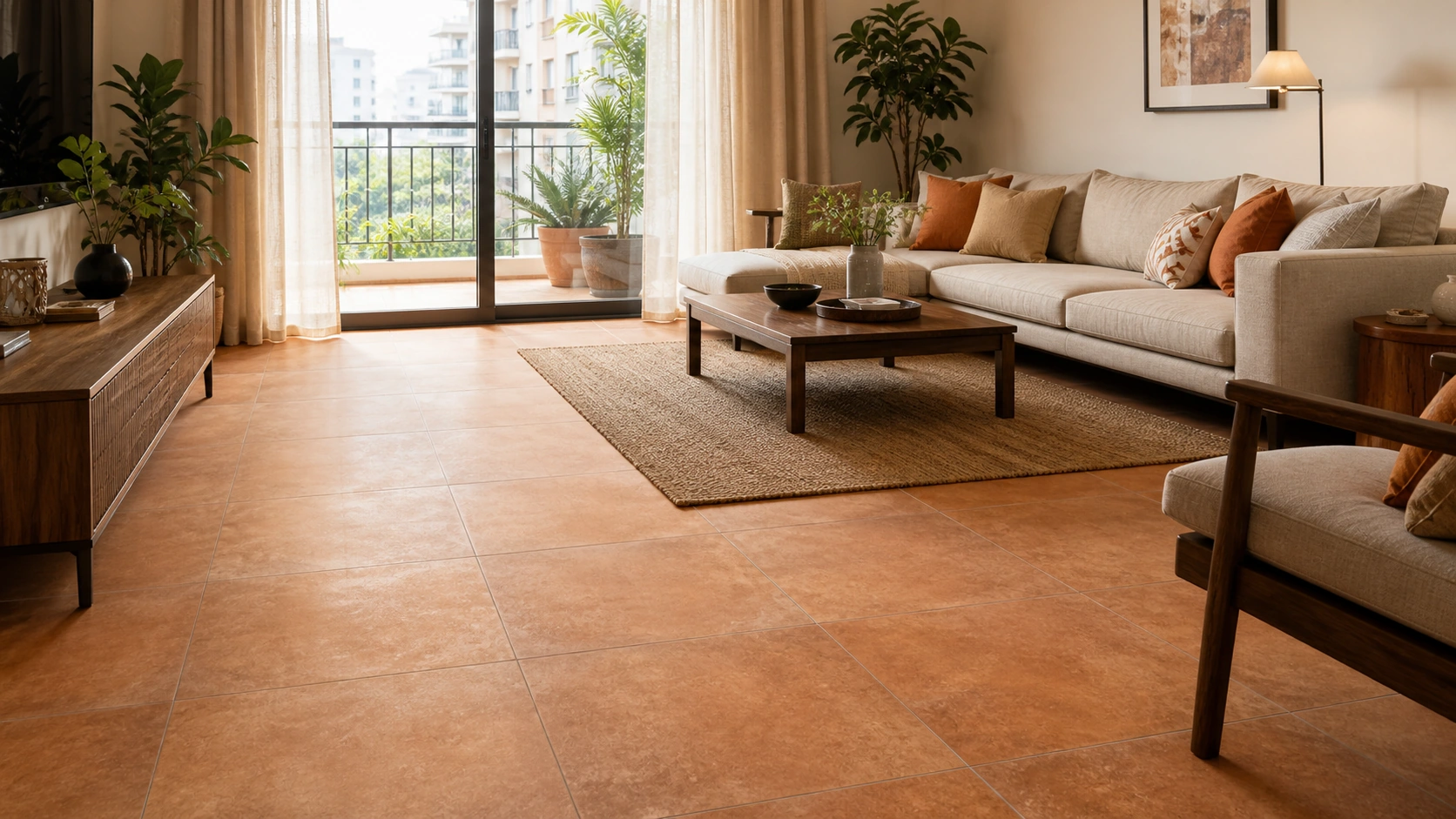
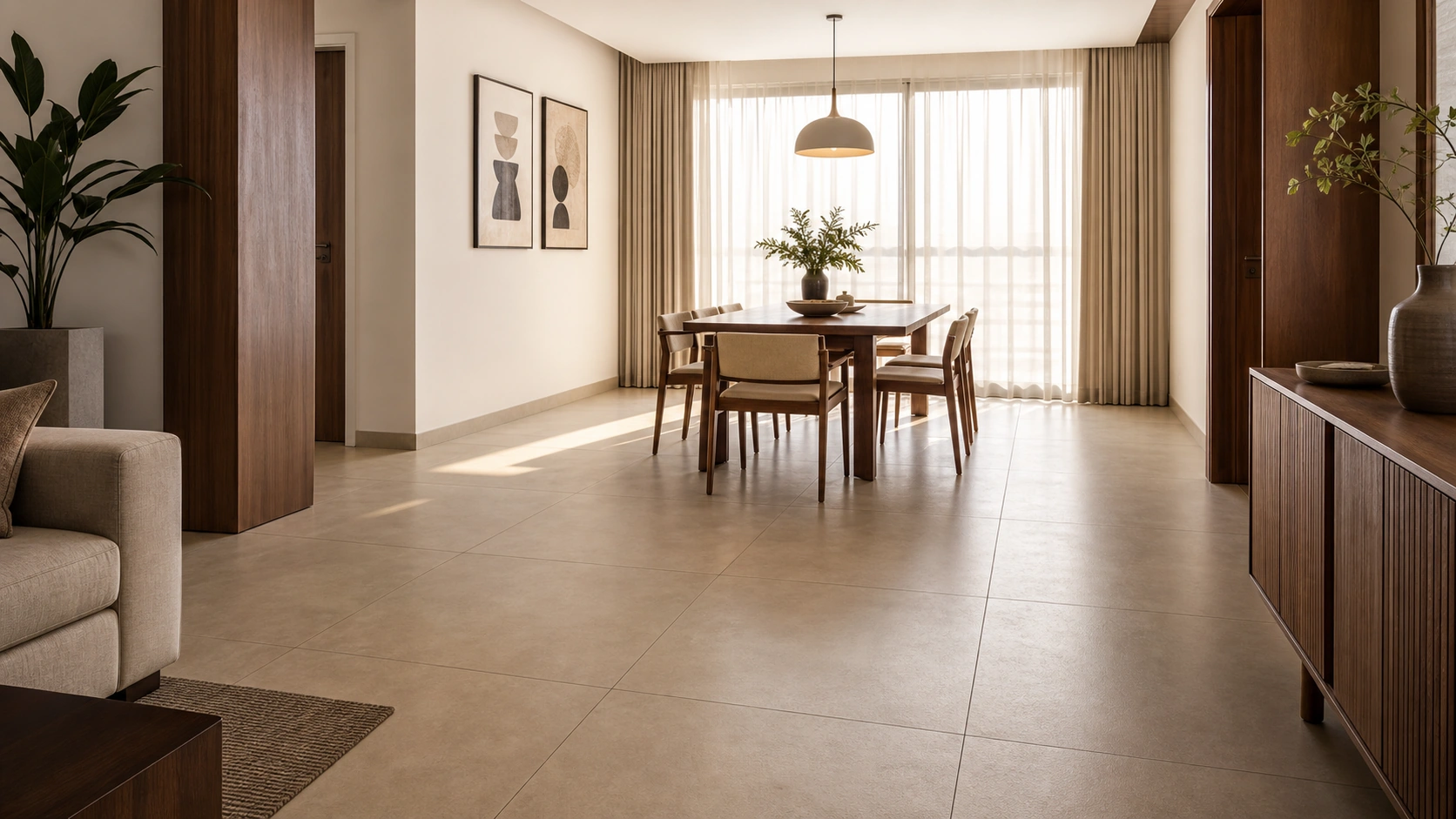
The single biggest shift of 2027 is tonal. After nearly a decade of grey-on-grey interiors, Indian homes are moving to terracotta, ochre, sand, and clay-inspired shades, the palette confirmed at recent international ceramic exhibitions and now flowing through Morbi's digital-print catalogues.
The practical appeal in India specifically: warm tones hide dust far better than cool grey, which shows every layer of settling dust in a way that frustrates daily-mopped Indian households. Expect earth-tone vitrified floors to become the new safe default the way grey was in 2018.
2. Sage and Olive Greens
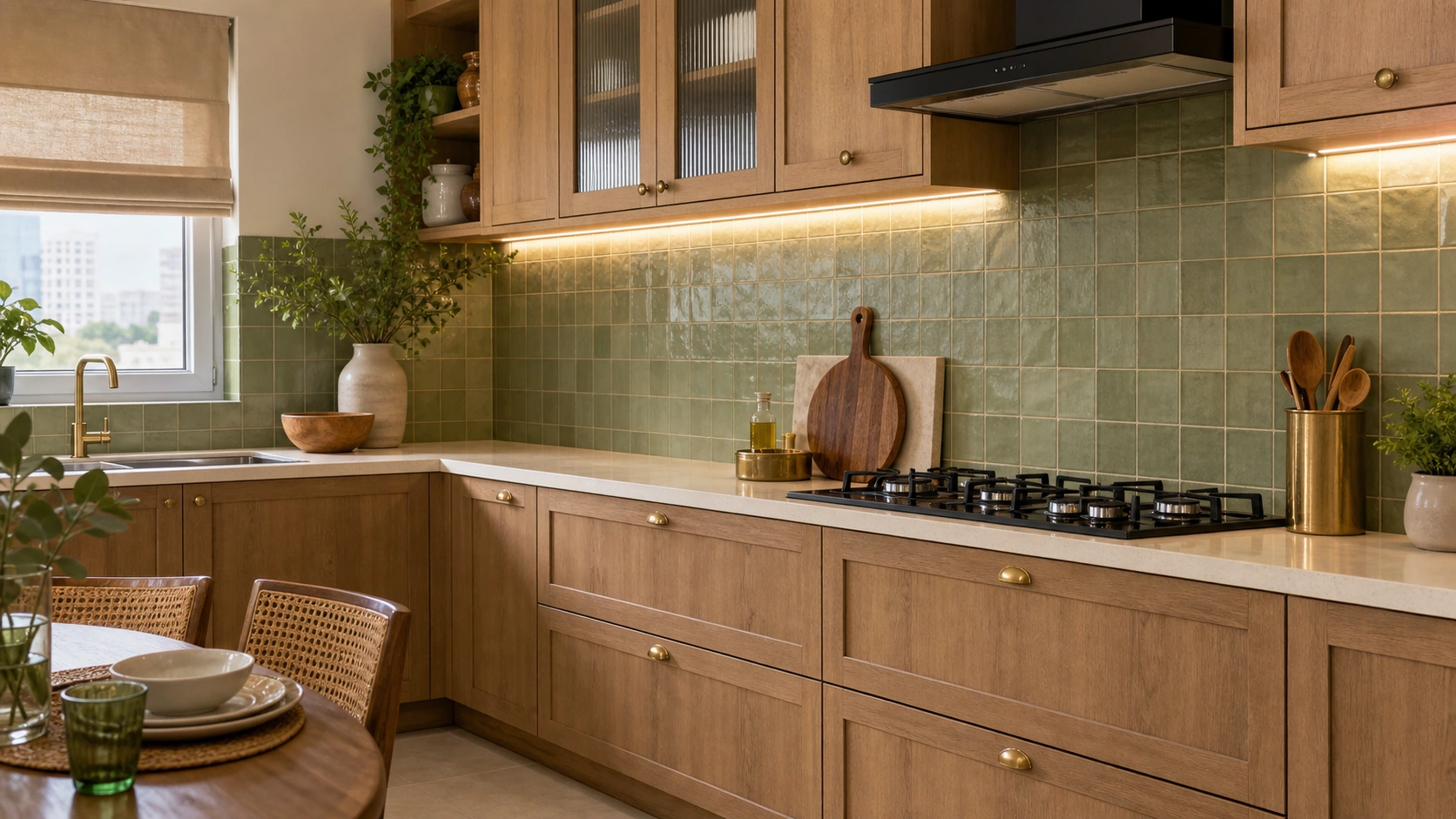
Muted greens are the accent colour of the moment, showing up as kitchen backsplashes, bathroom feature walls, and checkerboard pairings with cream. They pair naturally with the brass and gold fixture finishes Indian buyers already favour, and with wood-tone cabinetry.
3. Ivory and Warm Neutrals as the New Base
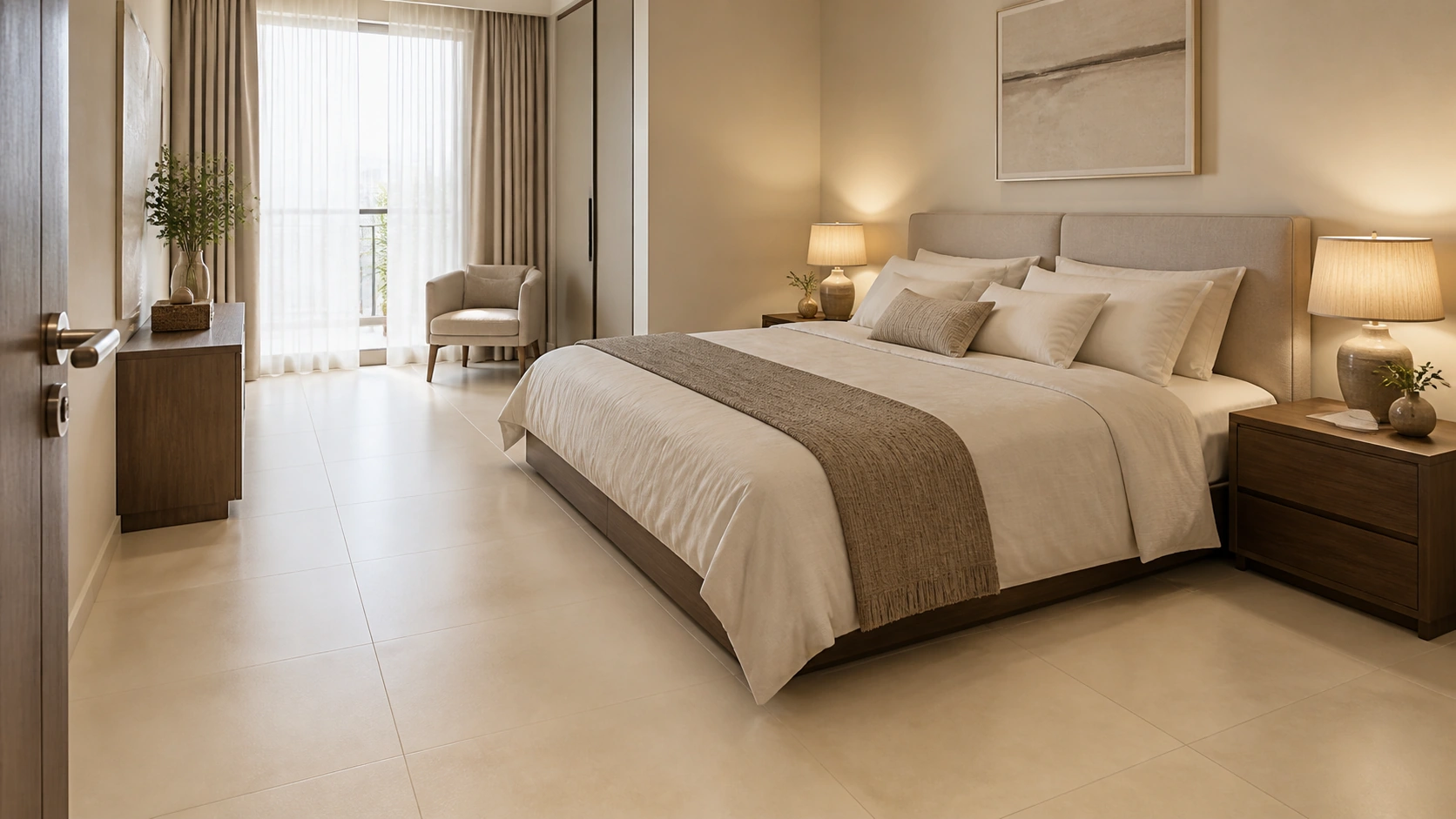
Stark white is giving way to ivory, greige, and warm off-whites as the base tone for floors and walls. The reasoning is the same as the broader warm shift: these tones brighten a room nearly as well as white while forgiving dust, water spots, and daily wear far better.
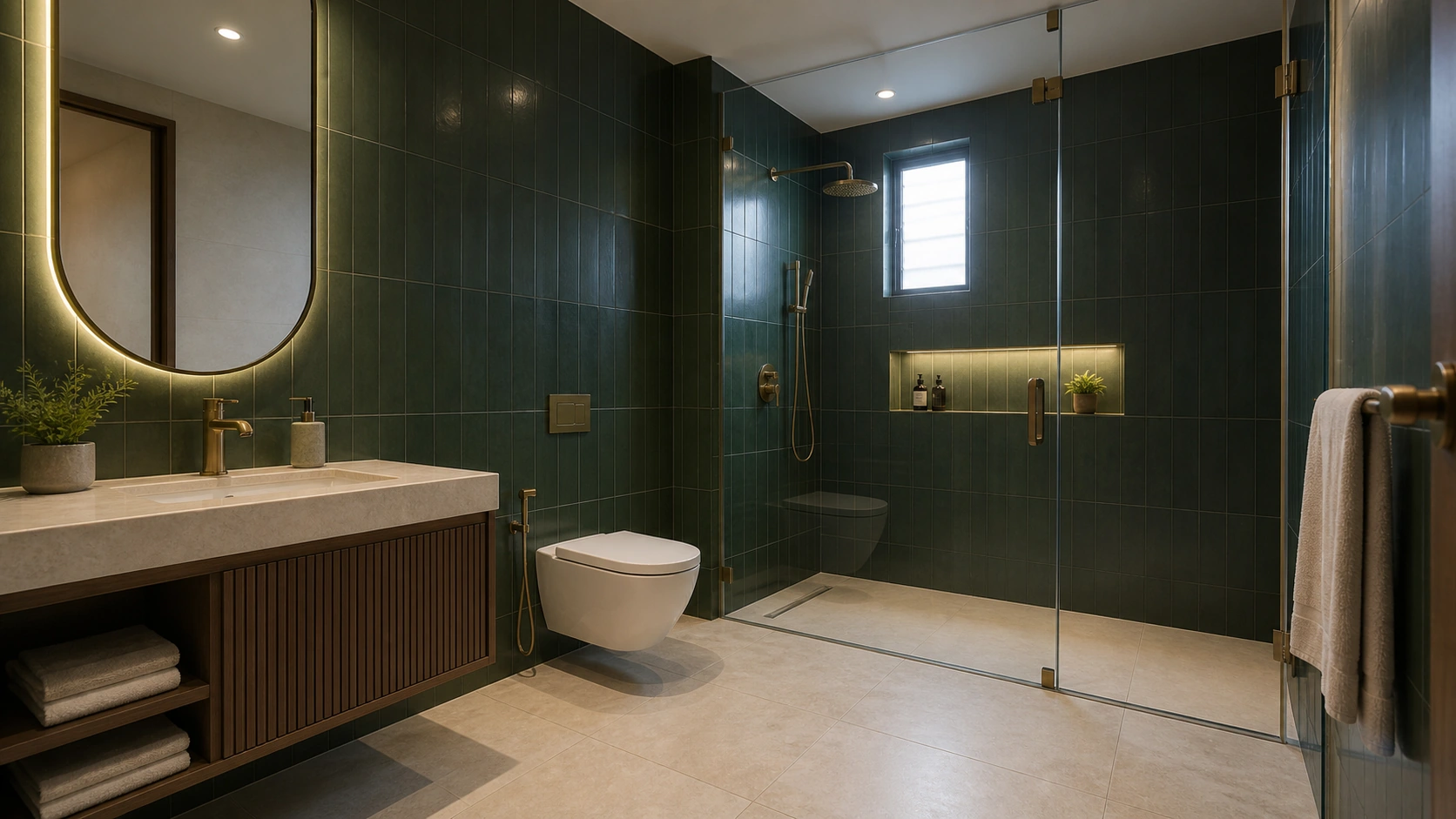
4. Deep Monochrome Bathrooms
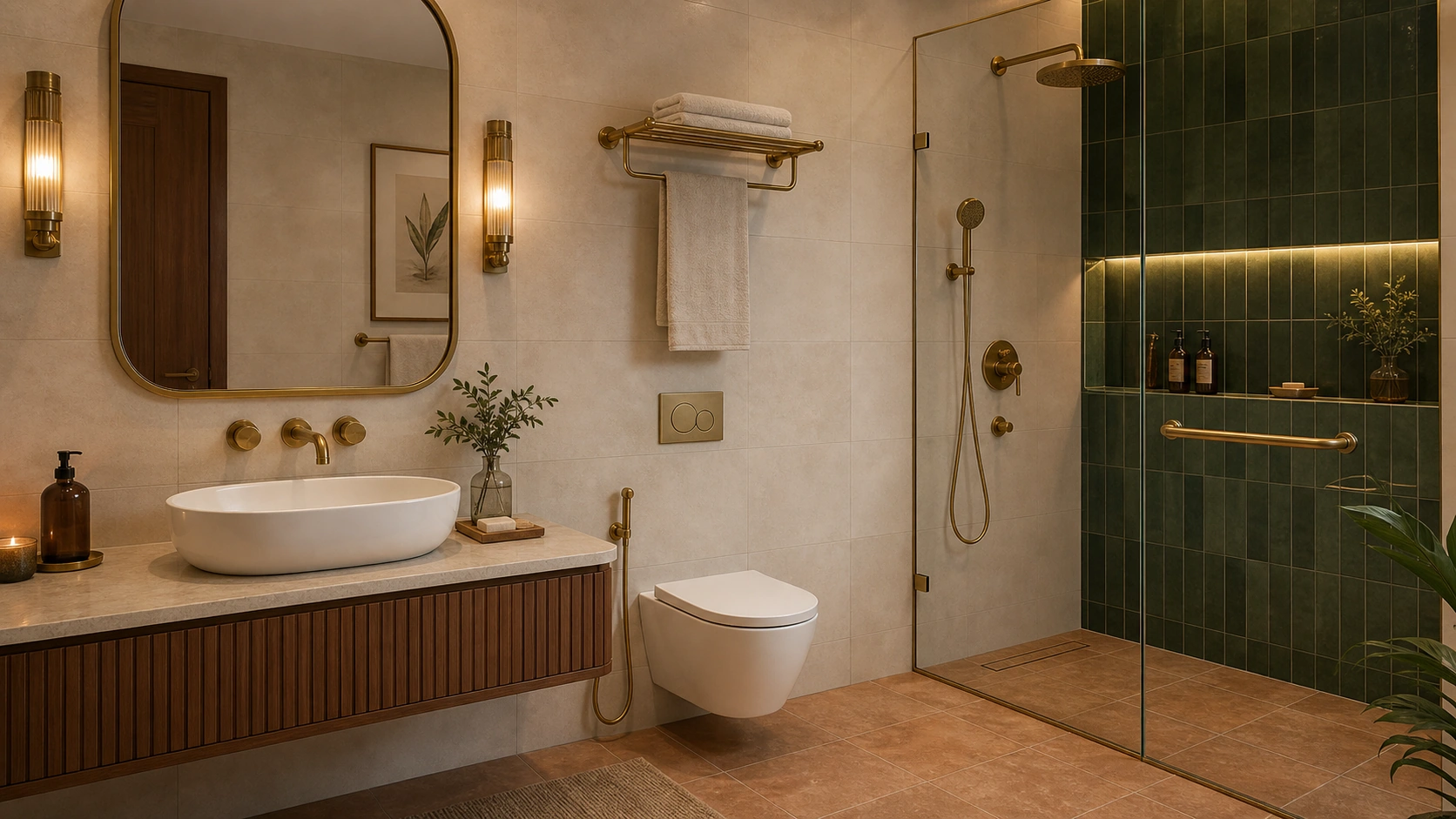
Bottle green, navy, charcoal-brown: the fully saturated single-colour bathroom is 2027's boldest mainstream move. The look works by drenching walls in one deep shade, then balancing it with light flooring and metallic fixtures so the space reads rich rather than dark.
5. Tone-on-Tone Checkerboard
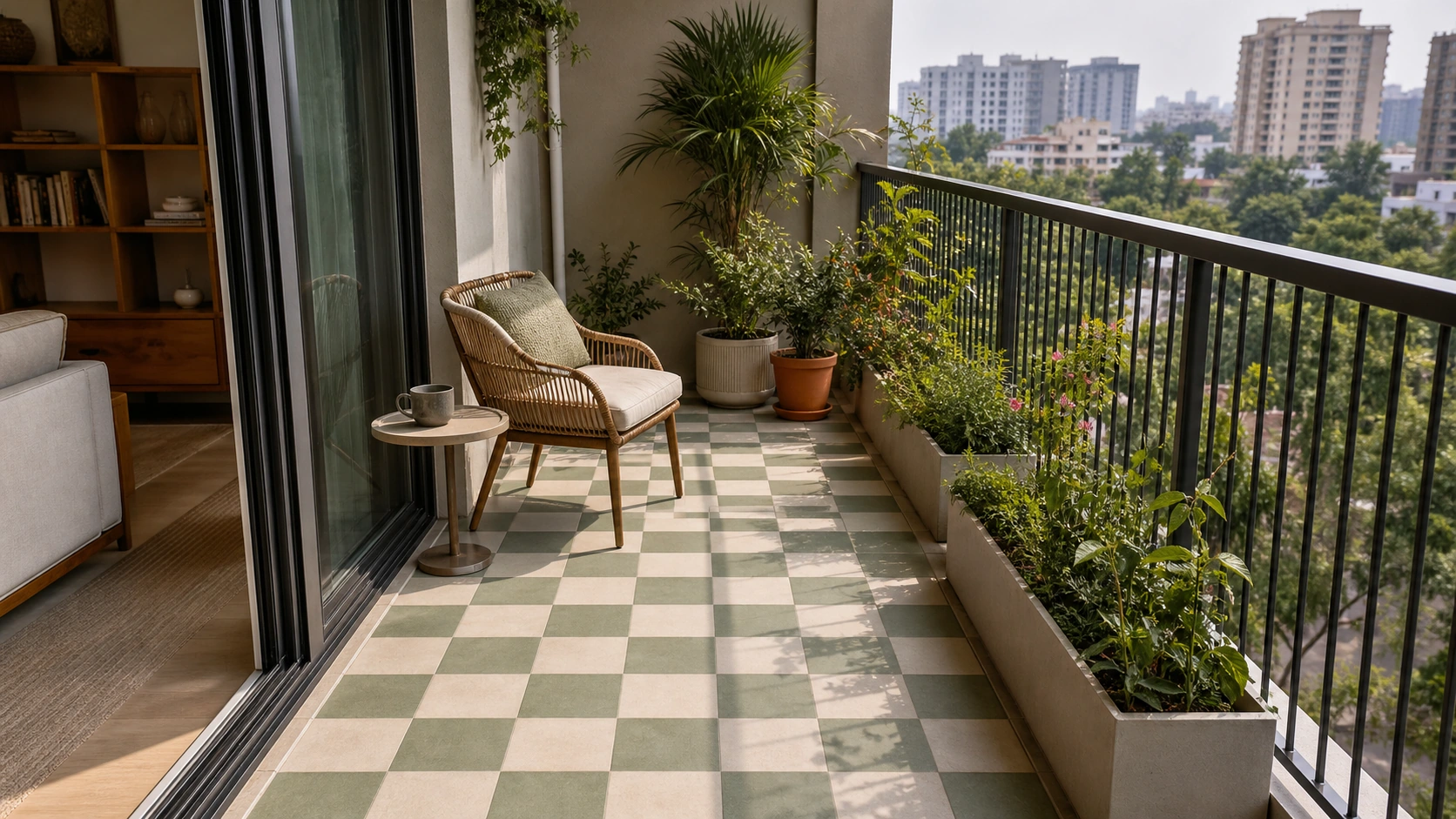
Checkerboard is back, but not the stark black-and-white version. The 2027 iteration pairs muted tones, sage with cream, sand with ivory, two greiges a shade apart, for a pattern that reads as texture from a distance. Balconies, utility areas, and compact bathrooms are its natural homes in Indian layouts.
Texture and Finish Trends
6. Fluted and Ribbed 3D Tiles
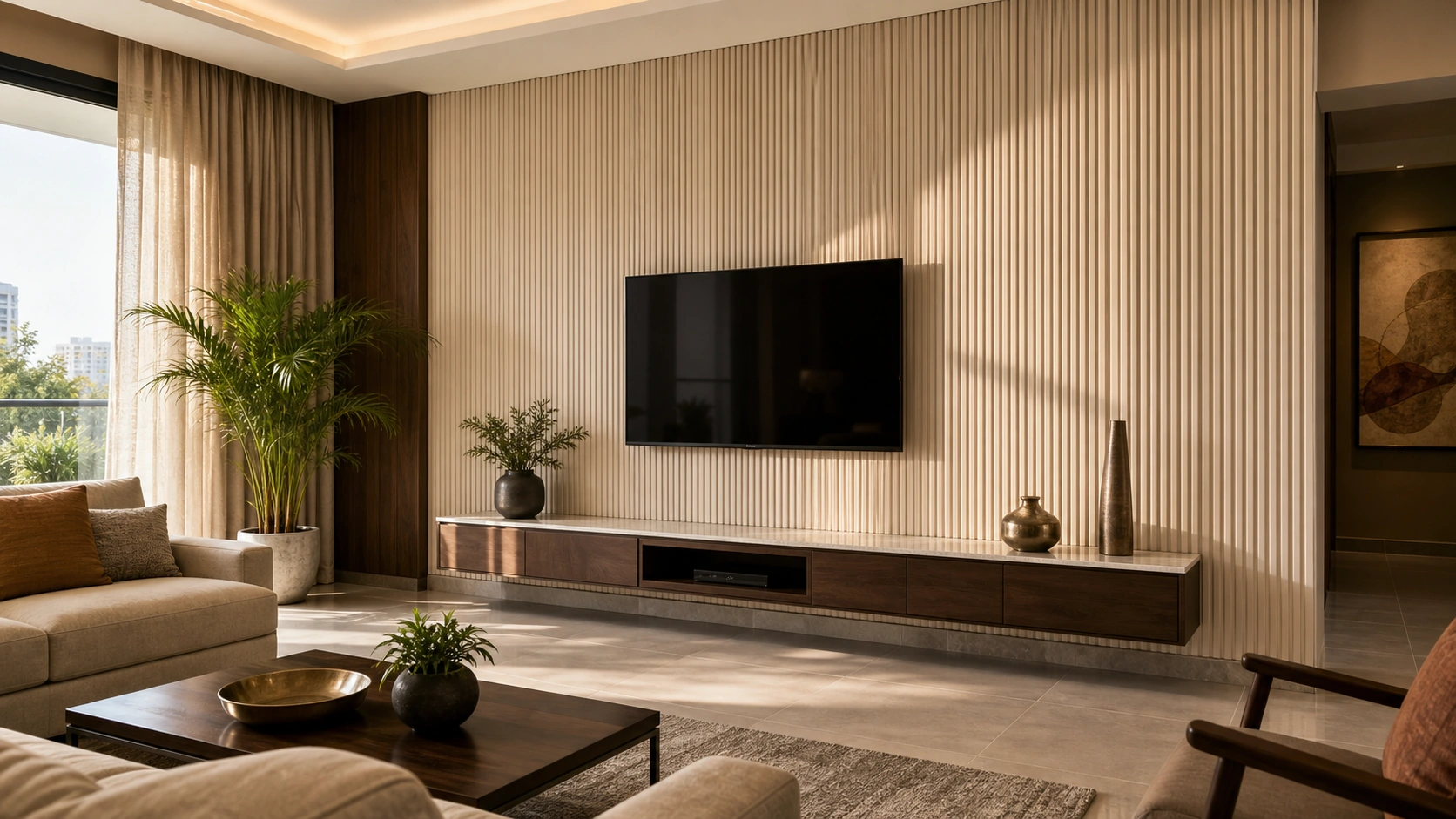
Sculptural tiles with raised vertical ribs are the defining texture of 2027. Their appeal is architectural: the ridges cast moving shadow lines as light shifts through the day, making a wall feel alive without any pattern or colour change.
These are wall tiles, full stop. Behind a vanity, framing a TV unit, or as a bathroom feature wall they are striking; on a floor the ridges would trap dirt and create a tripping surface. Indian manufacturers have moved into this category quickly, so pricing has already dropped from import-only levels to accessible mid-range.
7. Zellige and Handmade-Look Glazes
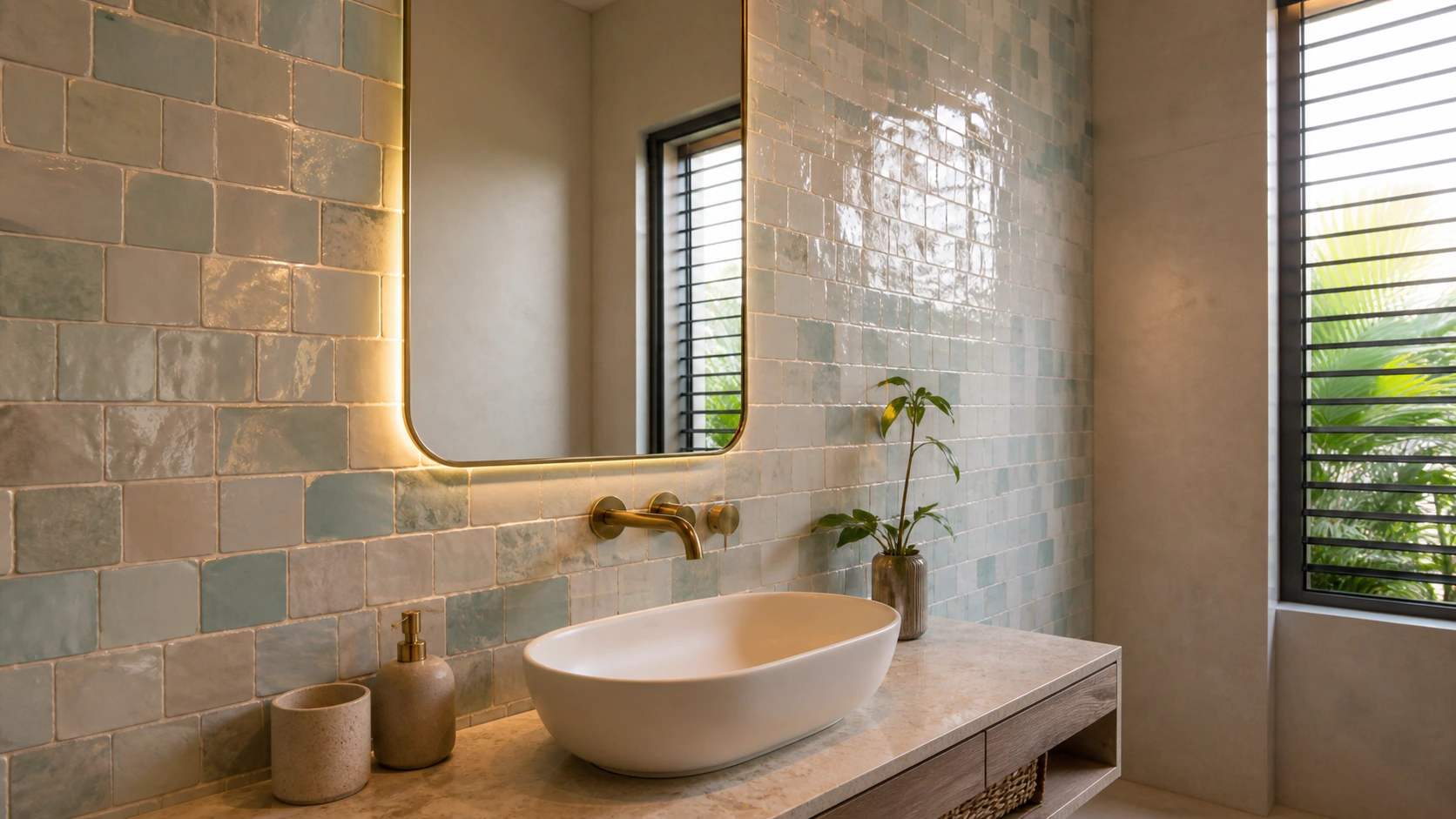
The handcrafted Moroccan look, glossy, tonally varied, deliberately imperfect, continues its run into 2027. The Indian market twist: rather than importing true handmade zellige, which is porous and expensive, buyers are choosing zellige-inspired porcelain and ceramic that recreates the tonal shimmer with standard-glaze maintenance.
8. Matte-First Finishes
Matte has completed its journey from alternative to default. For floors especially, Indian buyers now start at matte and need convincing to go glossy, a complete reversal from five years ago. The drivers are practical: better slip resistance, less glare under bright Indian daylight, and better hiding of water marks and footprints.
9. Encaustic Cement-Look Tiles
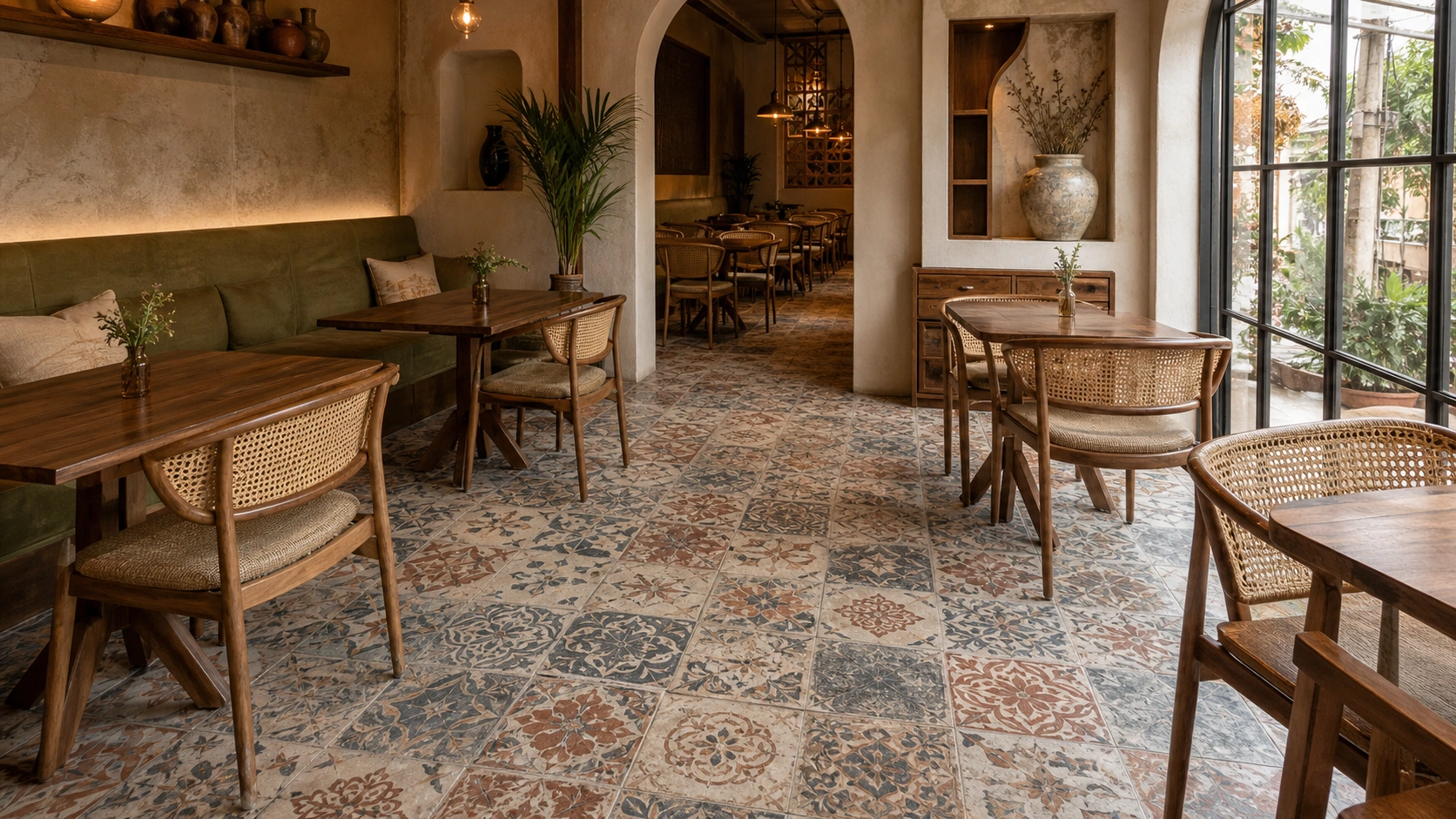
The hand-pressed cement tile aesthetic, faded florals, worn geometric motifs, a soft patina, is being reproduced in digitally printed vitrified tiles that carry none of the maintenance burden of real cement tiles. Expect these as statement floors in cafes, balconies, and heritage-styled homes.
10. Brass and Gold Accent Pairings
Less a tile trend than a styling direction that shapes tile choices: warm metallics are the fixture finish of 2027, and tiles are being selected specifically to flatter them. Earth tones, deep greens, and ivory bases all photograph and live beautifully against brushed brass, which partly explains their simultaneous rise.
Format and Layout Trends
11. Large-Format Slabs
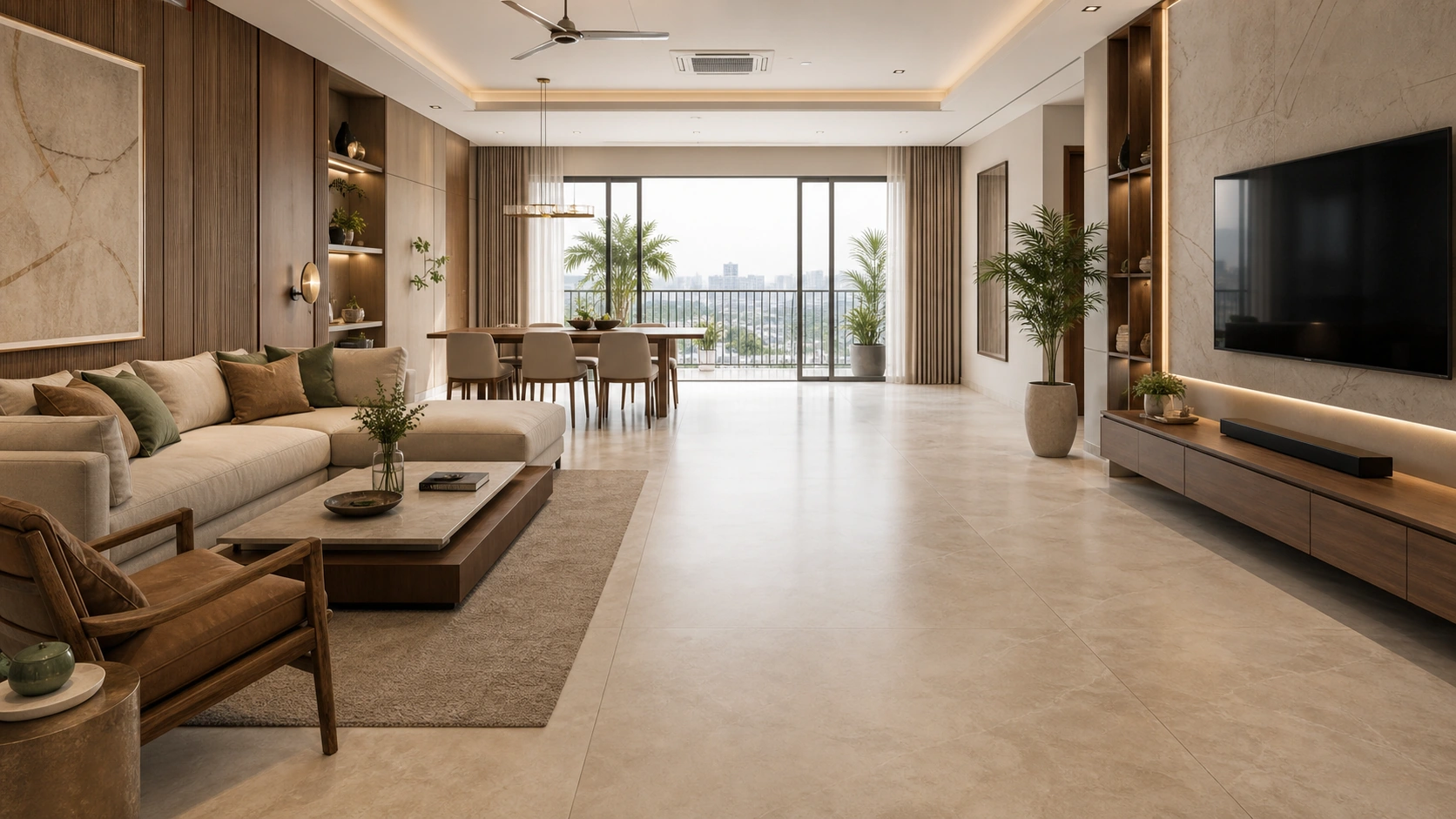
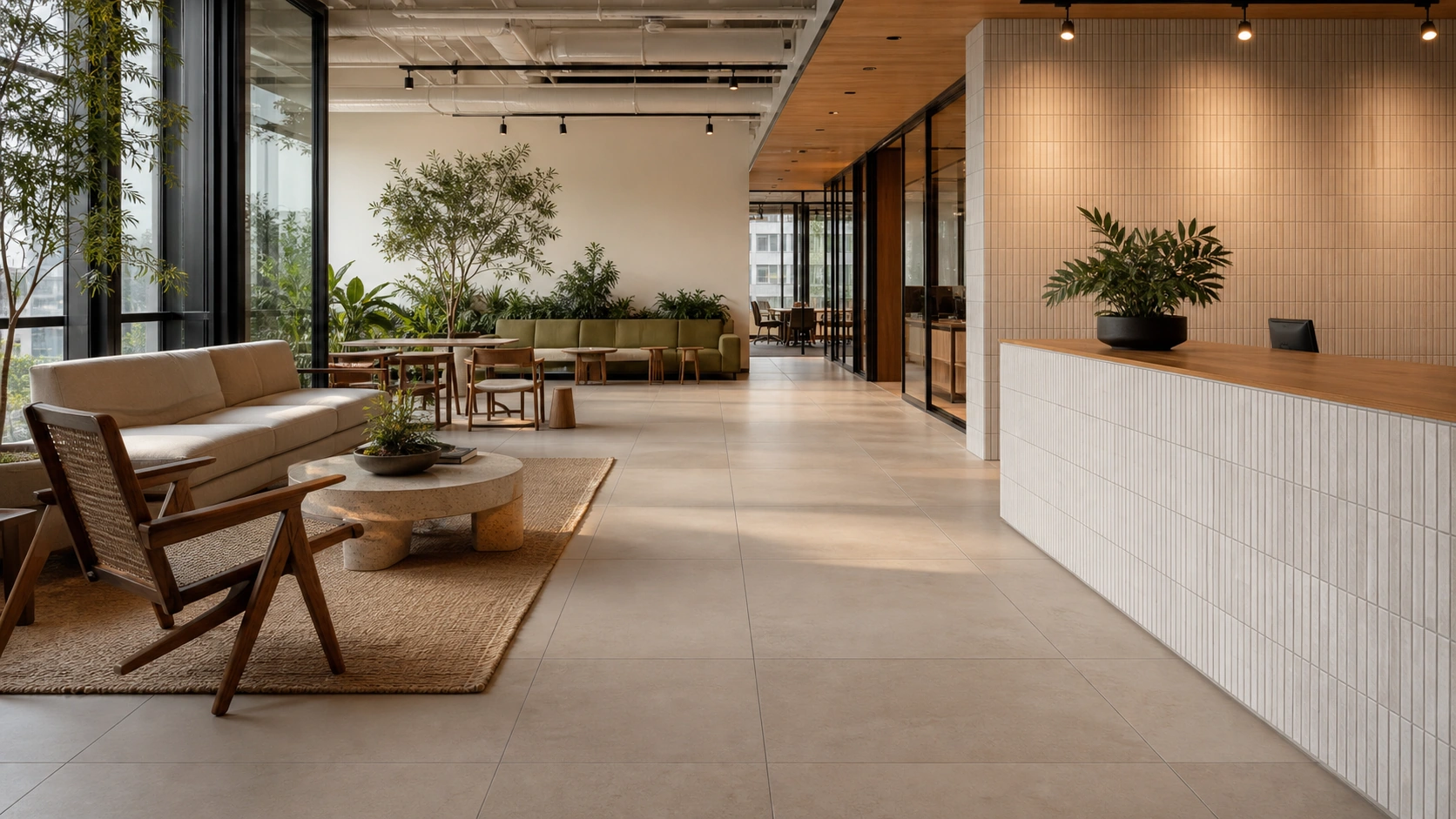
Formats like 800x1600mm, 800x2400mm, and 1200x2400mm have moved from showpiece to standard specification in premium Indian projects. Fewer grout lines mean cleaner sightlines, easier maintenance, and rooms that feel larger, the trio of benefits driving the format's dominance.
Two honest caveats: installation demands genuinely skilled labour to avoid lippage, the uneven edges that ruin the seamless effect, and handling wastage runs higher than standard formats. Budget for both before committing.
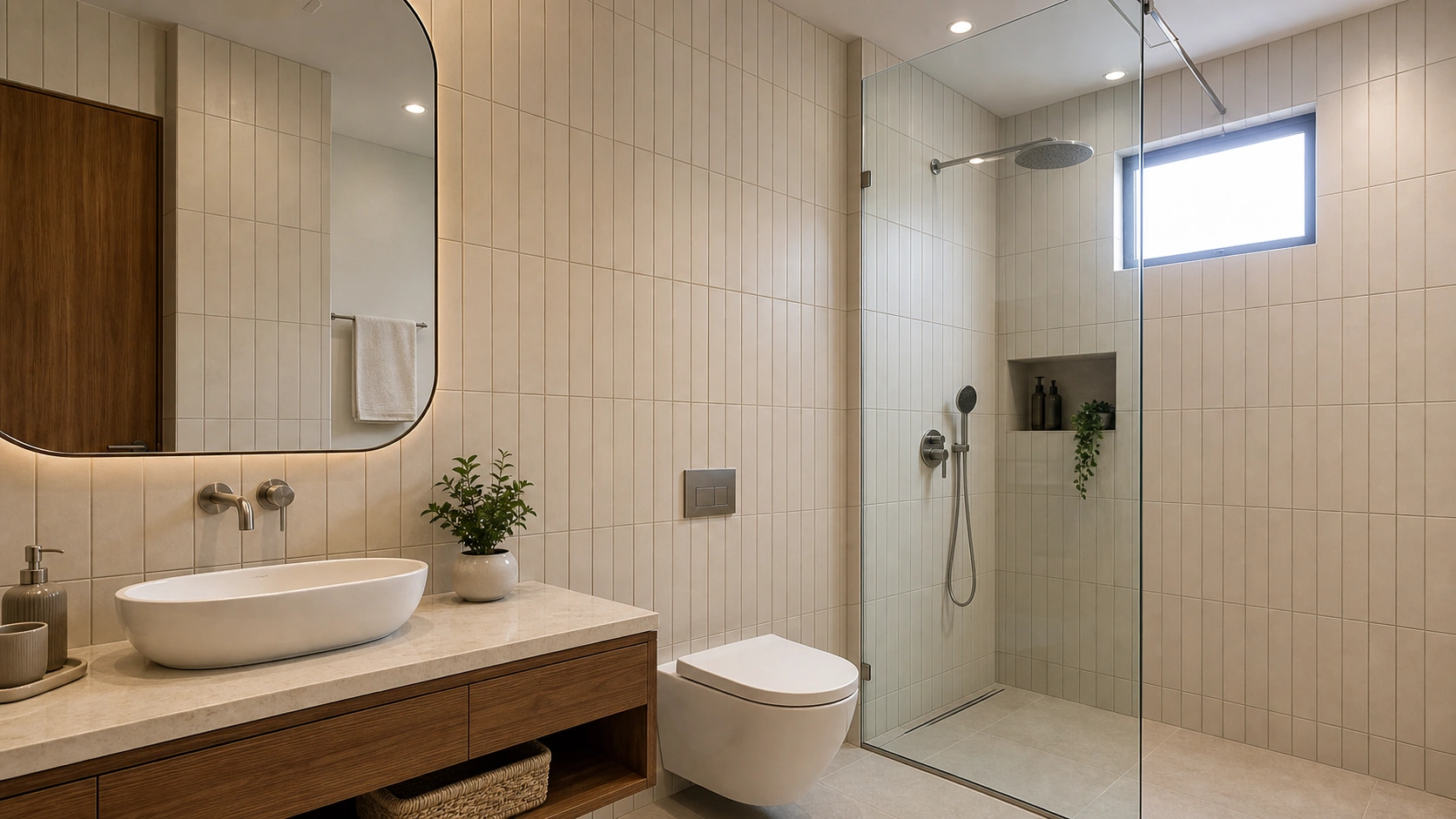
12. Vertical Stacked Layouts
The classic brick-offset subway layout is giving way to clean vertical stacking, tiles aligned in straight columns rather than staggered rows. The effect draws the eye upward and makes ceilings feel taller, a genuinely useful trick in standard 9 and 10 foot Indian apartment ceilings. Best of all, this trend costs nothing: it is a layout choice, not a product upgrade.
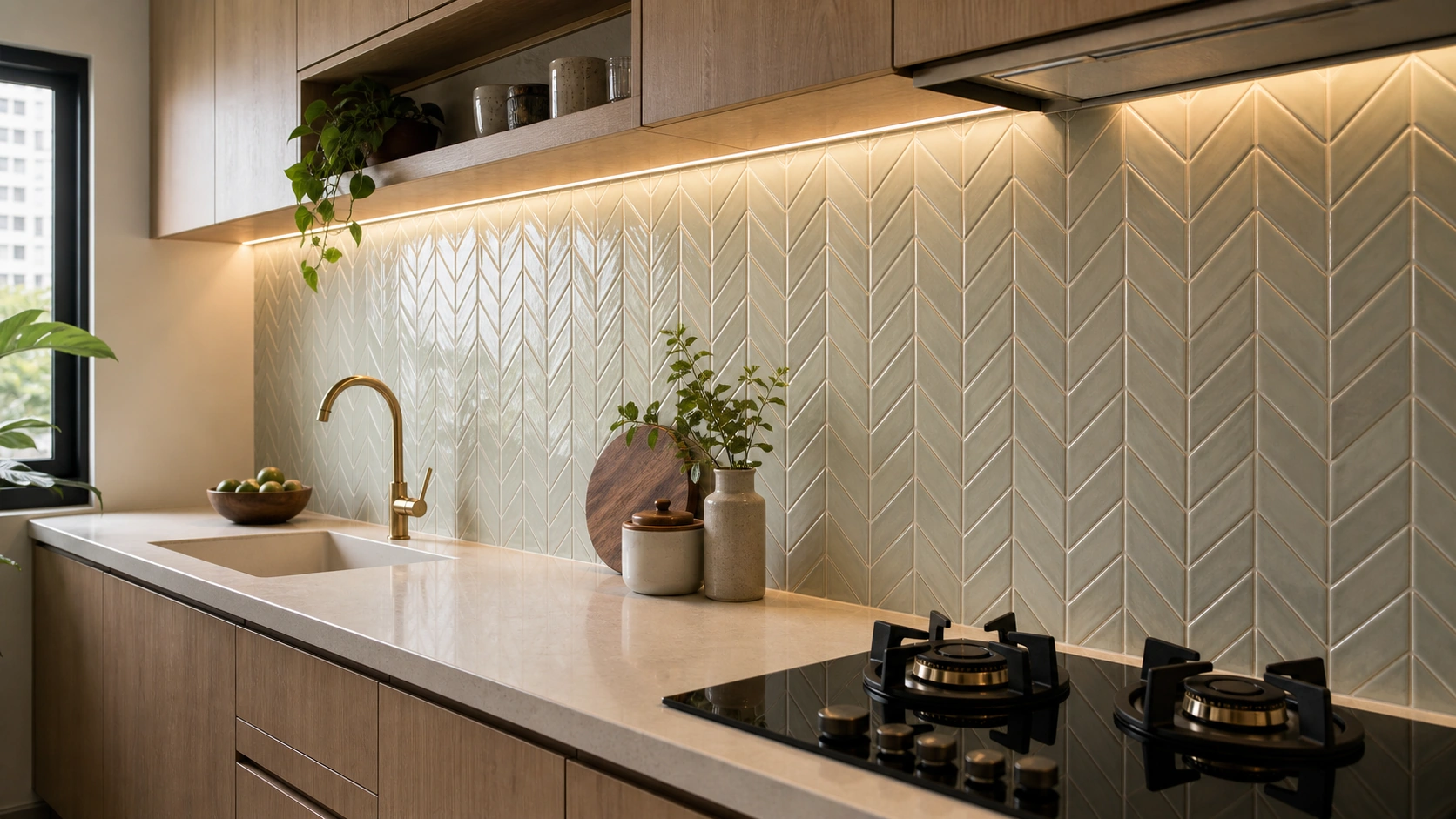
13. Elongated Herringbone and Chevron
Herringbone never really left, but 2027's version uses longer, slimmer formats that give the classic zigzag a more contemporary rhythm. Laid diagonally it visually widens narrow spaces, laid vertically on a backsplash it adds height, which is why designers keep returning to it.
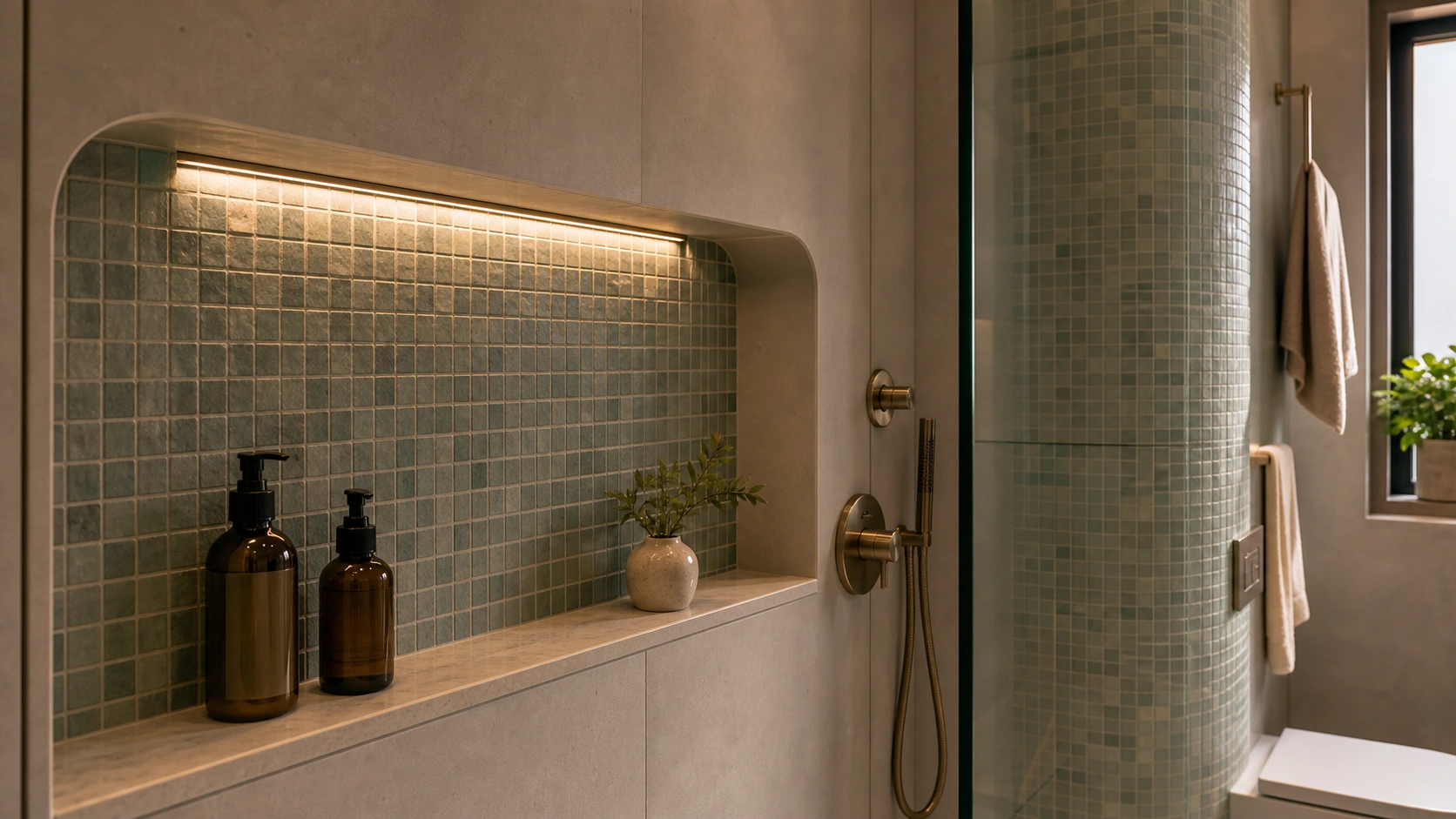
14. Small-Format Mosaic Comeback
After years of ever-larger tiles, small formats are returning in a supporting role: shower niches, curved surfaces, accent strips, and pool waterlines. The 2027 mosaic palette is muted and tonal rather than the multicolour glass mixes of the 2010s.
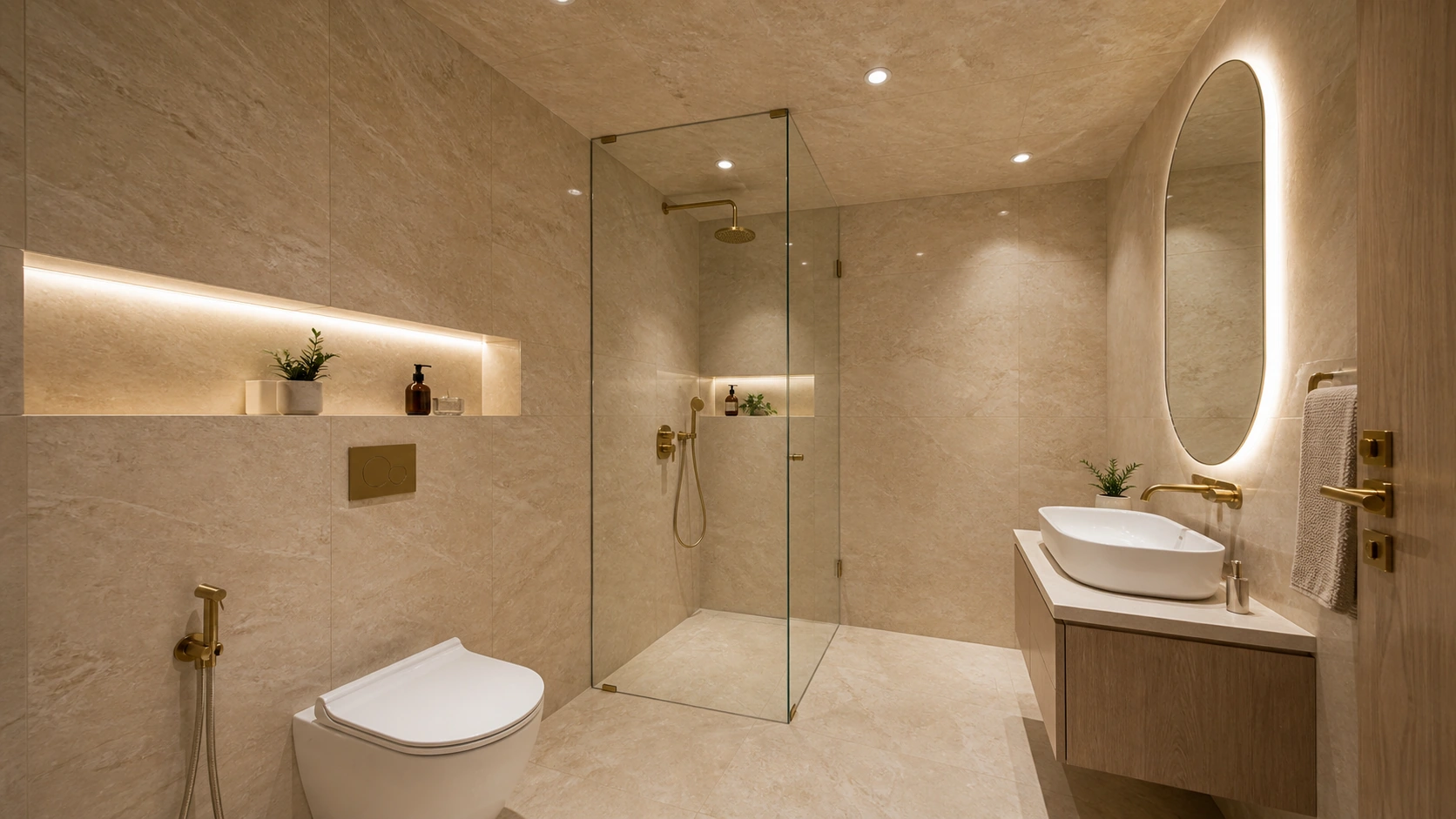
15. Tile Drenching
Running one tile continuously across the floor, walls, and even the ceiling, drenching, is the premium bathroom move of 2027. Removing every visual break makes compact bathrooms feel dramatically larger, which is exactly why the look suits Indian metro apartments where bathrooms rarely exceed 40 square feet.
Material-Look Trends
16. Rare Marble-Look Porcelain
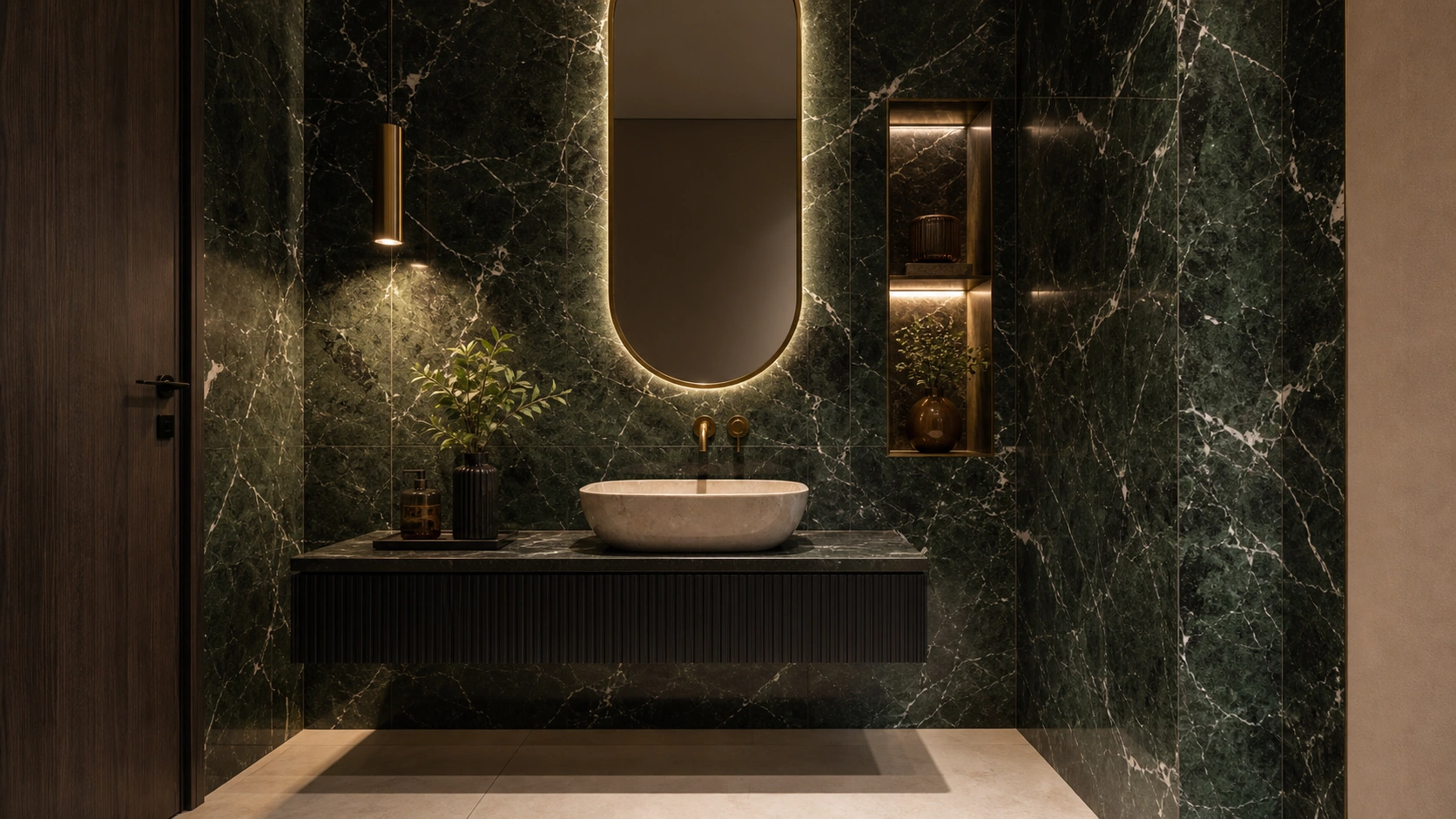
Marble-look is mature, so the frontier has shifted to rarer stones: deep green Verde Alpi, burgundy Rosso Levanto, heavily veined Calacatta Viola. Digital printing has become good enough that these dramatic looks are now available in vitrified tiles at a fraction of natural stone cost, and without the sealing upkeep.
17. Travertine and Limestone Looks
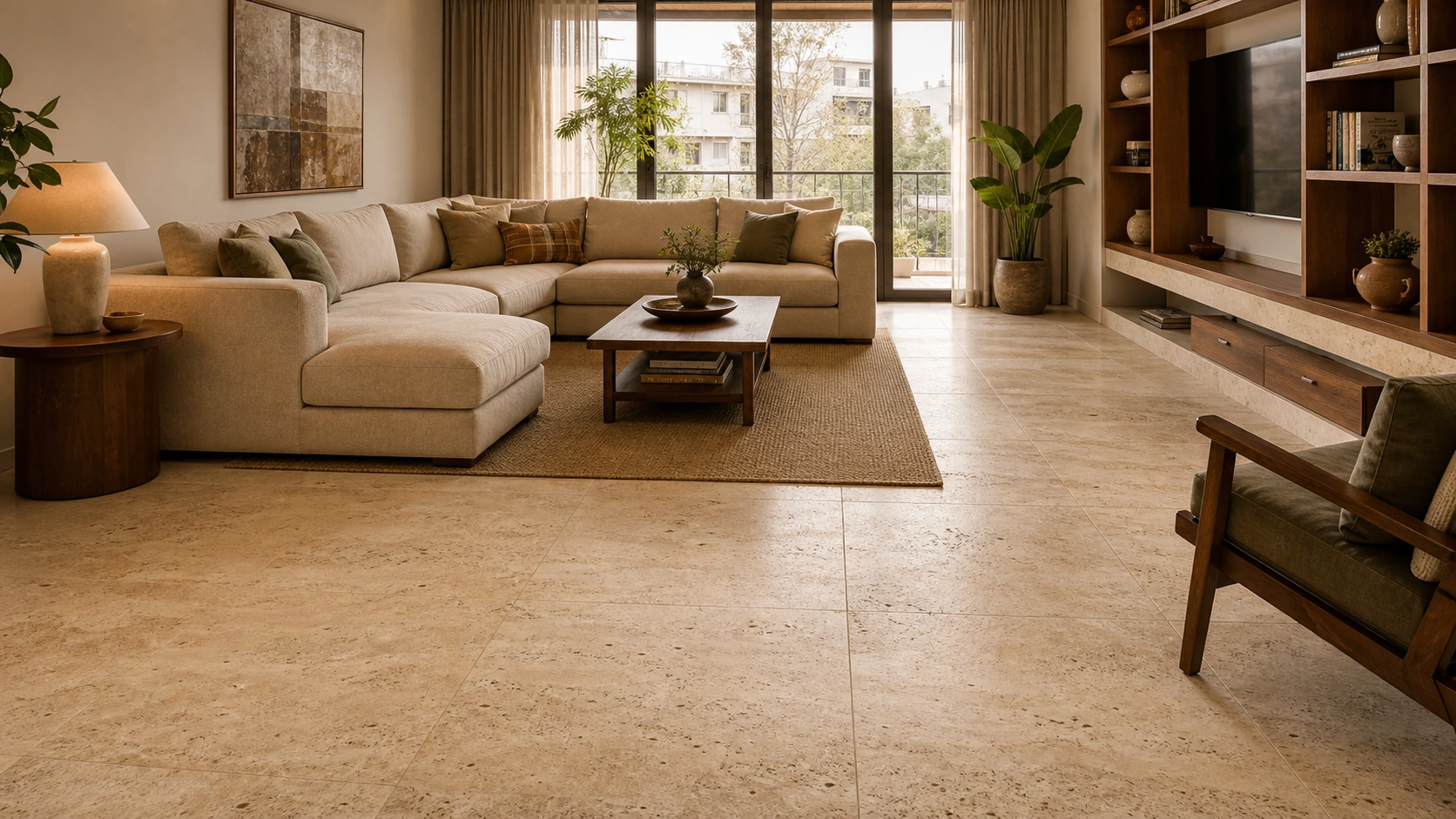
The soft, pitted texture of travertine, filled or unfilled, is the stone look of the moment internationally, and Indian manufacturers have followed quickly. Its warm beige-cream tonality slots directly into the broader earth-tone shift, making it a natural floor choice for the 2027 palette.
18. Granite-Look Vitrified Tiles
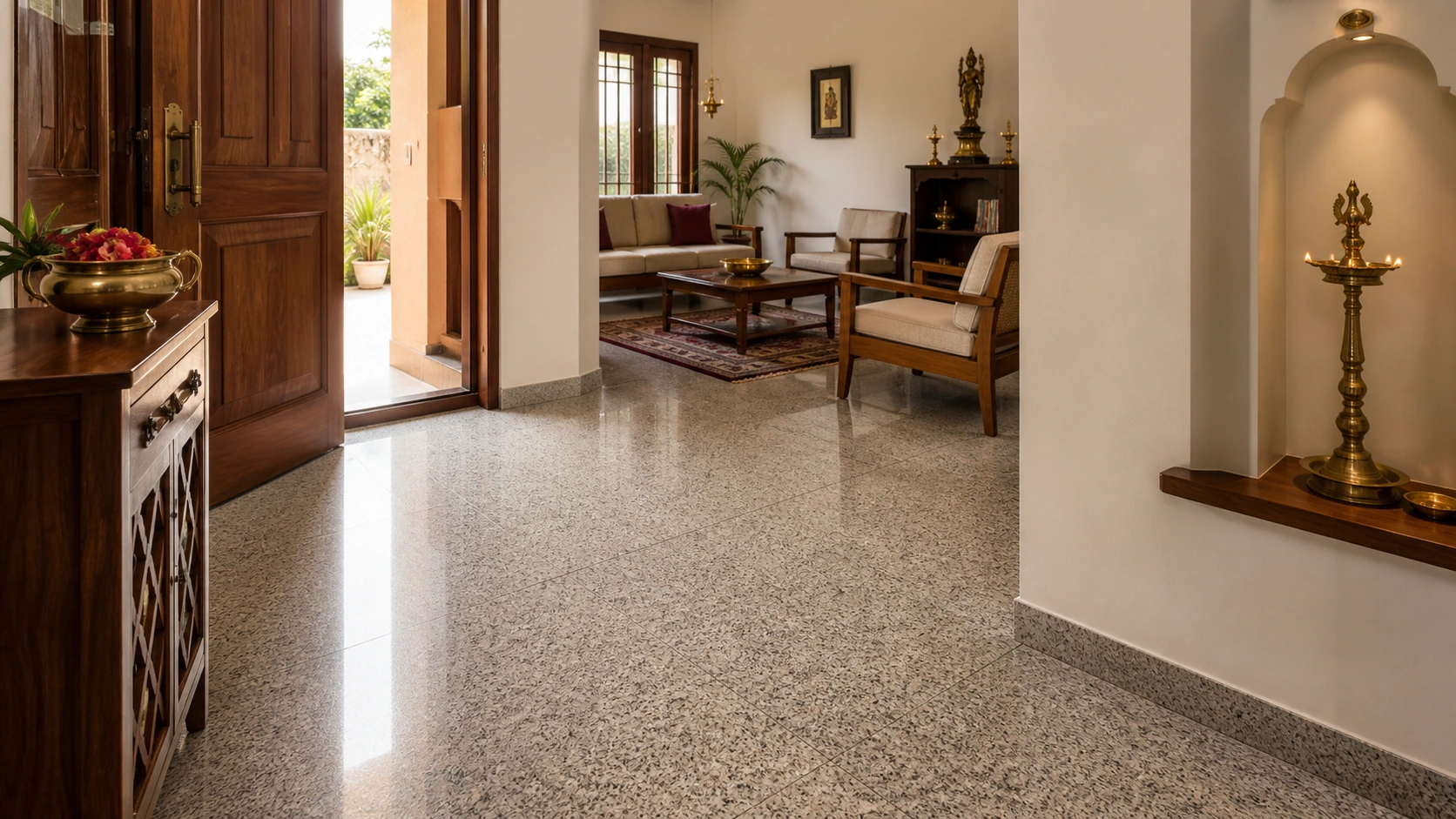
A distinctly Indian trend: granite has deep cultural preference in South Indian construction especially, and granite-look vitrified tiles now deliver the speckled depth of Rajasthan and Karnataka granites with easier installation and consistent batches. Expect this category to keep growing as buyers who grew up with granite floors renovate.
19. Terrazzo 2.0, Refined Speckle
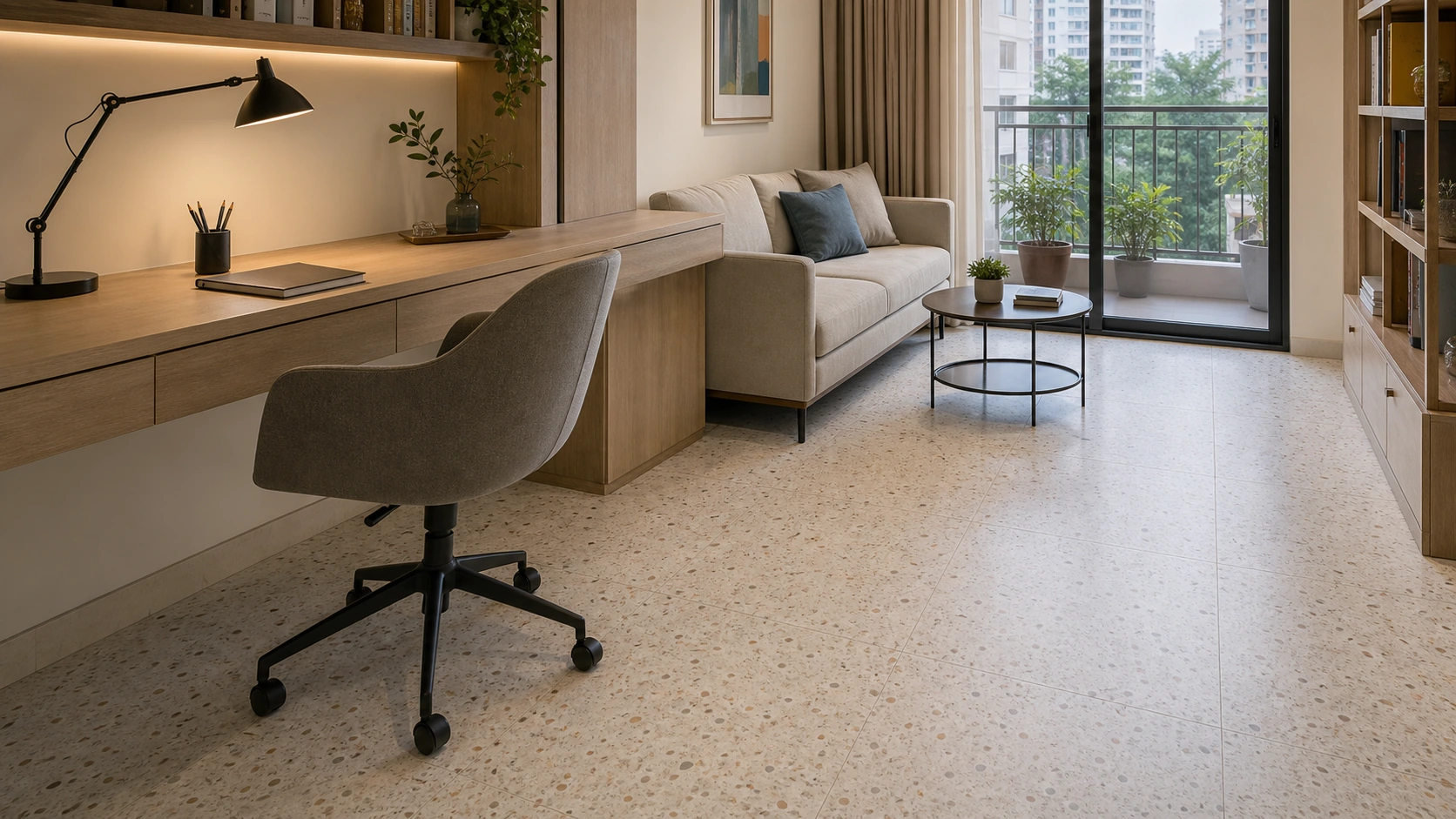
Terrazzo's comeback matures in 2027 into subtler territory: fine, tonal speckling in neutral bases rather than the bold confetti chips of its first revival. This quieter version works across larger areas without overwhelming a room, which is what limited the louder version.
20. Light-Tone Wood-Look Tiles
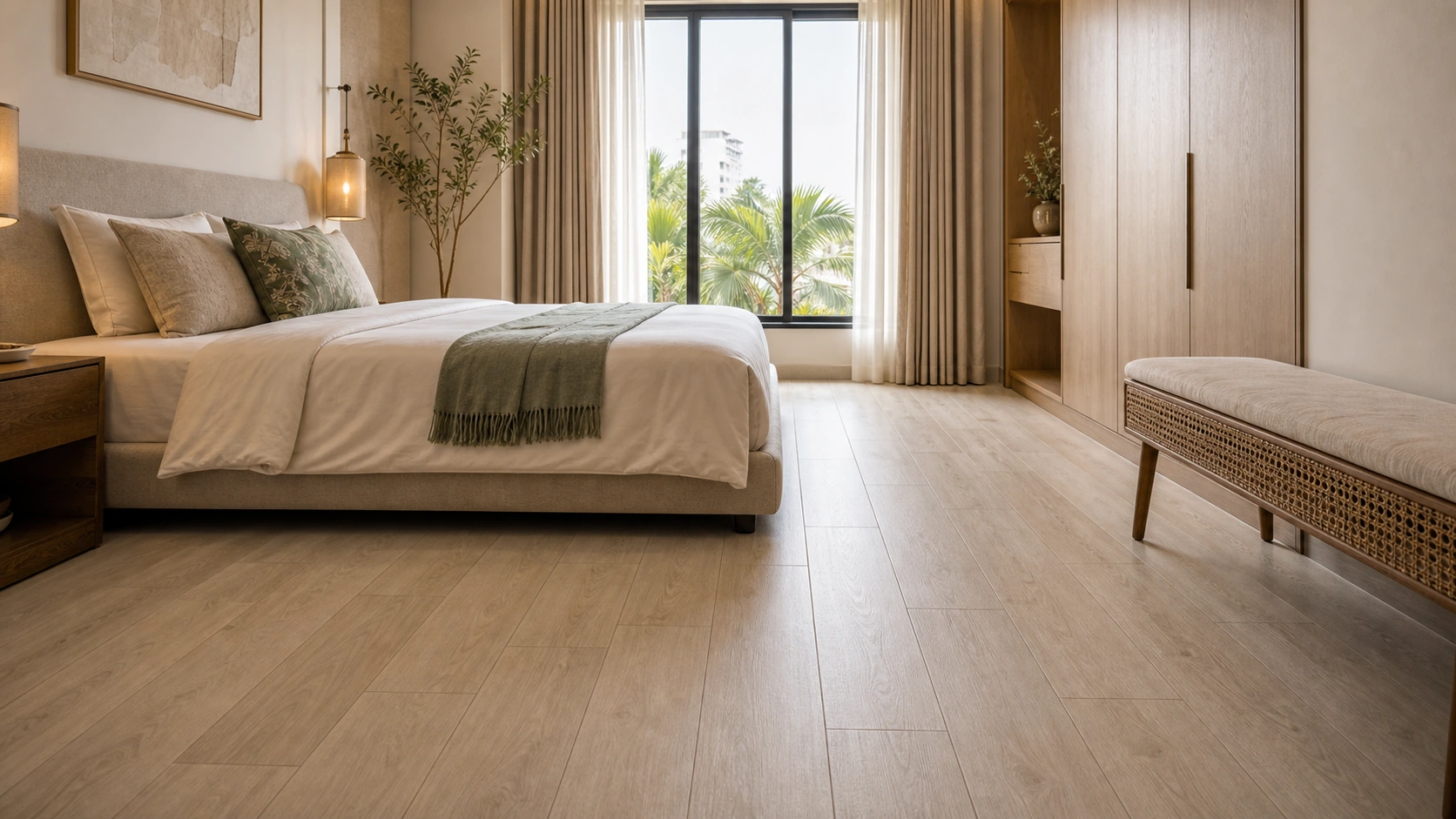
Wood-look remains one of India's most practical tile categories, delivering warmth without termite risk or humidity warping, and its 2027 evolution is tonal: pale oak, ash, and washed finishes replacing the dark walnut of earlier years, in step with the broader lightening of Indian interiors.
India-Specific and Functional Trends
21. Athangudi and Heritage Revival
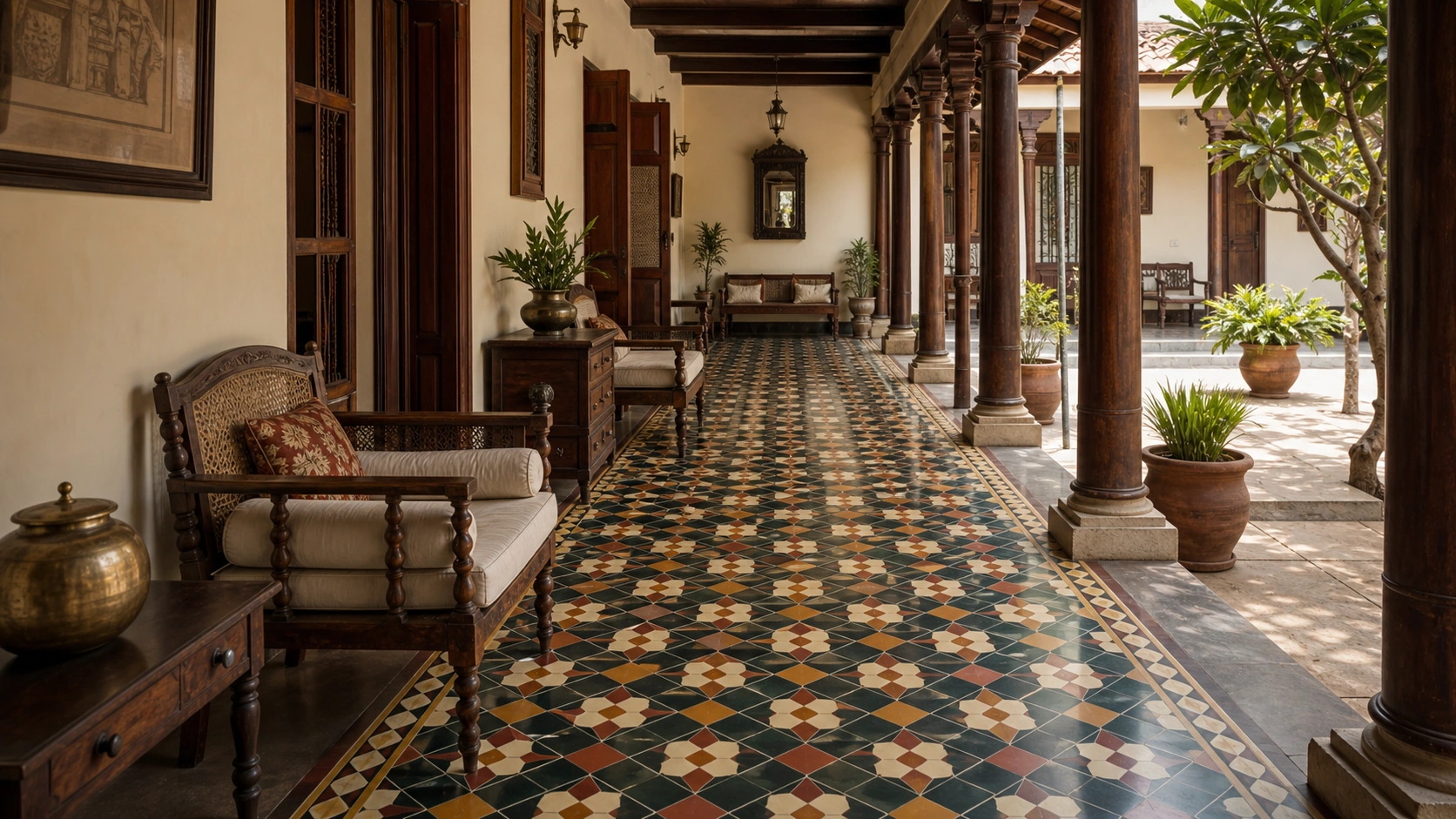
The handmade tiles of Chettinad, with their jewel-toned geometric and floral patterns, are having a genuine revival as Indian design leans into its own heritage rather than only importing global looks. Production remains small-batch and lead times run to weeks, but demand from designers restoring and referencing heritage homes keeps climbing.
For buyers who love the look but not the wait, digitally printed Athangudi-inspired vitrified tiles are emerging as the accessible route, another example of Morbi's print capability absorbing a trend quickly.
22. Jaali-Inspired Geometric Patterns
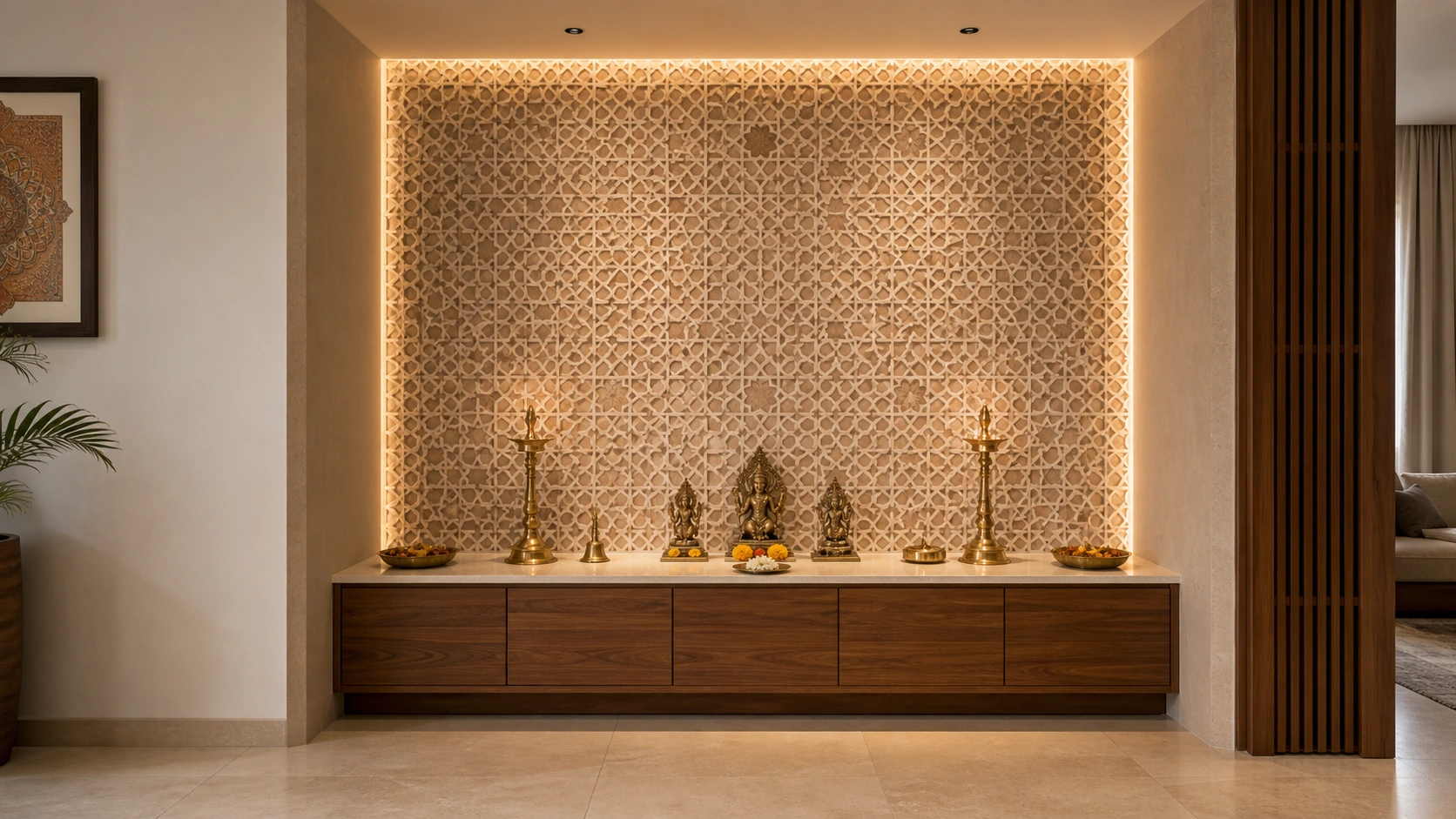
The perforated screen geometry of traditional Indian jaali work is translating into tile: repeating star, hexagon, and lattice motifs used on feature walls, pooja room surrounds, and elevation accents. It reads as unmistakably Indian while staying graphic and contemporary.
23. Indoor-Outdoor Continuity
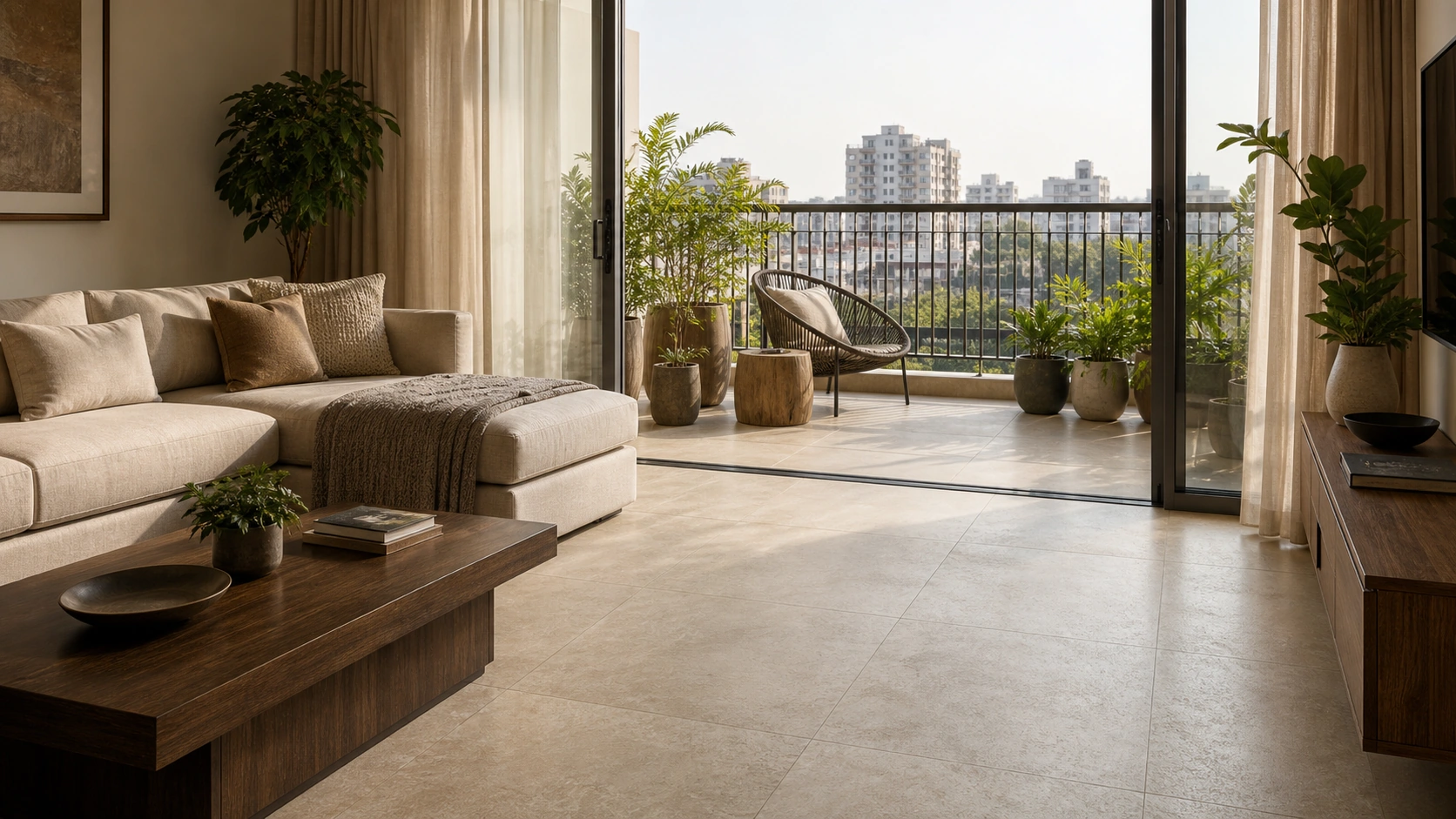
Running the same or visually matched tile from living room through to balcony is becoming standard in metro apartments, erasing the visual boundary and making both spaces feel bigger. The technical requirement: the outdoor portion must be an anti-skid, weather-rated version of the look, which manufacturers now produce as matched indoor-outdoor pairs.
24. Anti-Skid as a Design Feature
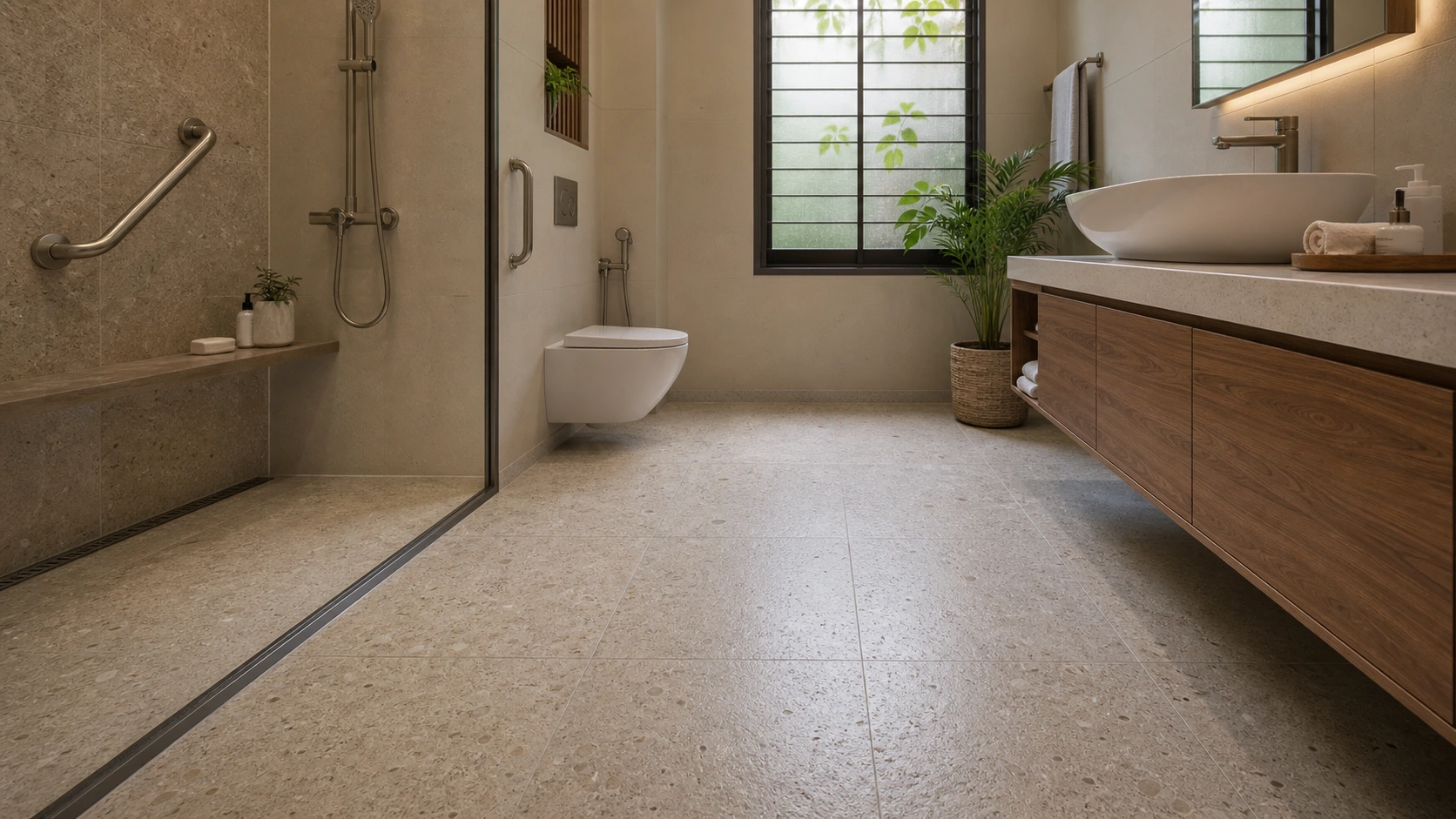
The quietest but most consequential shift on this list. Anti-skid tiles were long the plain, reluctant purchase for bathrooms and parking, but the category has been redesigned: matte textured finishes now come in wood-look, stone-look, and terrazzo-look designs good enough to choose on aesthetics alone.
With multi-generational households the norm and awareness of fall risk for elderly family members rising, expect anti-skid to be specified by default in far more rooms than before.
25. Recycled-Content and Low-Energy Tiles
Sustainability has moved from marketing language to specification reality: recycled-content bodies, thinner tile gauges that cut material use, and lower-energy kiln firing are increasingly documented by Indian manufacturers, partly driven by export requirements from European buyers. For domestic buyers, the practical entry point is asking suppliers for their recycled-content percentage, a question that increasingly has a real answer.
Note on Data Source
Trend directions were compiled from international ceramic exhibition coverage, design publication reporting, and Indian manufacturer catalogue movements, combined with editorial judgement on Indian market fit. Price bands are indicative market estimates. Staying-power assessments are editorial opinion, not guarantees, and should be presented as such when published.
Matching Trends to Rooms
Not every trend belongs in every room. This table pairs the strongest 2027 directions with the spaces where they genuinely work, and flags the common mismatches.
| Room | Strongest 2027 Trends | What to Avoid |
| Living room | Large-format slabs, granite-look, warm neutrals, wood-look | Small-format mosaic across full floors, high-gloss in homes with elderly members |
| Bathroom | Fluted feature walls, deep monochrome, matte anti-skid floors, tile drenching | Glossy floors of any kind, heavy pattern on every surface |
| Kitchen | Zellige-look backsplash, vertical stacked layouts, checkerboard accents | Porous cement-look near the hob without proper sealing |
| Balcony and outdoor | Anti-skid textured, indoor-outdoor continuity, terracotta tones | Polished finishes, marble-look without outdoor rating |
| Pooja room | Jaali-inspired patterns, Athangudi-style, warm ivory bases | Dark, heavily veined slabs that overpower a small sacred space |
| Elevation and exterior | Granite-look, full-body textured, stone-look claddings | Standard glazed wall tiles not rated for weather exposure |
What These Trends Cost to Adopt
Trend adoption in India spans an enormous price range, and several of the biggest looks of 2027 are layout choices that cost nothing extra at all.
| Budget Band (per sq ft) | Trends You Can Adopt | Where the Money Goes |
| Under Rs. 50 | Warm neutrals, ivory bases, matte finishes, vertical stacked layouts, granite-look ceramic | Standard ceramic and entry vitrified from Morbi manufacturers |
| Rs. 50-120 | Sage greens, checkerboard, wood-look, terrazzo-look, encaustic cement-look, jaali patterns | Mid-range GVT, digital printed designs, better anti-skid ratings |
| Rs. 120-300+ | Large-format slabs, fluted 3D walls, zellige-look, tile drenching, Athangudi handmade, rare marble looks | Premium GVT/PGVT, imported-look slabs, handmade and heritage production |
Which Trends Will Last, and Which Will Fade
An honest read on staying power: the warm-tone shift, matte-first finishes, large formats, granite-look, and anti-skid-as-design are structural changes that will define the next decade, not the next season. They solve real Indian problems, dust, glare, safety, maintenance, which is what separates a shift from a fad.
Tone-on-tone checkerboard, deep monochrome bathrooms, and terrazzo 2.0 sit in the middle: strong for three to four years, then likely to date. The safest way to enjoy them is on small, changeable surfaces, a balcony floor, one feature wall, a backsplash, rather than a full-house commitment.
Zellige-look and fluted textures are the hardest calls. Both are everywhere in 2027, which is exactly what eventually dates a look. Used in one well-lit statement location they will age gracefully; wrapped around every wall of a home they will timestamp it.
Adopting Trends Without Regret: A Short Checklist
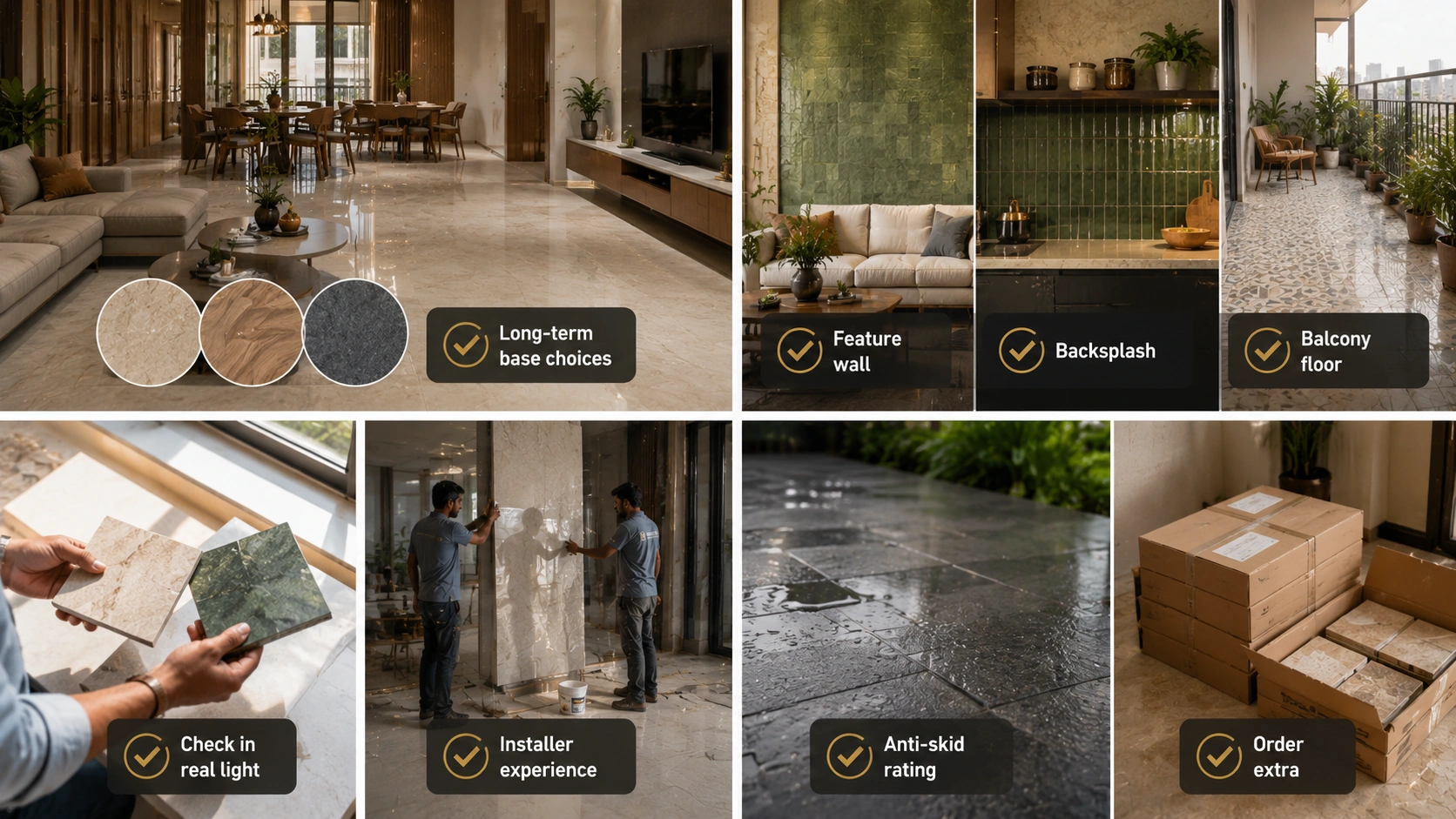
- Keep the largest surfaces, main floors especially, in long-term choices: warm neutrals, wood-look, granite-look, stone-look
- Spend trend money on small, high-impact zones: one feature wall, a backsplash, a balcony floor
- Order physical samples and view them in your home's actual light, since earth tones and greens shift dramatically between showroom and daylight
- For large formats, confirm your installer has laid 800x2400mm or larger before, and ask to see the work
- For any wet or outdoor area, confirm the anti-skid rating in writing rather than trusting the word matte
- Order 7 to 10 percent extra of any trend tile, since reordering a discontinued design a year later is often impossible
Finding These Trends in Your City
The gap between reading about a trend and standing in front of the actual tile is real, fluted profiles and granite-look slabs reached metro showrooms a full season before smaller cities saw them. TilesFinders tracks verified tile suppliers city by city across India, so once a look from this list makes your shortlist, a quick search shows who actually stocks it near you before your design plan gets locked.
FAQs
Warm earth tones, terracotta, ochre, sand, and warm ivory, are set to displace the cool greys that dominated the last decade. Sage and olive greens are the strongest accent shades, and deep monochrome schemes in bottle green or navy are gaining ground in bathrooms specifically.
For open living areas, generally yes. Formats like 800x2400mm and 1200x2400mm cut grout lines dramatically, which makes rooms feel larger and cleaner. The tradeoffs are real though: higher per-square-foot pricing, more skilled installation to avoid lippage, and higher wastage if a slab cracks during handling.
Fluted tiles carry raised vertical ribs that create shadow lines as light moves across them through the day. They are a wall treatment, best behind a vanity, a TV unit, or as a bathroom feature wall, and are not suited to floors, where the ridges would collect dirt and create an uneven walking surface.
The look works well, but true handmade zellige is porous and irregular, which complicates cleaning behind a hob. The practical 2027 route is zellige-inspired porcelain or ceramic, which recreates the tonal variation and glossy depth with the easier maintenance of a standard glazed tile.
Grey is not disappearing, but it is no longer the default. The shift is toward warmer bases, ivory, sand, greige, with grey moving into a supporting role. An all-grey floor laid today will read as a 2018-2022 choice rather than a current one.
Tile drenching means running the same tile across floor, walls, and sometimes the ceiling for a continuous, wrapped effect. It actually suits small bathrooms particularly well, since removing visual breaks makes a compact space feel larger, though it demands precise installation and a bigger tile budget.
Availability is improving but still limited. Athangudi tiles are handmade in the Chettinad region and produced in small batches, so most buyers outside South India order through specialist dealers or online platforms rather than walking into a local showroom. Lead times of several weeks are normal.
Put trends on surfaces that are cheap to change and keep foundations neutral. A fluted feature wall or checkerboard balcony floor covers 40 to 80 square feet and can be redone affordably, while a full-house floor in a trend colour is a decade-long commitment. The safest structure: timeless floors, trend-led accents.
Yes, and this is one of the quietest but most important shifts. Anti-skid tiles were once a plain, utilitarian category, but manufacturers now produce matte textured finishes in wood-look, stone-look, and terrazzo-look designs, so safety no longer means settling visually.
Nearly all of them are produced domestically. Morbi's manufacturing cluster has moved quickly into large-format slabs, fluted profiles, and digital-print looks including granite, travertine, and terrazzo effects, while heritage categories like Athangudi remain genuinely handmade in Tamil Nadu. Imports now compete mainly at the very top of the premium slab market.
