Red Tiles for Indian Homes: Colour Psychology, Vastu and Where to Use
June 13, 2026 5
Learn where red tiles work best in Indian homes, including Vastu guidance, colour psychology, room-wise applications, tile types, and pricing.
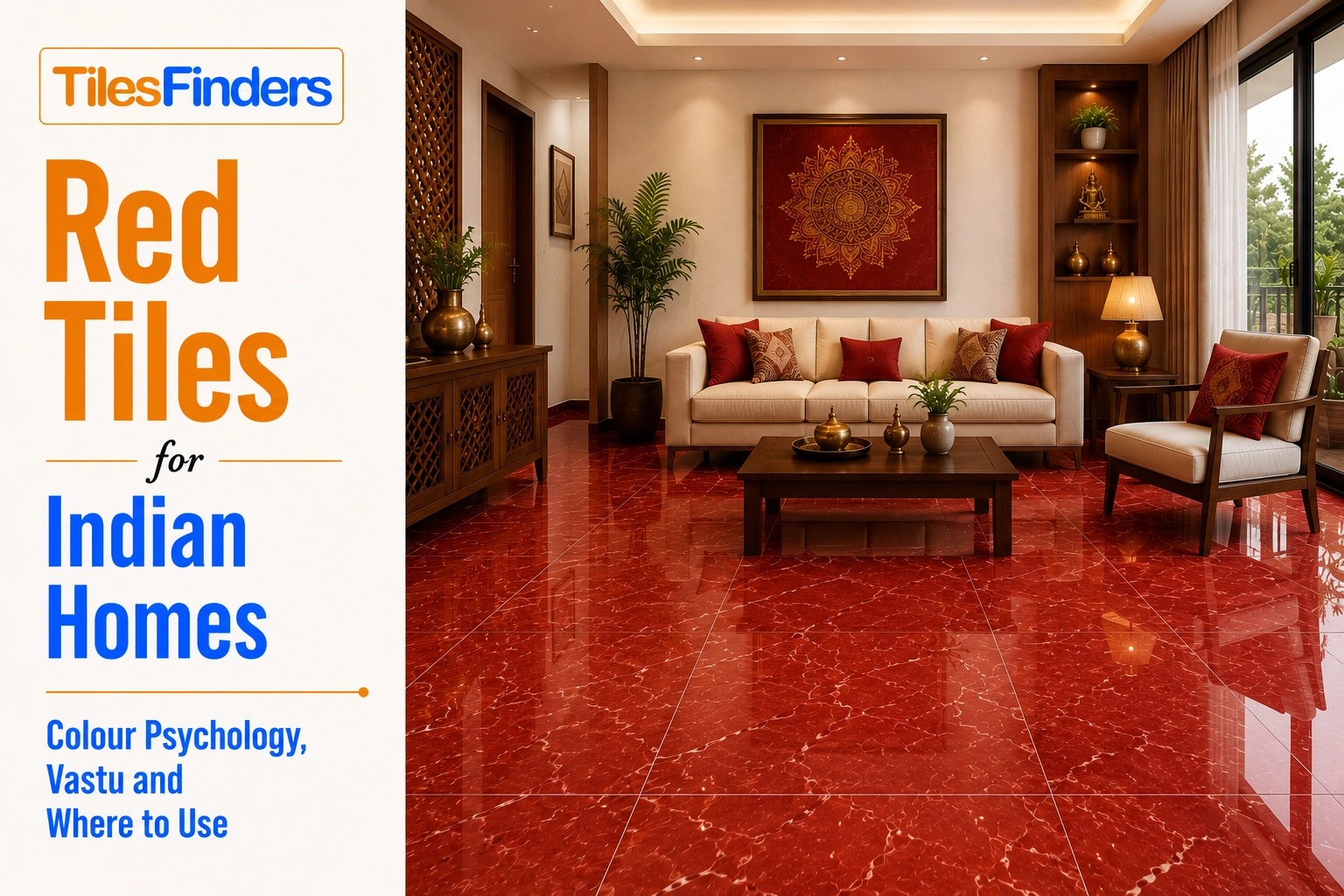
Red tiles can add warmth, energy, and cultural significance to Indian homes when used thoughtfully. Terracotta and brick-red shades work well for floors, entrances, and pooja rooms, while wine-red tones are best suited for feature walls. Vastu generally favours red in active spaces like kitchens, pooja rooms, and south-facing areas but discourages it in bedrooms and study rooms. Choosing the right shade, finish, and tile category is key to achieving a balanced and practical design.
Red tiles for Indian homes carry weight that no other colour carries. Red is the colour of sindoor, of kumkum, of marigold garlands against a temple door. It shows up at every auspicious occasion in Indian life. When it comes to tiling, that cultural weight means red is both widely loved and widely misunderstood.
Indian buyers either use red tiles with complete confidence in specific spaces like pooja rooms and traditional entrance areas, or avoid them entirely because they worry the colour will overwhelm a room or conflict with Vastu. Both approaches miss the range of what red tiles actually offer in 2026.
This guide covers the colour psychology of red in Indian interiors, what Vastu shastra actually says about red in different rooms, the shade differences between terracotta, brick red, and wine red, which tile categories work for floors versus walls, and which rooms in an Indian home benefit from red tiles and which do not.
What Red Tiles Mean in Indian Interiors
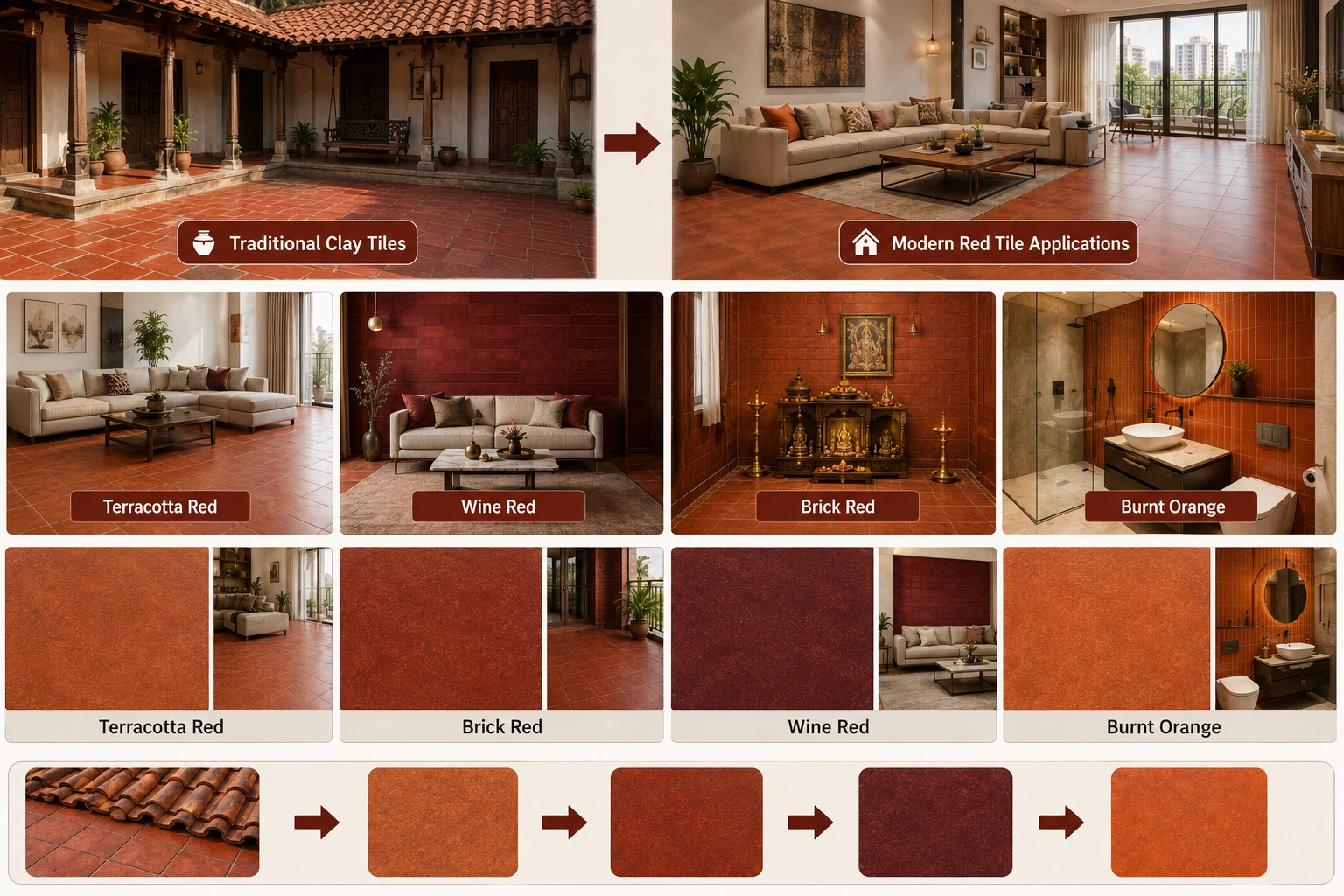
Red has been a floor and wall material in Indian architecture for centuries. Traditional Indian homes used locally fired brick-red clay tiles long before vitrified technology arrived. The colour carries associations with auspiciousness, warmth, energy, and celebration that are specific to Indian culture.
In contemporary Indian homes, red tiles appear across a range of applications: terracotta-look GVT on living room floors that references traditional Indian craft, deep wine-red accent walls in modern drawing rooms, brick-red tiles in pooja rooms, and burnt orange bathroom feature walls. Each application uses a different shade of red, a different tile category, and a different finish.
Understanding that red tiles in India are not a single product but a family of shades and applications is the starting point. The differences between terracotta red, brick red, and wine red in terms of where they work are covered in detail in the guide on terracotta red vs brick red vs wine red tiles for Indian spaces. This pillar focuses on the framework: where red works, where Vastu applies, and which categories to use.
Colour Psychology of Red in Indian Home Design
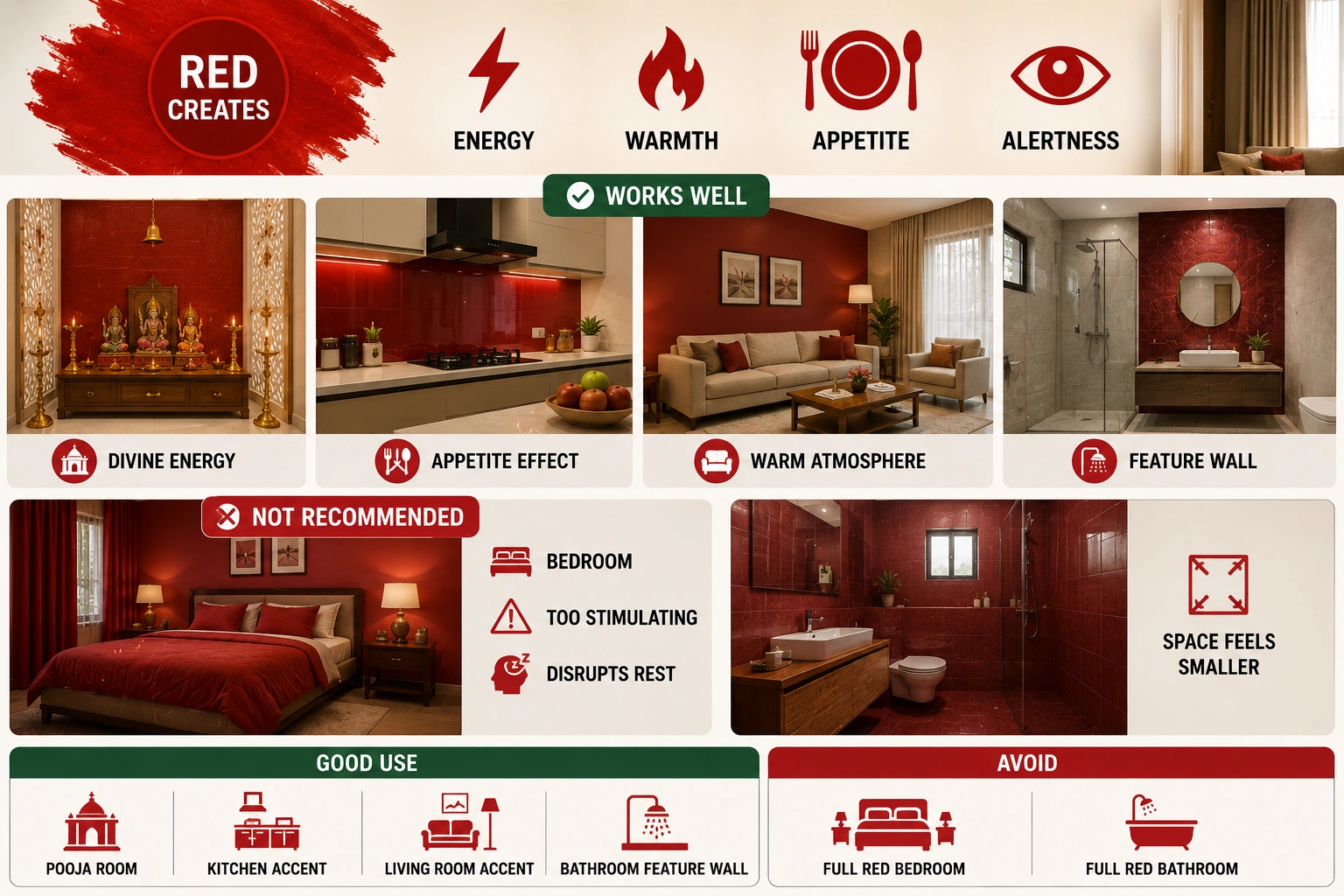
Red stimulates. It raises alertness, increases appetite, and creates a sense of warmth and energy in a room. In Indian interior design, these effects are contextually useful in some rooms and counterproductive in others.
In pooja rooms and puja spaces, red's association with divine energy and auspiciousness makes it a natural choice for walls and floors. In kitchens, the appetite-stimulating effect of red works positively as an accent wall or backsplash. In living rooms, a single red accent wall or a terracotta-toned floor creates warmth without overwhelming the space if balanced with neutral walls and furniture.
Red does not work in bedrooms as a full wall or floor colour. The stimulating effect of red actively disrupts sleep and rest. Indian designers consistently advise against red as the primary colour in any bedroom, though a small red accent in a bedroom pooja alcove is acceptable. In bathrooms, deep wine-red or maroon wall tiles work well as a feature wall but should not cover all four walls in a small bathroom because the colour reduces the perceived size of the space.
Red Tiles and Vastu Shastra: The Honest Picture
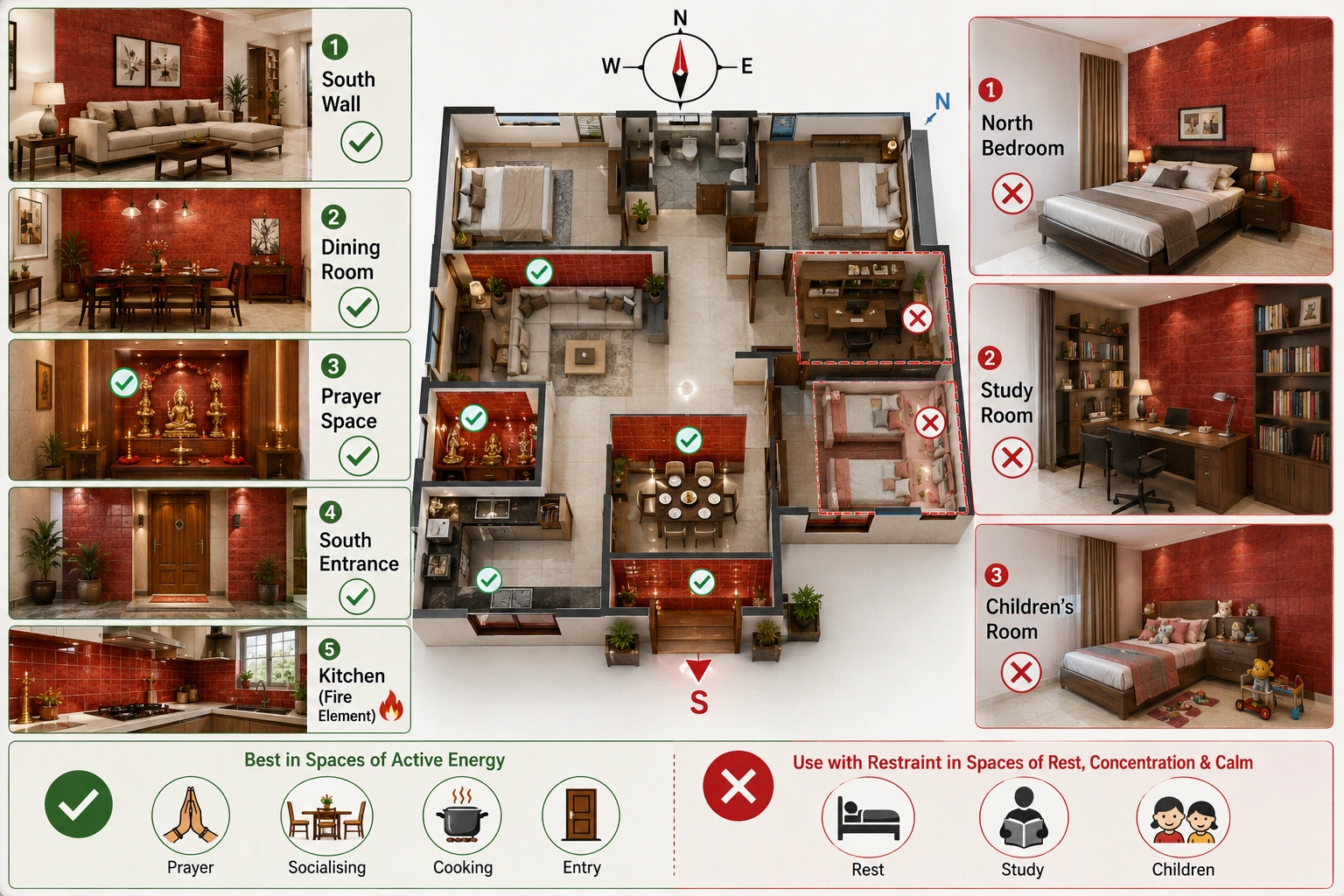
Vastu shastra associates different colours with different directions and elements. Red is associated with the fire element and the south direction in Vastu. This creates context-specific guidance rather than a blanket good-or-bad verdict.
Red tiles are considered auspicious in Vastu for: the south wall of a living room or dining room, pooja rooms and prayer spaces, entrance areas facing south, and kitchen walls (fire is the governing element of the kitchen in Vastu). Red tiles are cautioned against in Vastu for: north-facing bedrooms (associated with the water element, conflicting with red-fire), study rooms (red increases stimulation rather than focus), and children's bedrooms.
The most consistent Vastu guidance around red tiles in Indian homes is that they work best in spaces associated with active energy (prayer, cooking, socialising, entry) and should be used with restraint or avoided in spaces associated with rest, concentration, and calm. This aligns well with the colour psychology noted above, which gives Indian homeowners two complementary frameworks pointing in the same direction.
Types of Red Tile Shades Available in India
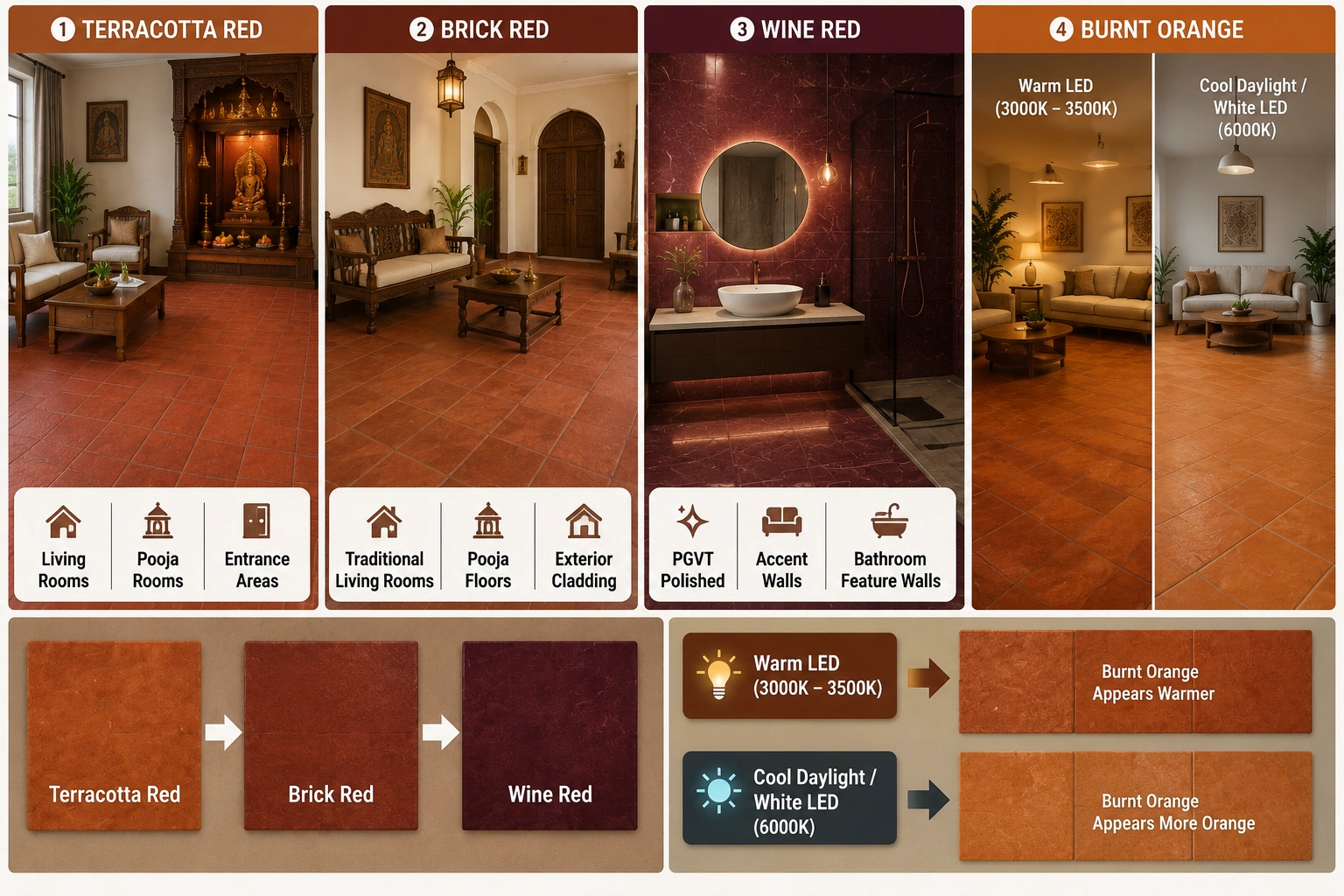
Not all red tiles look the same. The Indian tile market in 2026 offers red tiles across four main shade categories, each with different visual character and room applications.
Terracotta red is a warm, earthy orange-red that references fired clay. It is the most traditional shade in Indian tile design and appears in GVT matte finishes that mimic handmade clay tiles. This shade works on floors and walls across living rooms, corridors, pooja rooms, and exterior entrance areas.
Brick red is a medium-depth red-brown that references the colour of Indian fired clay bricks. It is slightly cooler and darker than terracotta. Brick red tiles in 600x600 mm or 2x4 GVT matte are very popular for traditional-style Indian living rooms and pooja room floors. The brick red shade is also used for exterior cladding on Indian independent houses and villas to reference vernacular architecture.
Wine red is a deep, cool-toned dark red that references Burgundy or maroon tones. It has no orange undertone. Wine red tiles in PGVT polished finish are used for bathroom feature walls and living room accent walls in contemporary premium Indian homes. This shade is the most formal of the three and does not suit informal or traditional-style rooms.
Burnt orange sits at the warm boundary between red and orange. It is a transitional shade that reads differently depending on lighting conditions. Under warm LED panels (3000K to 3500K), burnt orange tiles warm an entire room. Under cool daylight or white LED (6000K), the same tile reads as a medium orange rather than red. Check the tile sample under your actual home lighting before purchasing any burnt orange tile.
Red Floor Tiles: Which Categories Work and Which Do Not
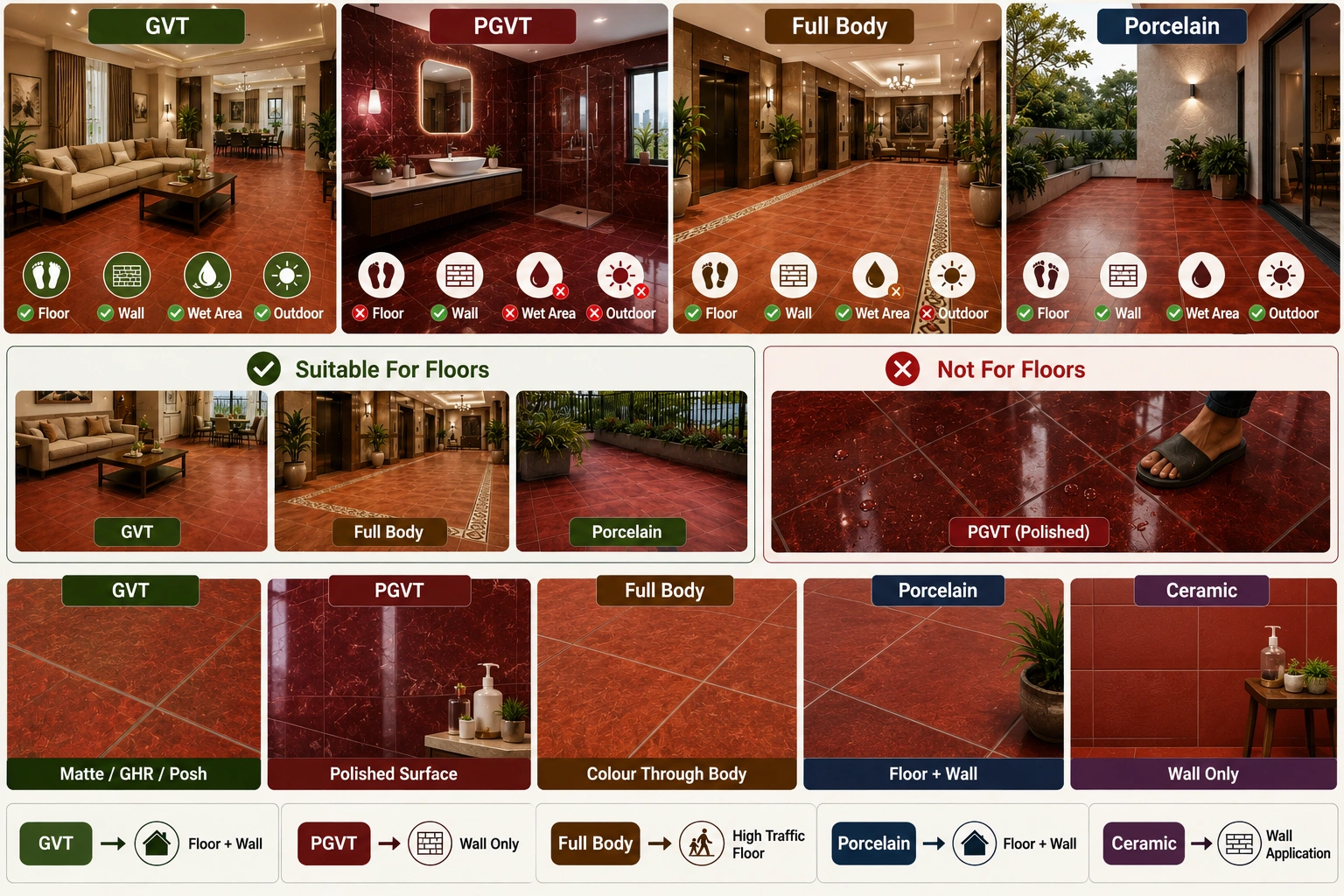
For red floor tiles in Indian homes, GVT (Glazed Vitrified Tiles) is the correct category. GVT in matte, GHR (Glaze High Resistance), or Posh finish gives the colour depth needed for red shades while providing adequate surface hardness and anti-skid properties for floor use. GVT in red is available in sizes from 400x400 mm (16x16) through 600x600 mm (2x2), 600x1200 mm (2x4), and 800x1600 mm (32x64).
PGVT (Polished Glazed Vitrified Tiles) in red or wine-red shades is for walls only, not floors. The polished surface is slippery when wet and does not suit Indian floor use in any colour. PGVT wine-red or deep maroon tiles are excellent for bathroom walls and living room feature walls but must never be specified for floors.
Full Body tiles in red or terracotta shades are an option for high-traffic floors in independent houses and commercial spaces. The colour running through the tile body means that heavy wear over years does not expose a different-coloured core at edges and worn areas. Full Body red tiles in 600x600 mm or 600x1200 mm are specified for entrance lobbies, corridors, and outdoor-facing areas in premium Indian residential projects.
| Category | Red Tile Available? | Floor OK? | Wall OK? | Wet Area? | Outdoor? |
| GVT | Yes, wide range | Yes | Yes | Yes | Yes |
| PGVT | Yes (wine red, maroon) | No (slippery) | Yes | No | No |
| Full Body | Yes (terracotta, brick red) | Yes | Yes | Yes | Yes |
| Porcelain | Limited | Yes | Yes | Yes | Yes |
| Ceramic | Yes (wall only) | 300x300 only | Yes | Limited | No |
Red Wall Tiles: Where Indian Designers Are Using Them
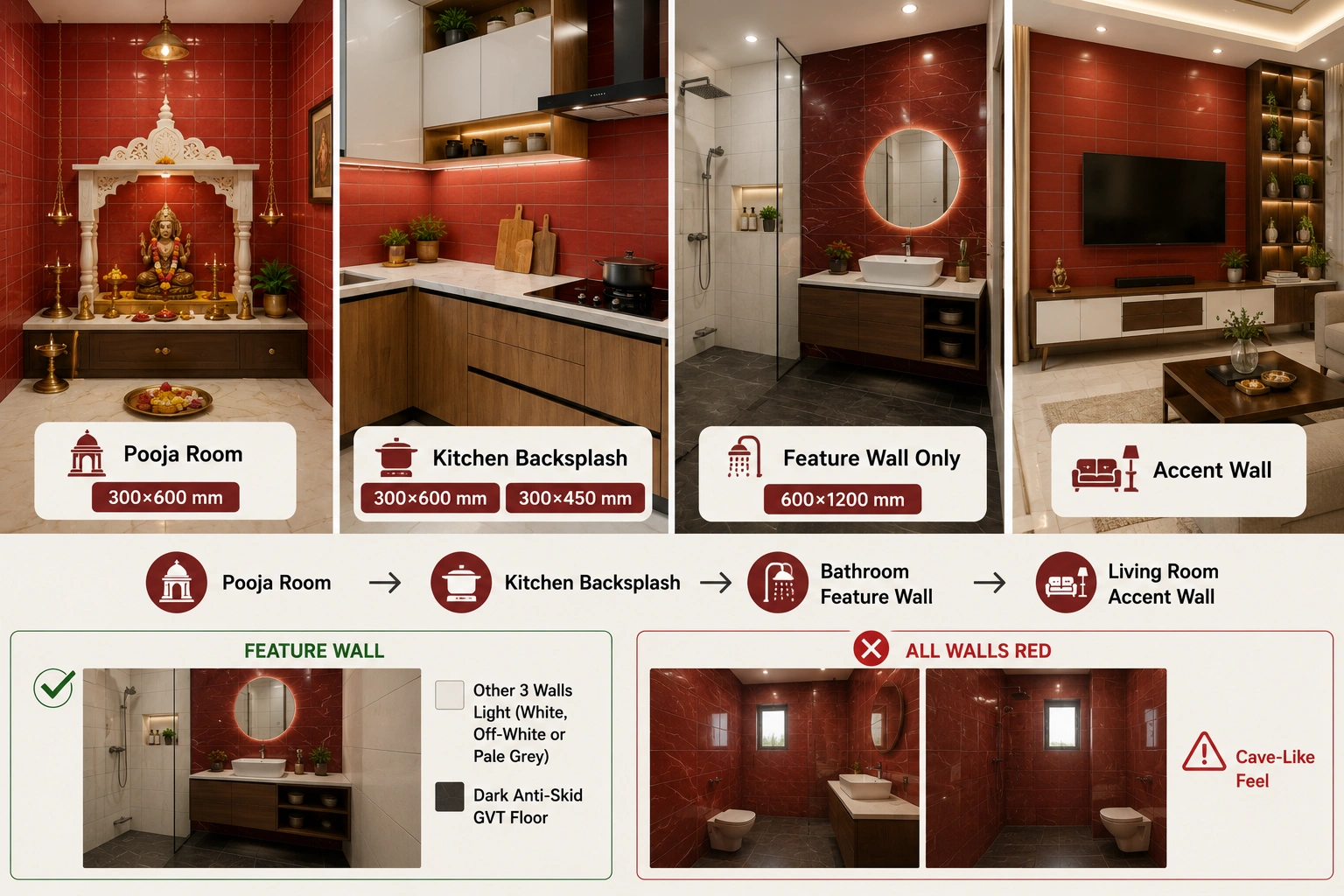
Red wall tiles in India are most commonly used in four applications in 2026: pooja room walls, kitchen backsplash walls, bathroom feature walls, and living room accent walls.
In pooja rooms, red ceramic or GVT tiles in traditional 300x600 mm (12x24) wall format are a standard specification. The religious and cultural significance of red in prayer spaces makes it one of the few rooms where red on all four walls is considered appropriate rather than overwhelming.
In kitchen backsplash areas, red or terracotta ceramic tiles in 300x600 mm or 300x450 mm (12x18) format create a warm cooking zone. Indian designers pair these with white or light grey platform tops and wooden cabinet fronts to balance the warmth of the red backsplash without the kitchen feeling closed.
In bathrooms, wine-red or maroon PGVT in 600x1200 mm (2x4) format on one feature wall creates a dramatic accent in a contemporary Indian bathroom. This works only if the other three walls are light (white, off-white, or pale grey) and the floor is a dark anti-skid GVT in a complementary shade. Wine-red wall tiles on all four bathroom walls make a small Indian bathroom feel like a cave.
Room-by-Room Guide: Where Red Tiles Work in Indian Homes
Living Room and Hall
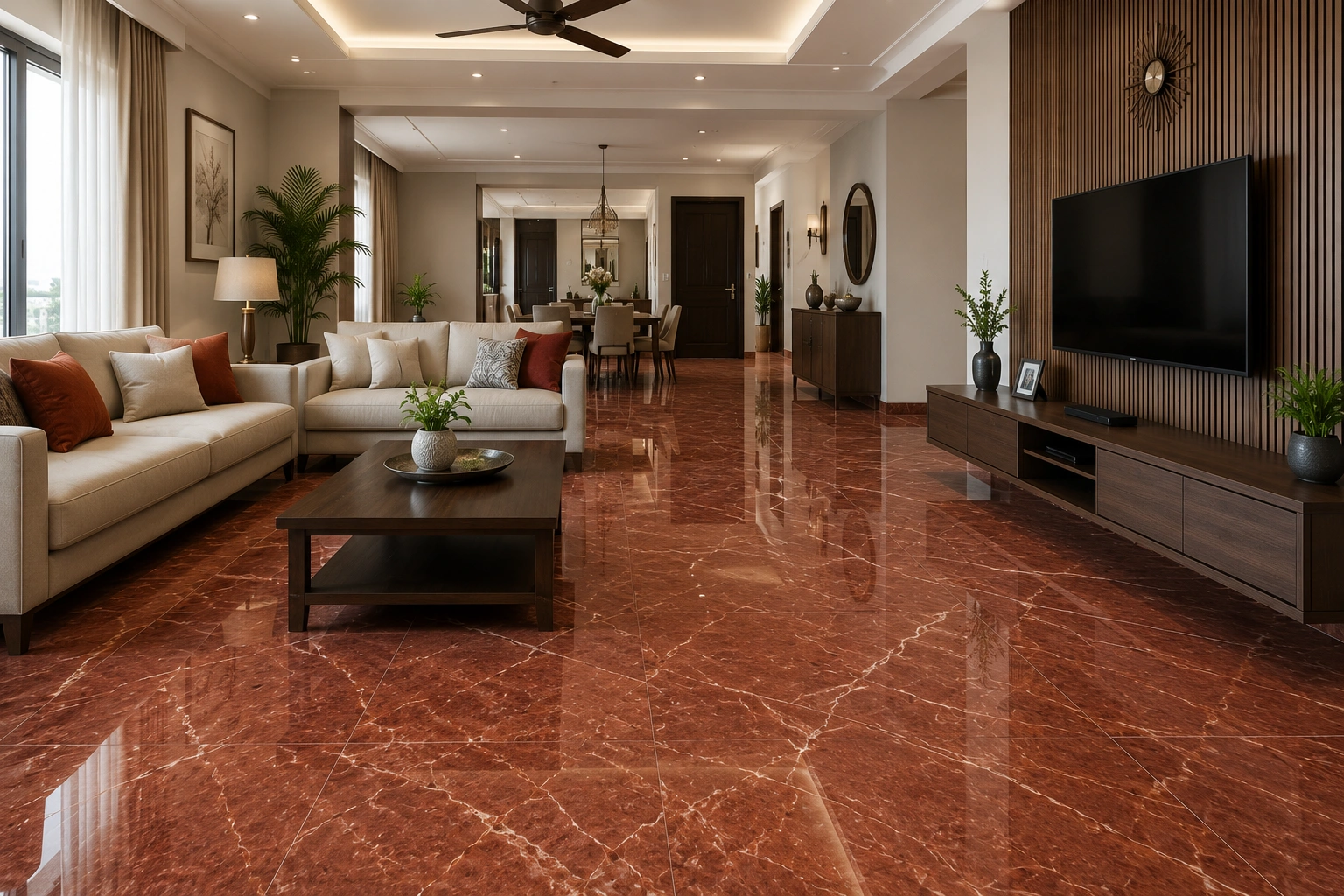
Terracotta red or brick red GVT floor tiles in 600x600 mm (2x2) or 600x1200 mm (2x4) matte finish work well in traditional-style Indian living rooms and corridors. The warm earthy tone reads as grounded and welcoming rather than aggressive. Pair with cream or off-white walls, jute and cotton textiles, and wooden furniture.
For contemporary Indian living rooms, a single wine-red PGVT accent wall in 600x1200 mm or 800x1600 mm (32x64) format behind the sofa or TV unit creates a bold focal point. The other three walls should be neutral. Do not use red tiles on the floor and a red accent wall in the same room unless the shade on the floor is significantly lighter (terracotta) than the wall (wine red).
Pooja Room
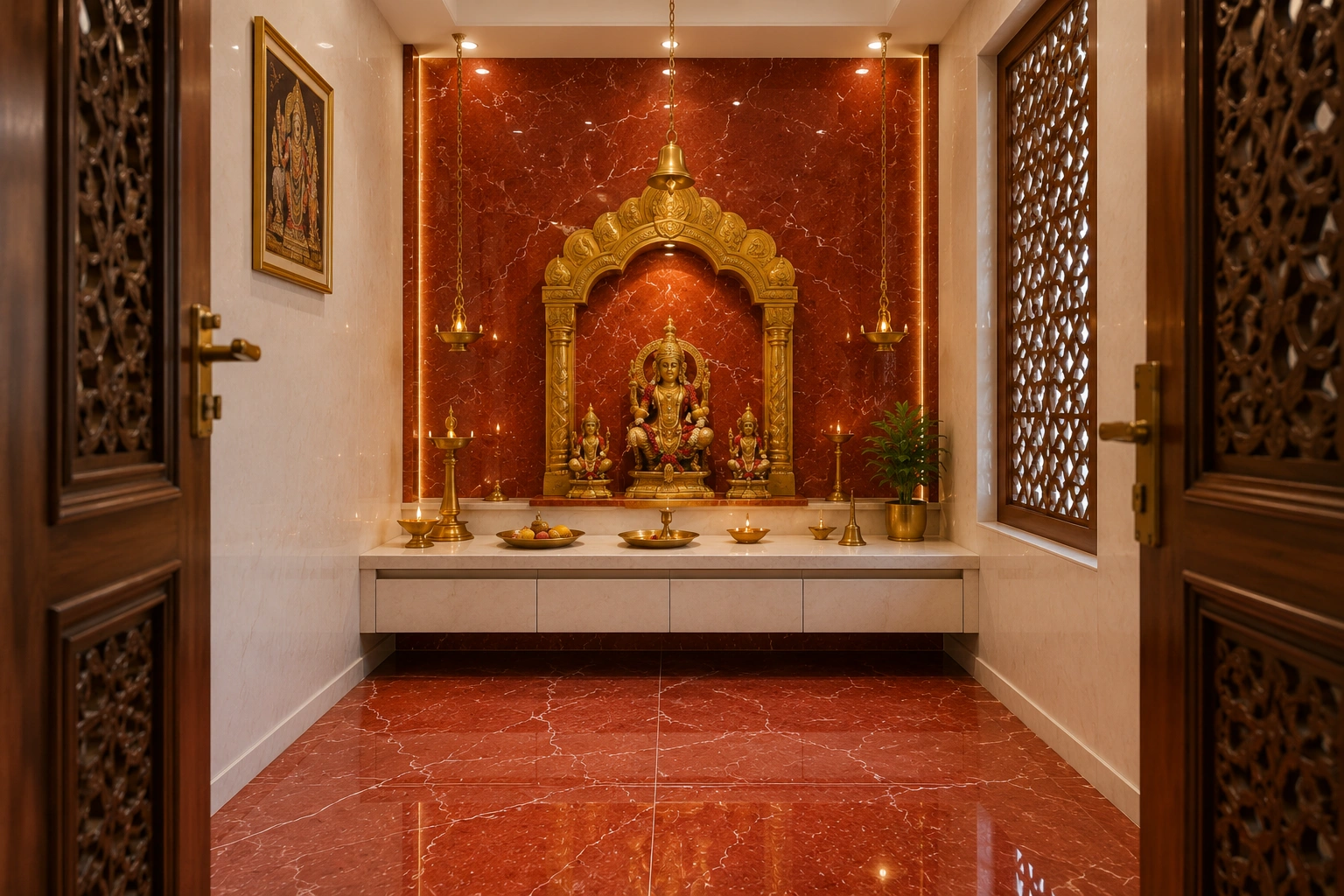
Red tiles in the pooja room are one of the most traditional and widely accepted applications in Indian homes. Brick red or deep red GVT floor tiles in 400x400 mm (16x16) or 600x600 mm (2x2) in matte finish are the most common specification. Red ceramic or GVT wall tiles in 300x600 mm (12x24) complete the space.
The Vastu alignment is strong for red in a pooja room. Indian architects and interior designers consistently recommend red, saffron, and deep orange shades for dedicated prayer spaces regardless of the home's overall colour palette. For a full treatment of red tile design ideas specific to pooja rooms, including modern minimalist approaches, see the guide on red tiles for pooja room floors and walls.
Kitchen
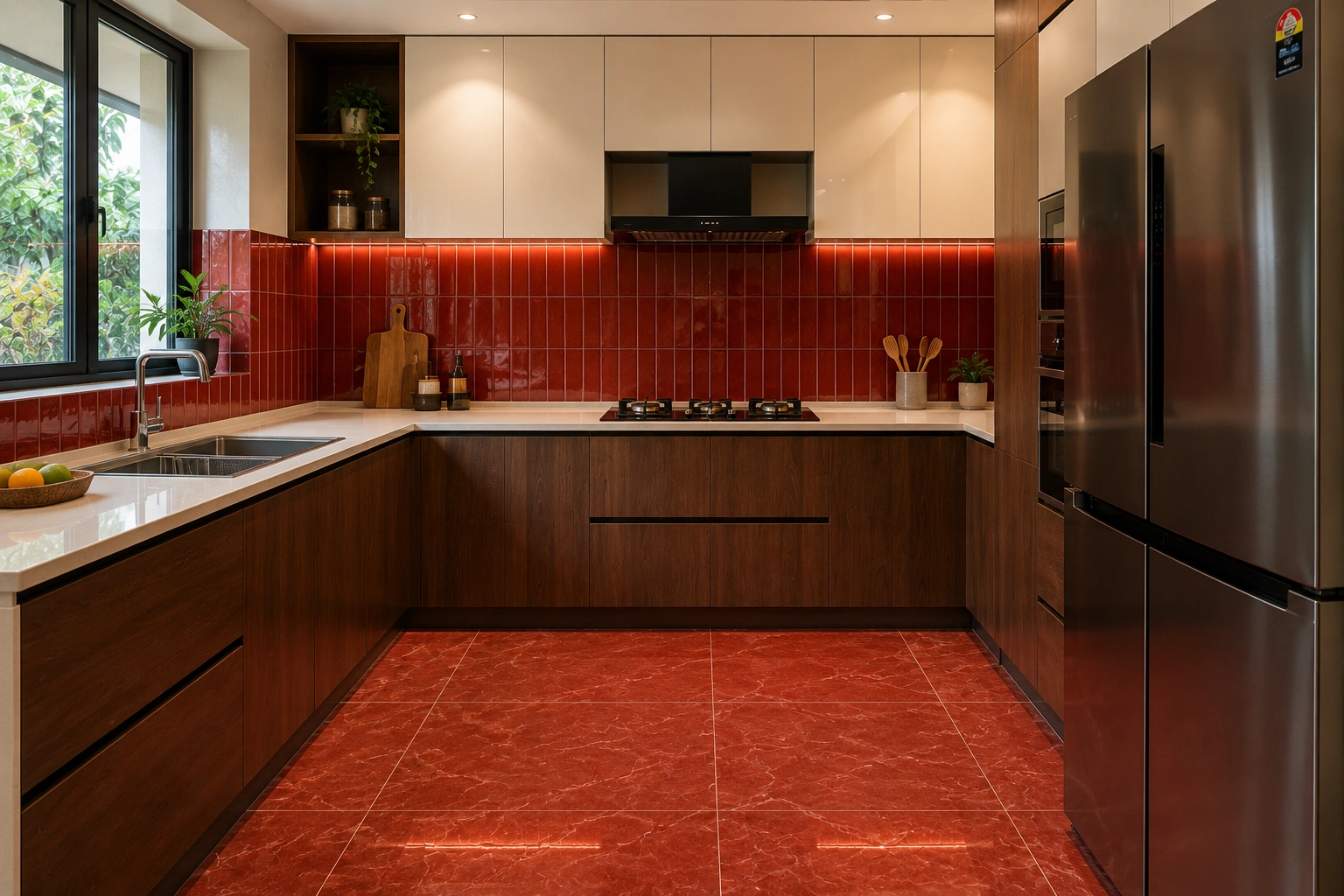
Red or terracotta wall tiles on the kitchen backsplash area (the wall between the platform and the upper cabinets) are a practical and visually warm choice for Indian kitchens. The area is non-walking surface so PGVT tiles can be used here, making cleaning of oil and masala splatter easier than on matte surfaces. Ceramic in 300x450 mm (12x18) or 300x600 mm (12x24) is the most economical option for this application. GVT in the same sizes in a matte or GHR finish is more durable long-term.
Red kitchen floor tiles require care in Indian conditions. Dark red or wine-red floor tiles in Indian kitchens show flour dust and cooking residue very visibly. Terracotta or medium brick red in a matte GVT finish hides daily kitchen mess better than deep red or polished surfaces. GHR finish in terracotta is the most practical Indian kitchen floor specification in red shades.
Bathroom
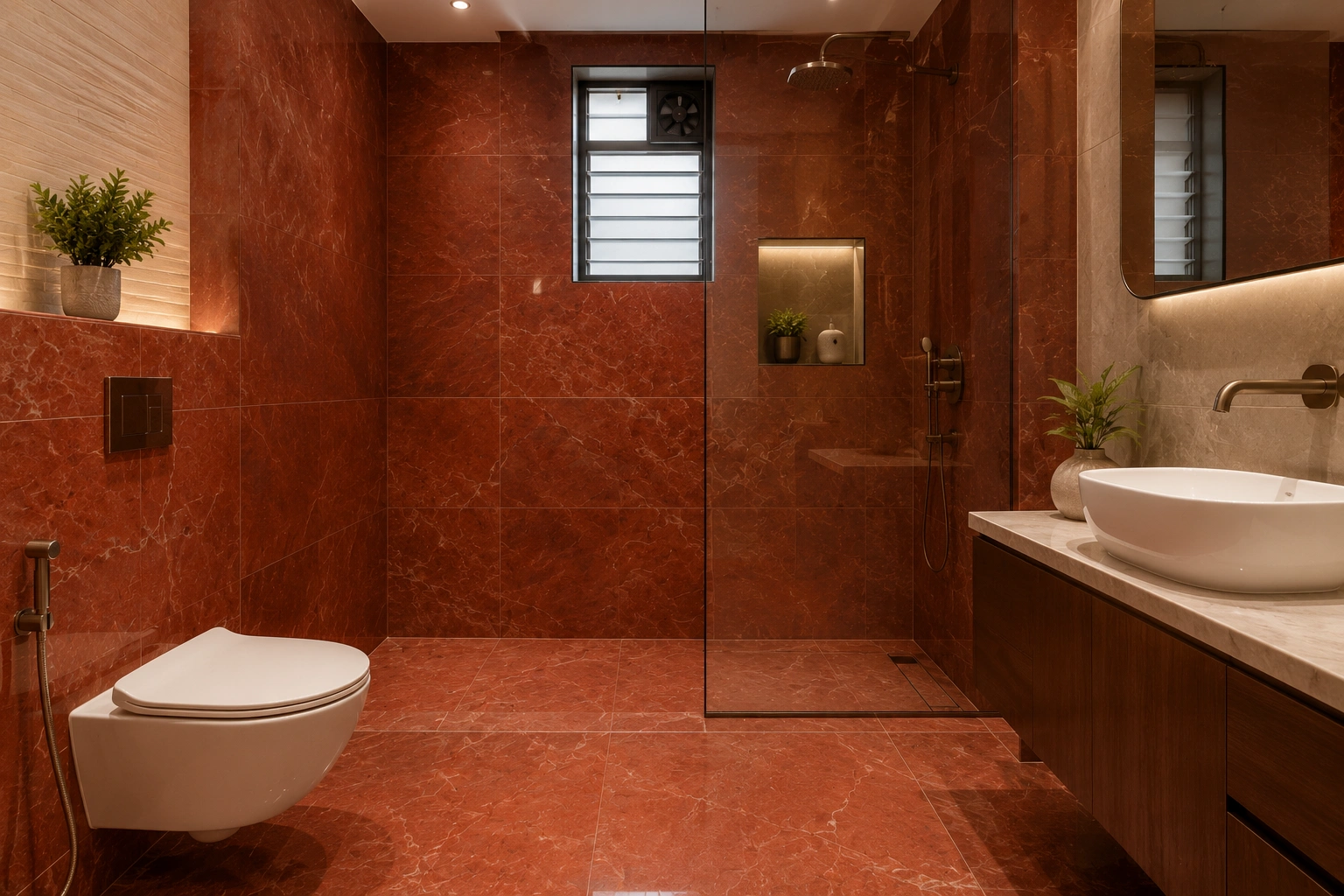
Wine-red or deep maroon PGVT tiles in 600x1200 mm (2x4) on one bathroom feature wall is the contemporary Indian designer approach to red in bathrooms. The polished surface reflects light and the deep colour creates a spa-like drama when paired with chrome fittings and a white sanitary ware. This works only in bathrooms with good artificial lighting.
For bathroom floors, always use GVT with a matte or anti-skid finish in a terracotta or brick red shade. Never specify PGVT polished red on a bathroom floor. Wet polished tiles in deep colours are the highest slip-risk combination possible.
Bedroom
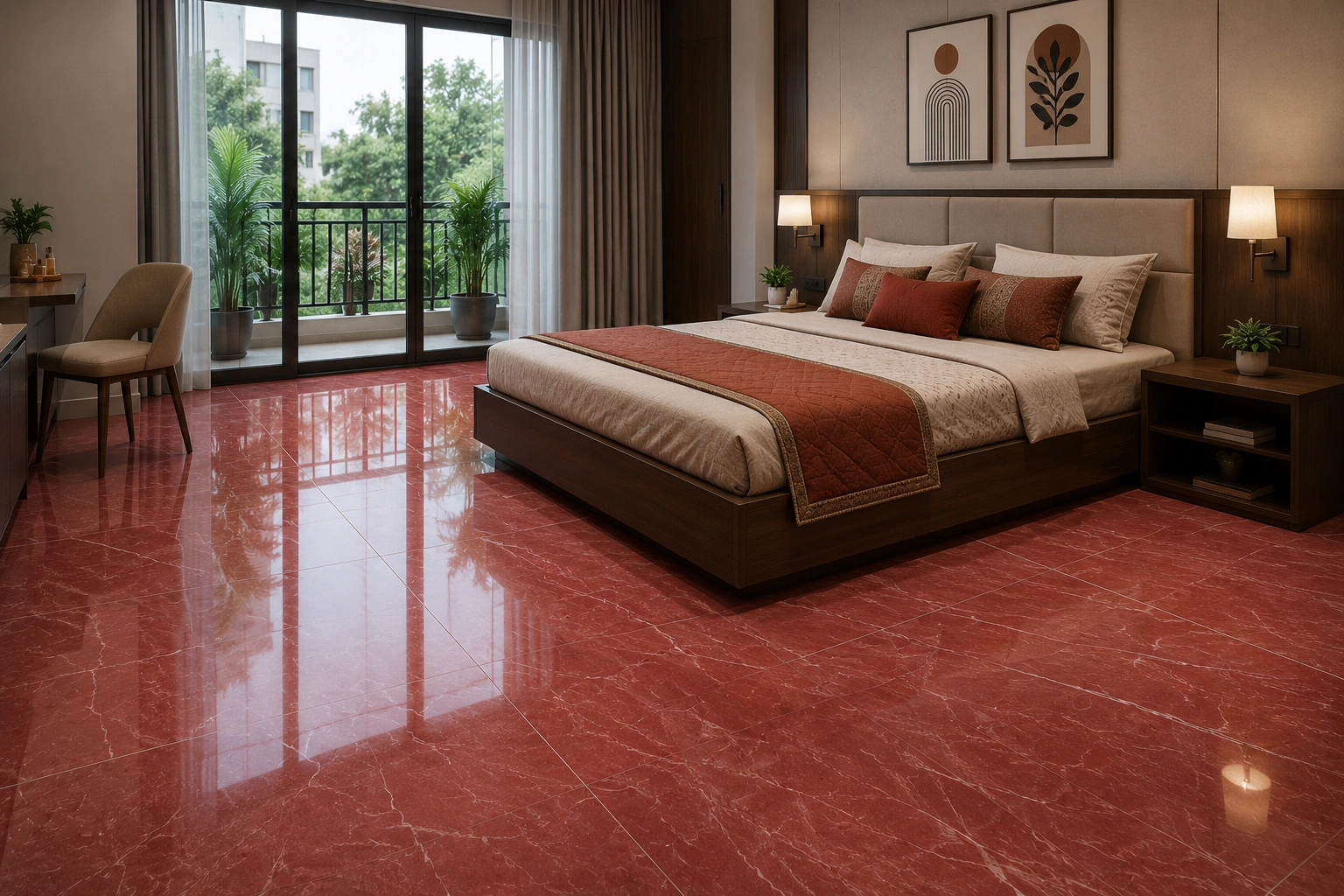
Red as the primary floor or wall colour in an Indian bedroom is not recommended. The stimulating effect of red disrupts sleep quality. If a bedroom includes a small pooja alcove or wall shrine, a red tile accent within that alcove only is acceptable. The rest of the bedroom should use neutral or cool-toned tiles.
Exterior and Entrance
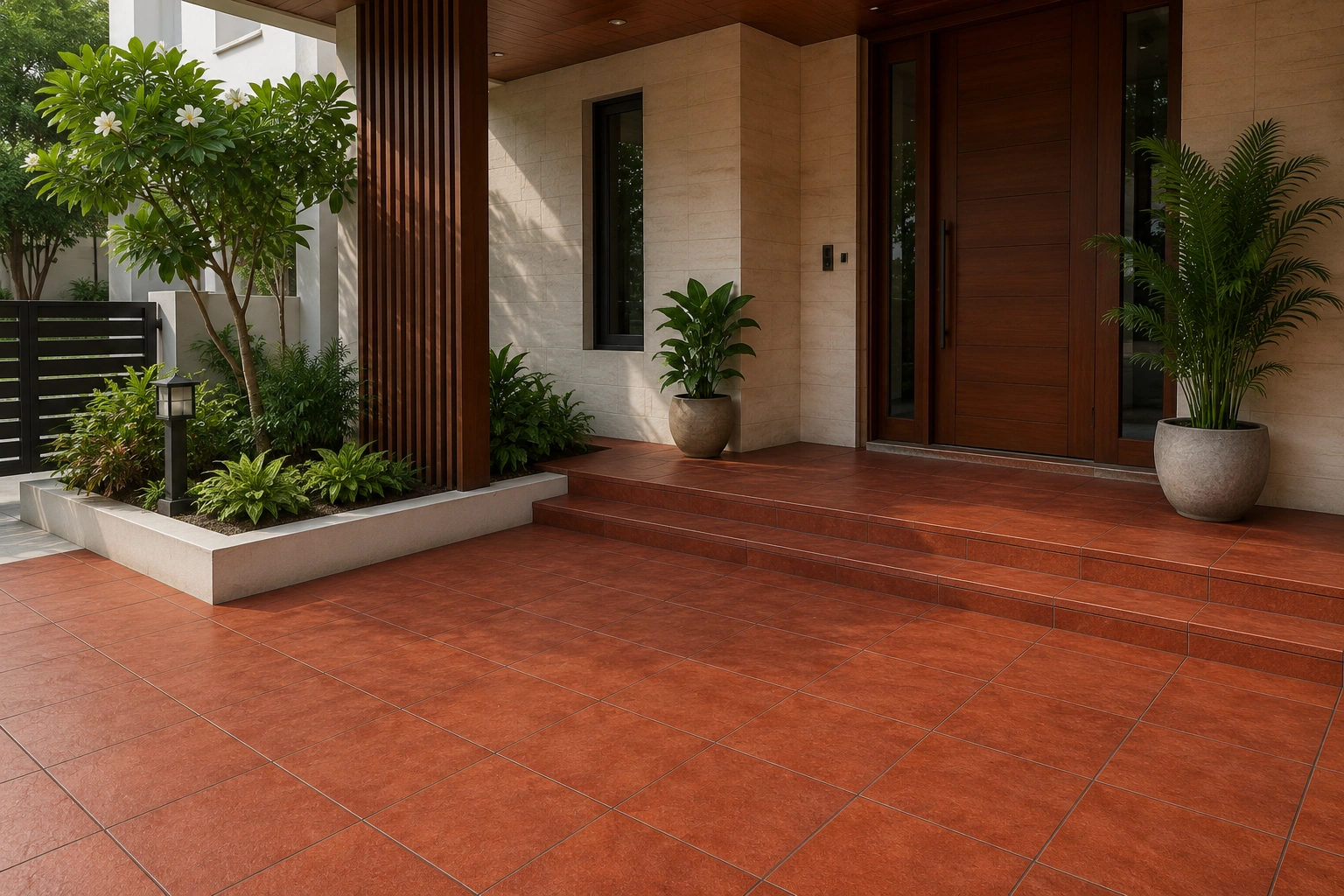
Terracotta red and brick red GVT tiles in 400x400 mm (16x16) or 600x600 mm (2x2) with GHR finish are excellent for Indian home entrances, verandahs, and compound walls. The warm red tones read as traditionally welcoming at a home entrance and reference the brick-and-clay architecture of traditional Indian buildings. Use GHR or outdoor-rated GVT for any exterior application. PGVT is not suitable for any exterior surface.
Price Ranges for Red Tiles in India
Red tiles in India range from economy terracotta ceramic at Rs. 25 to Rs. 45 per sq. ft. to premium wine-red PGVT at Rs. 110 to Rs. 180 per sq. ft. The mid-range, which covers most GVT matte and GHR red tiles from Morbi manufacturers, runs Rs. 45 to Rs. 90 per sq. ft.
| Category | Shade | Size | Price Range (per sq. ft.) |
| Ceramic (wall only) | Terracotta, brick red | 300x450, 300x600 mm | Rs. 25 to Rs. 55 |
| GVT (matte) | Terracotta, brick red | 400x400, 600x600, 2x4 | Rs. 45 to Rs. 90 |
| GVT (GHR) | Terracotta, brick red | 600x600, 2x4 | Rs. 55 to Rs. 100 |
| GVT (Posh) | Brick red, wine red | 600x600, 2x4, 32x64 | Rs. 65 to Rs. 120 |
| PGVT (polished) | Wine red, maroon | 2x4, 32x64 | Rs. 110 to Rs. 180 |
| Full Body | Terracotta, brick red | 600x600, 2x4 | Rs. 80 to Rs. 140 |
| Porcelain | Terracotta | 600x600, 2x4 | Rs. 60 to Rs. 110 |
Common Mistakes Indian Buyers Make with Red Tiles
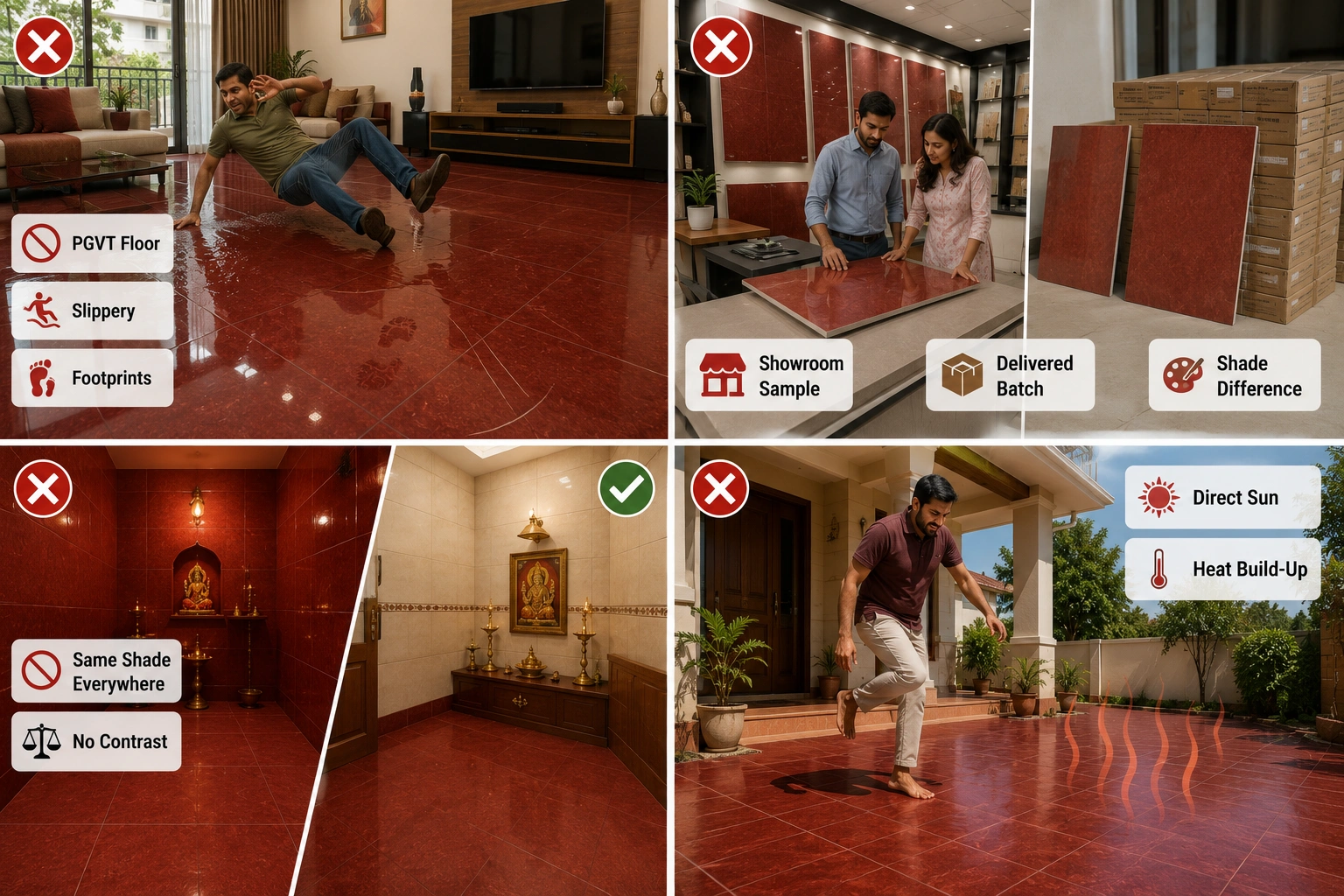
Using PGVT polished red on a floor. This is the most critical technical error. PGVT polished tiles are wall-only. Red or wine-red PGVT on a floor is both a safety risk (slippery when wet) and a maintenance problem (shows every footprint and scratch).
Buying red tiles from a showroom display without checking the actual production batch. Red shades in GVT and ceramic vary significantly between production batches. The showroom tile may be a purer, brighter red. The delivered batch may run more orange or more brown. Always check the actual delivery batch tiles in your room's lighting before installation begins.
Using red on all walls and floors in the same room. Even in a pooja room where red is contextually appropriate, covering every surface in the same red shade removes visual contrast and makes the space feel heavy. Use one red shade on the floor and a slightly lighter or complementary shade on the walls, or use red on two facing walls and white or cream on the other two.
Ignoring the heat absorption of dark red tiles in outdoor applications. Dark red and maroon tiles absorb more solar heat than lighter shades. In Indian summer conditions, dark red tiles on a south-facing verandah or uncovered entrance can become uncomfortably hot underfoot. For outdoor areas with direct afternoon sun exposure, choose a lighter terracotta shade or apply a heat-reflective coating.
Red Tiles in India: Category Standards and Manufacturing
GVT red tiles from Indian manufacturers, primarily from Morbi in Gujarat, carry water absorption rates of 0.05 percent or less, meeting IS 15622:2006 standards for vitrified tiles. This near-zero absorption makes GVT red tiles resistant to staining from oil, turmeric, and the daily cleaning products used in Indian homes. The consistent low absorption across the tile body also prevents the colour bleeding or darkening from moisture ingress that older terracotta clay tiles were prone to.
Gujarat's Morbi tile manufacturing cluster produces the majority of GVT and ceramic tiles sold in the Indian market, including red and terracotta shades. Most red GVT tiles in the Rs. 45 to Rs. 100 per sq. ft. range are Morbi-manufactured.
Through TilesFinders, homeowners can compare red ceramic, GVT, and porcelain options from Morbi-based manufacturers, including porcelain red tiles with water absorption of 2 to 5 percent under IS 13630 that sit between ceramic economy products and GVT mid-range offerings in terms of both price and performance.
FAQs
Red tiles are Vastu-positive for south-facing walls, pooja rooms, kitchen walls, and entrance areas, where the fire element and active energy align with red's associations. Vastu cautions against red in north-facing bedrooms, study rooms, and children's rooms. The consistent Vastu guidance is that red suits active-energy spaces and should be avoided in rest and concentration spaces.
Pooja rooms, living room accent walls, kitchen backsplash, bathroom feature walls, and entrance areas all suit red tiles in appropriate shades and categories. Terracotta and brick red work well for floors and traditional spaces. Wine red and maroon work for wall accents in contemporary rooms. Bedrooms and study rooms are the spaces where red tiles are consistently not recommended.
Ceramic red tiles for walls start at Rs. 25 to Rs. 55 per sq. ft. GVT matte red floor tiles run Rs. 45 to Rs. 90 per sq. ft. PGVT polished wine-red wall tiles cost Rs. 110 to Rs. 180 per sq. ft. Full Body red tiles for high-traffic floors range from Rs. 80 to Rs. 140 per sq. ft. Most red tiles from Morbi, Gujarat in the GVT category fall in the Rs. 45 to Rs. 100 mid-range.
Yes, with the right category and placement. Wine-red or maroon PGVT polished tiles in 2x4 format work well on a single bathroom feature wall. For bathroom floors, use GVT matte or anti-skid finish in terracotta or brick red only. Never use PGVT polished tiles on any bathroom floor regardless of colour as the polished surface is slippery when wet.
Terracotta red is a warm orange-red shade that references fired clay. It suits floors, traditional rooms, and exterior areas. Wine red is a deep cool-toned dark red with no orange undertone. It suits contemporary accent walls and bathroom feature walls in premium Indian homes. The two shades use different tile categories: terracotta works in GVT matte for floors, wine red works in PGVT polished for walls.
Terracotta red and brick red GVT tiles with GHR or outdoor-rated finish in 400x400 mm or 600x600 mm format work well for Indian verandahs, entrances, and compound areas. Choose lighter terracotta shades over dark red or maroon for south-facing outdoor areas because dark tiles absorb more solar heat and become very hot underfoot in Indian summer conditions. PGVT tiles are not suitable for any outdoor application.
