Mosaic Tiles for Indian Bathrooms: Size, Grout Width, and Water Resistance Explained
Learn how mosaic-pattern tiles perform in Indian bathrooms. Compare sizes, grout width, water resistance, GVT vs ceramic, and practical buying tips for safer, easier-to-maintain bathroom installations.
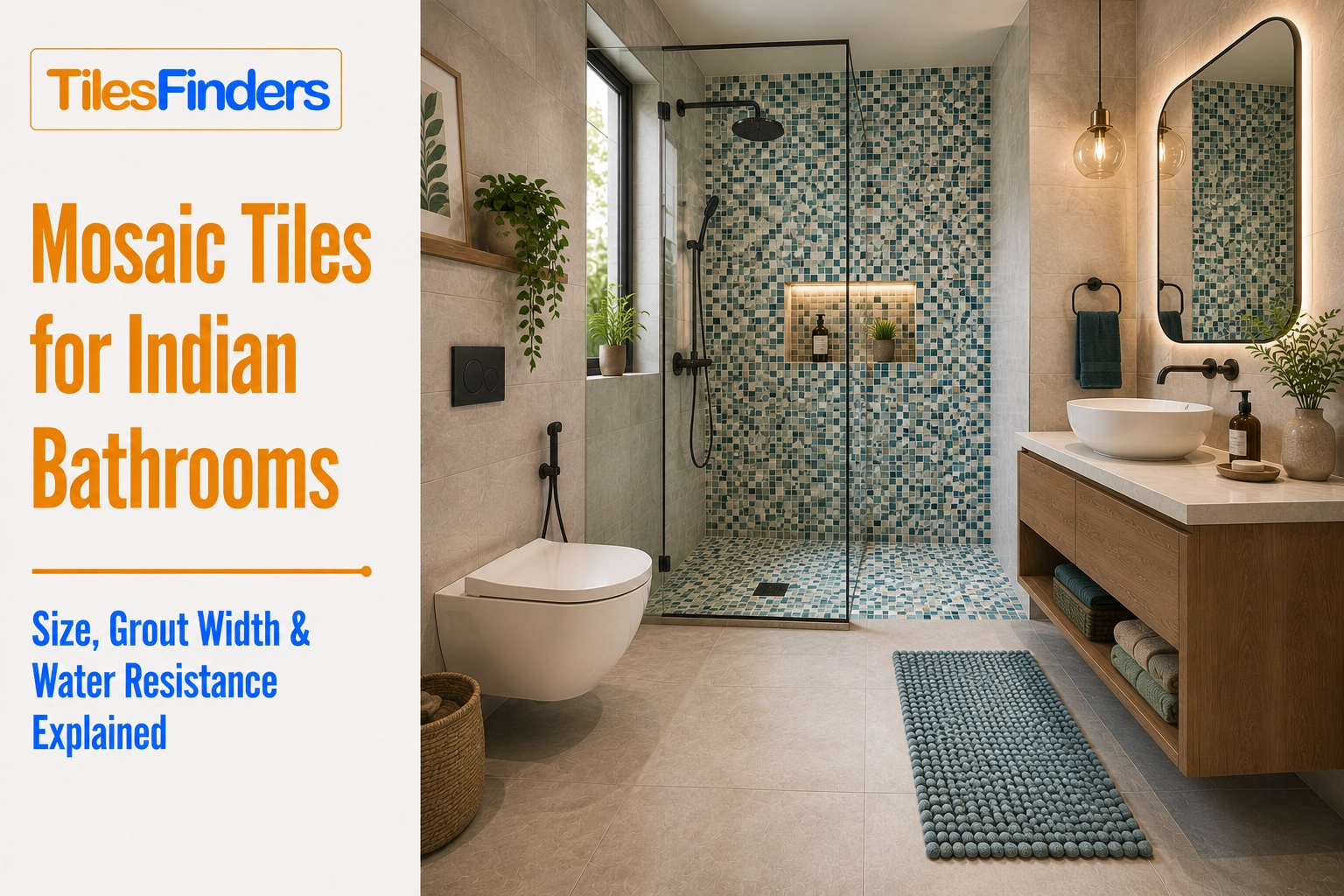
Mosaic-pattern tiles deliver the visual appeal of genuine mosaics while installing like standard GVT or ceramic tiles with far fewer grout joints. For Indian bathrooms, choose anti-skid GVT for floors and verify water absorption, face variation, and grout specifications before buying.
This guide specifically covers mosaic-pattern tiles: single-piece GVT or ceramic tiles printed with a mosaic-look design and sold in standard tile formats, not the assembled chip-and-sheet mosaic covered elsewhere. The distinction matters, since the two products differ meaningfully in sizing logic, grout density, and how they should be specified for an Indian bathroom.
What a Mosaic-Pattern Tile Actually Is
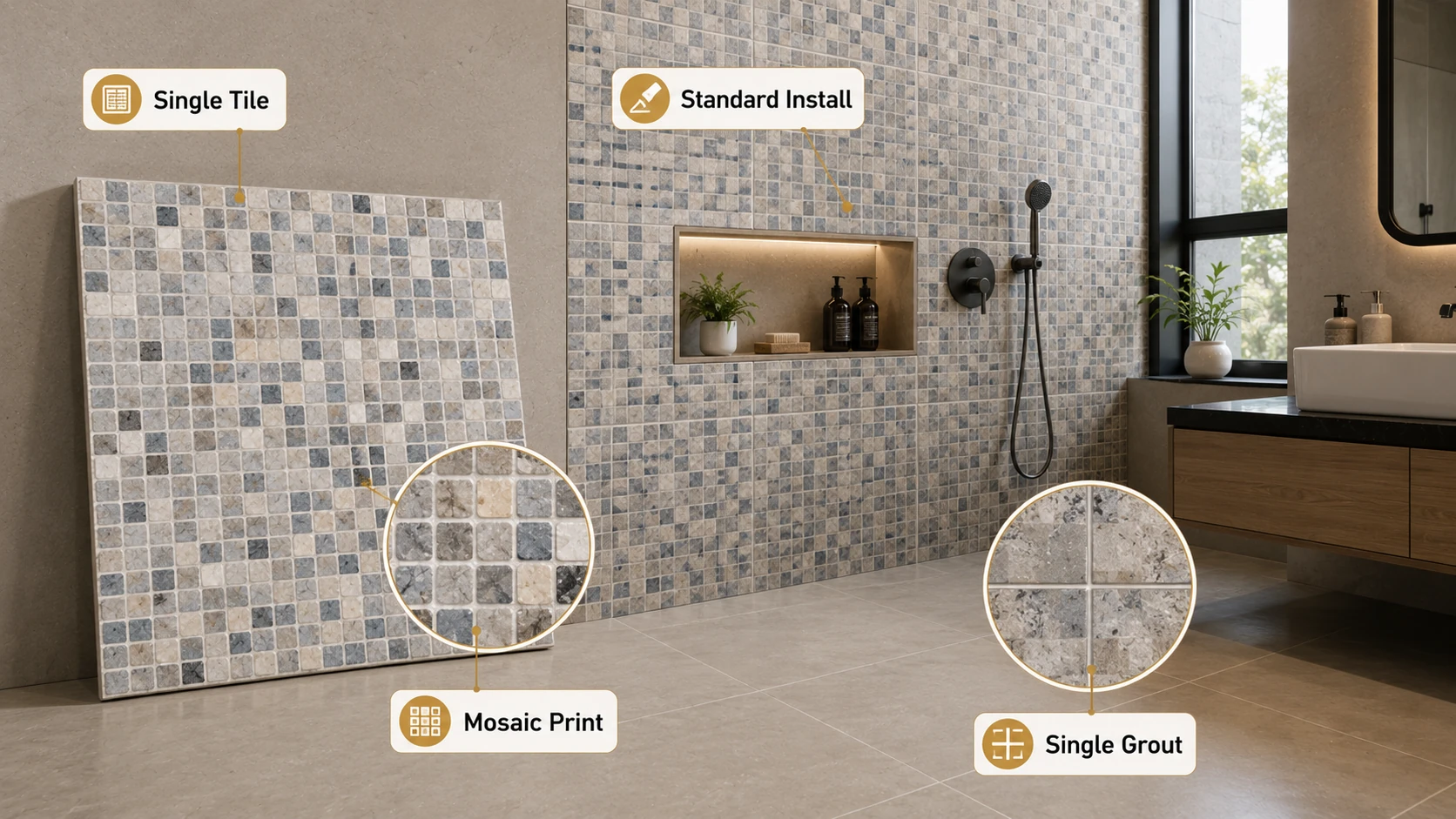
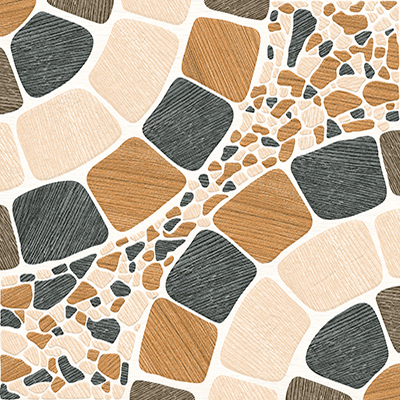
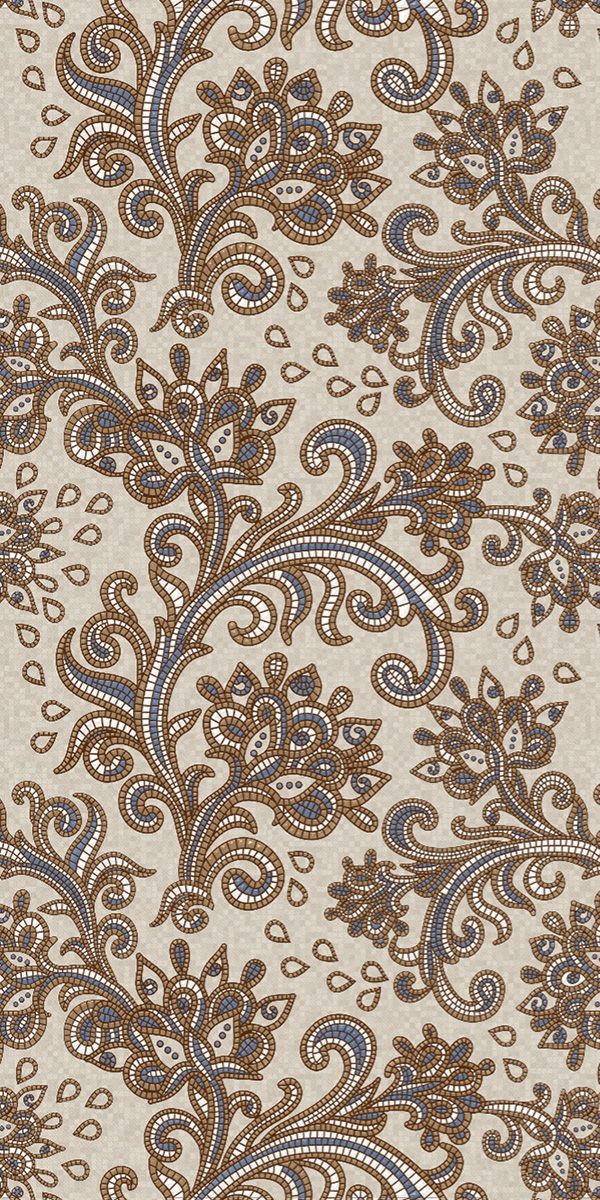
A mosaic-pattern tile is a single, standard-format GVT or ceramic tile, printed during manufacture with a design that visually replicates the look of an assembled mosaic, without being physically assembled from individual pieces. It installs exactly like any other standard tile, in the same format, with the same single-piece grout joint spacing, while delivering a mosaic visual reference at a fraction of the installation complexity real chip mosaic requires.
From The Marketplace
Popular tiles right now
-2915a5ca-f019-45aa-a2ca-a63dfa34d551.jpg)
Mosaic-Pattern Tile Sizing
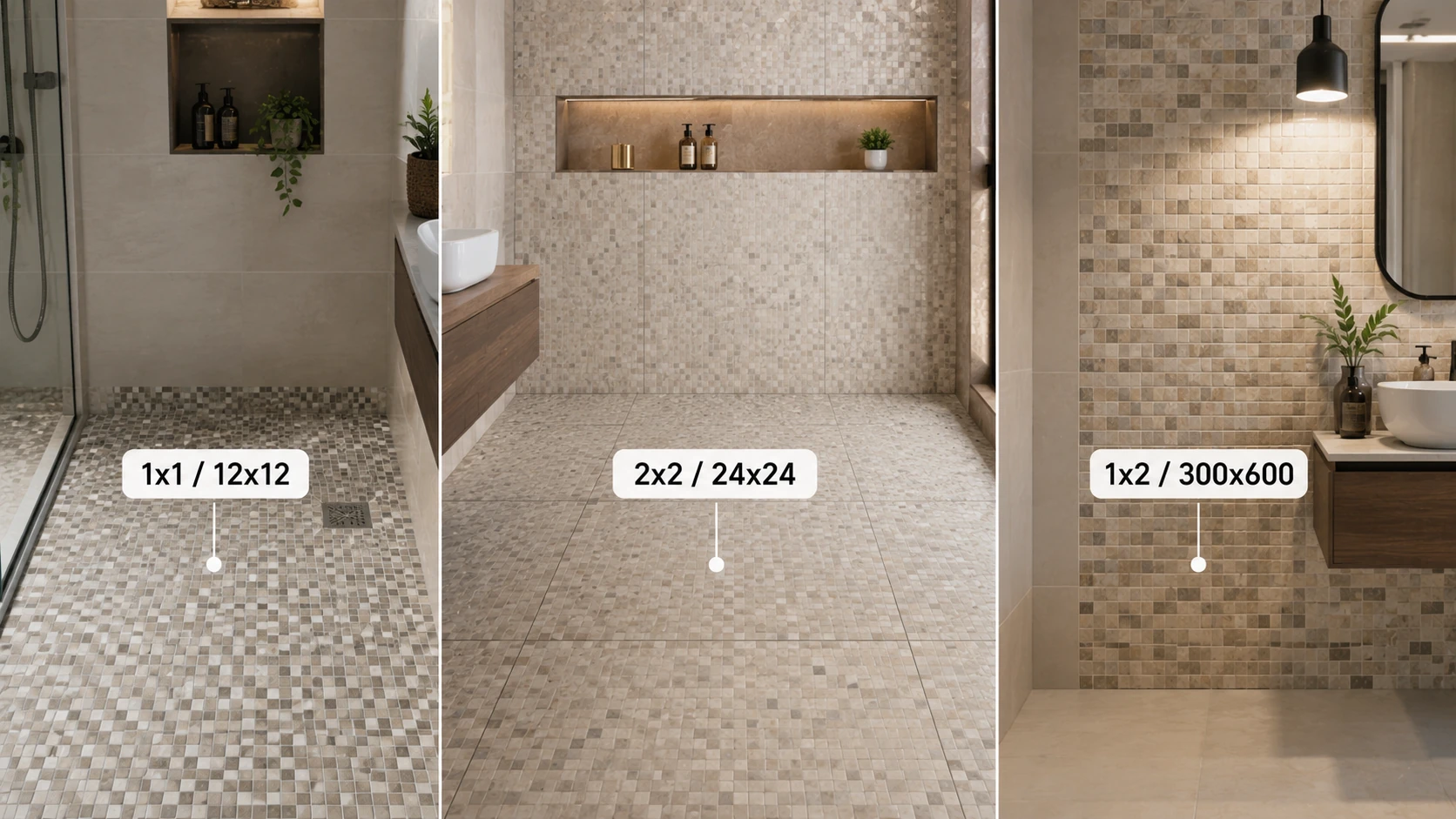
Because a mosaic-pattern tile is a single manufactured piece, it is sized and sold exactly like any other standard GVT or ceramic tile, by tile dimension, not by sheet coverage or chip count. This is the first and most consequential difference from a genuine chip mosaic, where the buyer is actually purchasing mesh-backed sheet coverage made of many small individual pieces.
| Format | Best Bathroom Application |
| 1x1 or 12x12 (300x300 mm) | Compact bathroom floors and accent walls, the most common mosaic-pattern tile size |
| 2x2 or 24x24 (600x600 mm) | Larger bathroom walls or floors want the mosaic print at a bigger, bolder scale |
| 1x2 (300x600 mm) | Vertical feature wall application, the print reads as a taller mosaic panel reference. |
Grout Width: The Key Practical Difference
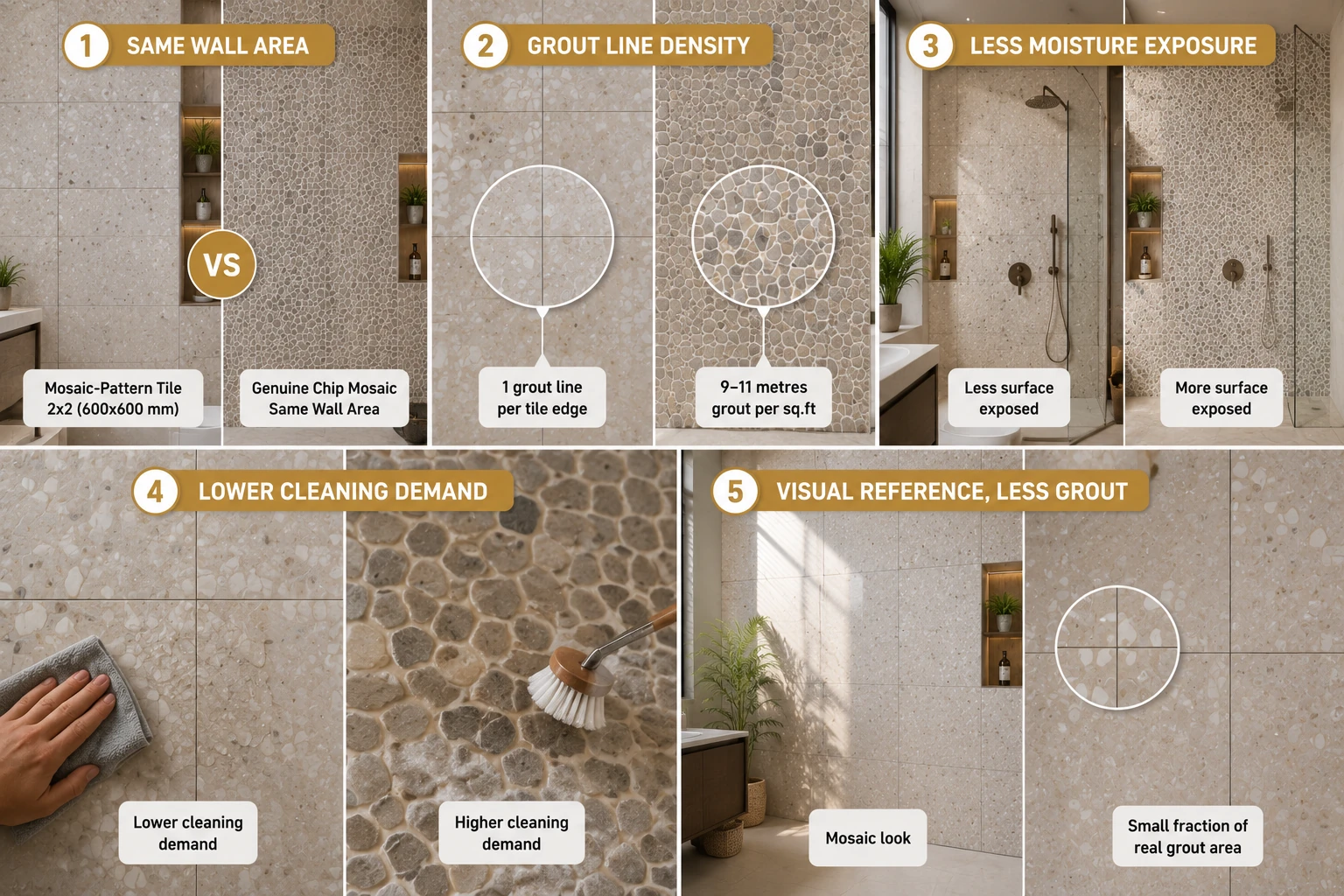
Why this distinction genuinely matters for a bathroom: A mosaic-pattern tile at 2x2 (600x600 mm) has exactly one grout joint per tile edge, the same grout line density as any standard large-format bathroom tile. A genuine chip mosaic at the same wall area can carry 9 to 11 linear metres of actual grout per sq.ft, since every individual chip is its own grout-bordered piece. A mosaic-pattern tile gives a bathroom the visual reference of a mosaic surface while carrying a small fraction of the real grout joint area a genuine chip mosaic installation would have, meaningfully reducing both the surface area exposed to moisture at the joints and the long-term cleaning demand.
Water Resistance
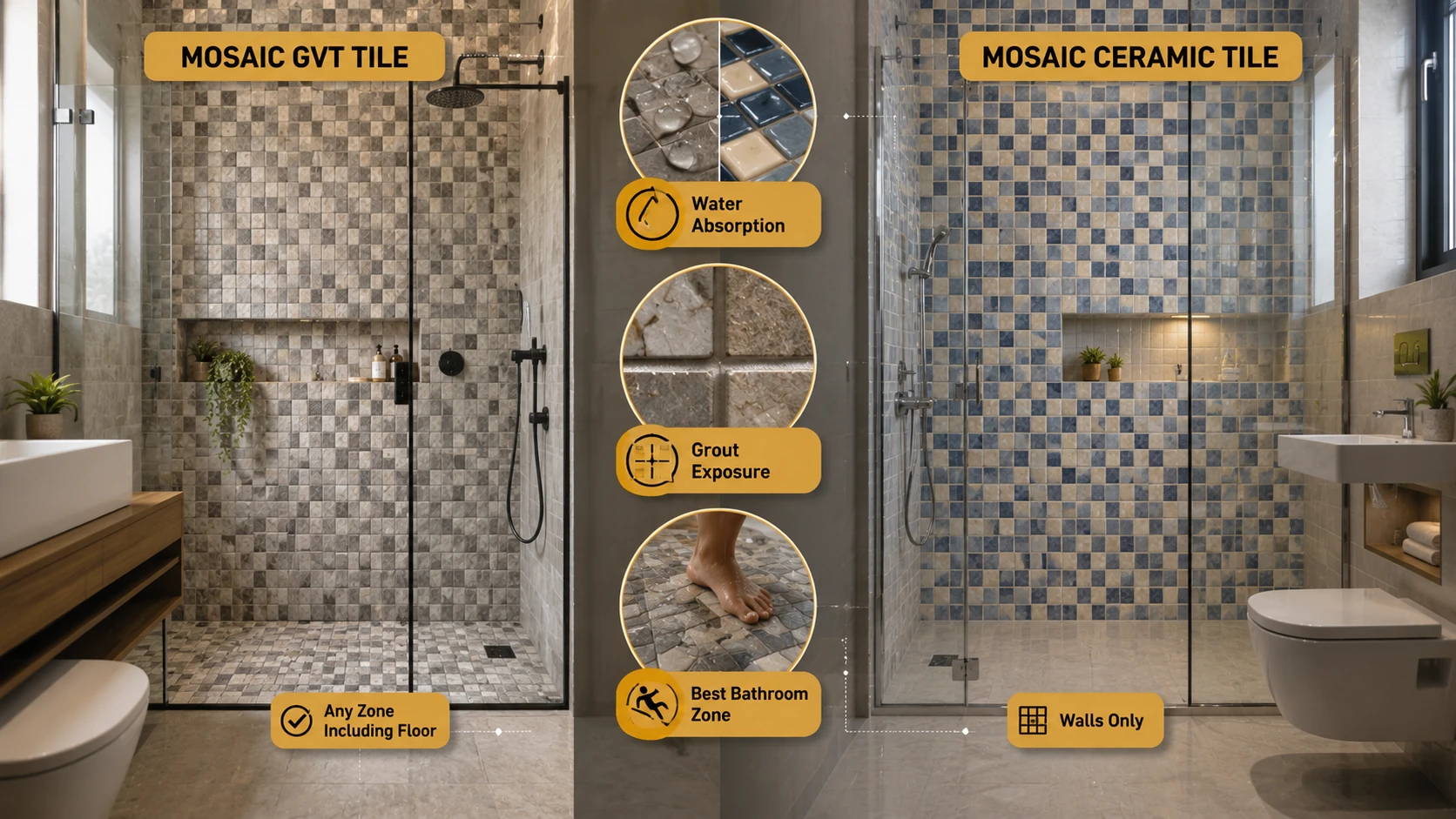
| Property | Mosaic-Pattern GVT Tile | Mosaic-Pattern Ceramic Tile |
| Water absorption | 0.05% or below, standard GVT specification | Higher standard ceramic range, confirm the specific product's rating |
| Grout exposure | Minimal, standard single-tile joint spacing | Minimal, same single-tile joint spacing regardless of material |
| Best bathroom zone | Any zone, including the floor, with a confirmed anti-skid rating for floor use | Walls only, given ceramics' generally higher absorption than GVT. |
Buying Checklist for Mosaic-Pattern Tiles
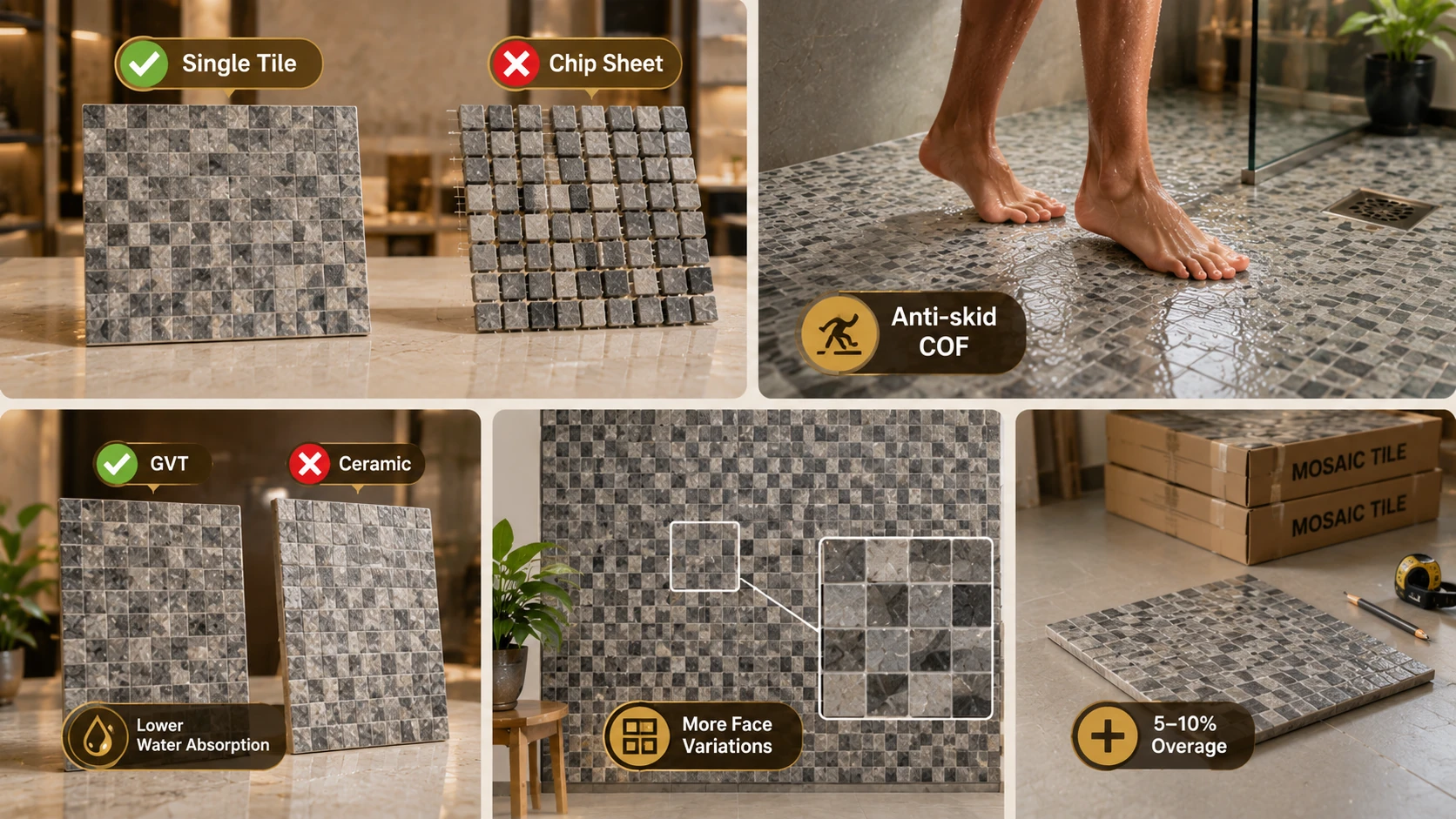
- Confirm the product is a single printed tile, not an assembled chip sheet, since both are marketed under overlapping mosaic terminology, and the installation, cost, and grout implications differ considerably.
- Confirm anti-skid COF for any floor application, exactly as with any other tile, since a printed mosaic pattern carries no inherent slip-safety property of its own.
- Confirm GVT versus ceramic construction and select GVT for any floor use, given its lower water absorption.
- Confirm face variation count, since a mosaic print with too few variations can reveal an obviously repeating tile-to-tile pattern across a wall or floor.
- Order standard tile overage, 5 to 10%, depending on room shape, since installation follows standard single-tile cutting rather than the higher waste chip mosaic sheets typically require.
Still deciding between printed mosaic-pattern tiles and genuine mosaic sheets? Read our Mosaic Tiles Guide to compare materials, construction, applications, and buying considerations, helping you choose the right mosaic solution for your bathroom and other spaces.
Mosaic-Pattern Tiles in India: 2026 Manufacturing Context
Mosaic-pattern GVT and ceramic tiles are produced widely across Morbi, Gujarat, and other Indian ceramic centres as part of standard printed-design tile ranges, using the same production line and lead times as any other printed GVT or ceramic product. This makes mosaic-pattern tiles considerably faster to source and more widely available than genuine chip mosaic, which is produced by a more specialised segment of manufacturers.
Once you've selected the right mosaic-pattern tile, explore our Mosaic Tile Design Ideas for inspiration across bathrooms, pools, kitchens, feature walls, and living spaces, with practical layout ideas for Indian homes.
Browse Mosaic-Pattern Tiles on TilesFinders
Single-piece mosaic-pattern GVT and ceramic tiles for Indian bathroom floors and walls can be compared by format and anti-skid rating on TilesFinders, with guidance available to confirm you are selecting the printed-tile product rather than assembled chip mosaic.
FAQs
A mosaic-pattern tile is a single, standard-format GVT or ceramic tile printed with a design that visually references a mosaic, installing exactly like any other tile. A mosaic sheet is genuinely assembled from small individual chips on a mesh backing, sold by sheet coverage rather than tile dimension.
Standard GVT and ceramic tile sizes, most commonly 1x1 or 12x12 (300x300 mm) and 2x2 or 24x24 (600x600 mm), are sold and priced by tile dimension exactly like any other printed tile.
No, considerably less. A mosaic-pattern tile has one grout joint per tile edge, the same as any standard large-format tile, while a genuine chip mosaic can carry 9 to 11 linear metres of grout per sq. ft, given its many individual small pieces.
Yes, with confirmed anti-skid COF, exactly as with any other floor tile. The printed mosaic design itself carries no inherent slip-safety property, so this must be confirmed for the specific product regardless of the pattern.
GVT, given its lower water absorption at 0.05% or below compared to standard ceramics' higher range, making it the correct choice for any bathroom floor application specifically.
Enough to avoid an obviously repeating tile-to-tile pattern across the installed wall or floor area, particularly important for this print style, since a low face variation count can make the mosaic illusion look mechanically repetitive rather than organic.
Generally, yes, since it follows standard tile production and installation rather than the more specialised manufacturing and higher-labour installation gthat enuine chip mosaic requires.
Standard tile overage of 5 to 10%, depending on room shape, since installation follows standard single-tile cutting rather than the higher waste percentages genuine chip mosaic sheets typically need around fixtures and curves.


Related Tiles
Mosaic Tiles for Indian Bathrooms: Size, Grout Width, and Water Resistance Explained
Top 10 Mosaic Tiles Manufacturers in India: Where to Source the Best Designs
Ceramic vs Vitrified vs Porcelain Bathroom Tiles: Which One Wins for Indian Homes?
Top 10 Tile Manufacturers in Morbi: India’s Tile Capital
See our tile guides first
Set TilesFinders as a preferred source and our buying guides surface ahead of the rest for you.
Add as preferred sourceTakes one tap. Nothing to install.
What Readers Say
This blog is very informative and tilesfinders is grt platform to learn about tiles and also they have nice collection of tiles and dealers to buy tiles near us.
I was about to redo my parking area with the wrong tile size until I read this. The layout comparisons saved me from a costly mistake.
We reference TilesFinders guides while briefing clients on material selection. The size and pattern breakdowns are accurate and easy to explain visually.
On site, I get asked about grout spacing all the time. This article gave me a solid reference I now share with my team before every job.
Finally a guide that doesn't just push generic advice. The oil stain removal steps actually worked on our clubhouse driveway tiles.
I run a small construction firm and now send this link to clients directly when they ask about entrance tile sizing. Saves me an hour of explaining.
Good practical detail, though I wish there were more examples for compact apartment entrances specifically, not just villas.
My mother-in-law wanted marble, I wanted vitrified. This blog gave us the neutral comparison we needed to actually decide together.
Detailed without being overwhelming. I appreciated that it covered both cost and maintenance, not just the aesthetics.
Used the algae and hard water removal tips on our terrace tiles after the monsoon. Worked better than what our regular cleaner was doing.
As someone who sources tiles for multiple builder projects, I find these comparisons genuinely useful for vendor conversations, not just consumer content.
Recommended this to a client who kept second-guessing the entrance design. The small vs large layout section settled the debate instantly.
Straightforward and honest, no unnecessary jargon. Would like to see a similar breakdown for outdoor pool-deck tiles next.
We've bookmarked several TilesFinders guides for our design handbook. Reliable source when clients want data, not just opinions.
Two paths, one marketplace.
Get free quotes from verified suppliers.
Share your room, budget, and style. Suppliers in Morbi respond within hours.
Get Free QuotesList your business, reach real buyers.
Put your showroom in front of homeowners searching for tiles right now.
List Your BusinessMore Blogs
See all
Top 10 Mosaic Tiles Manufacturers in India: Where to Source the Best Designs
Sourcing mosaic layouts? Compare India's top 10 ceramic, vitrified, and porcelain mosaic manufact...
Read More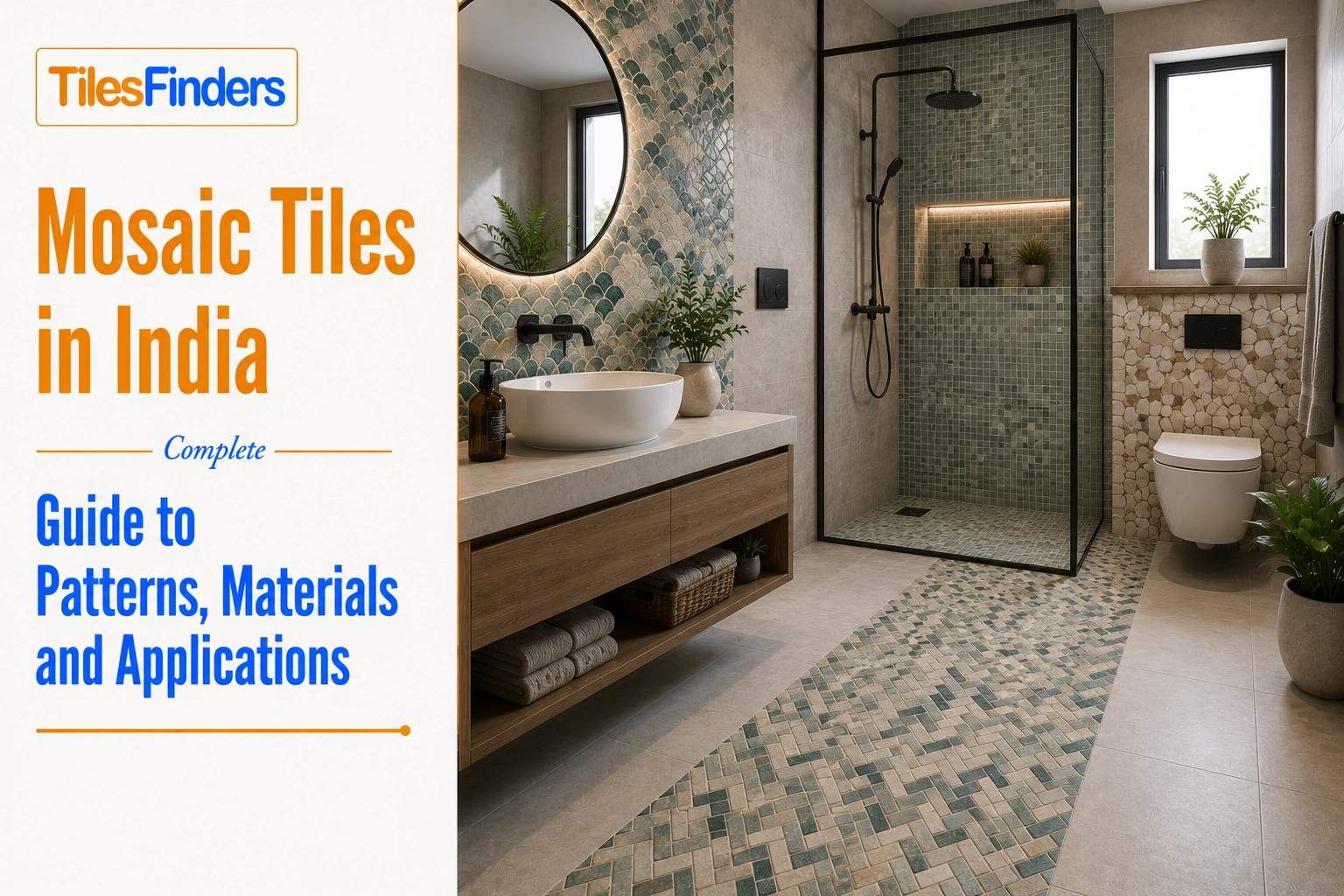
Mosaic Tiles in India: Complete Guide to Patterns, Materials and Applications
Learn how printed mosaic-look tiles differ from genuine mosaic sheets, explore popular patterns, ...
Read More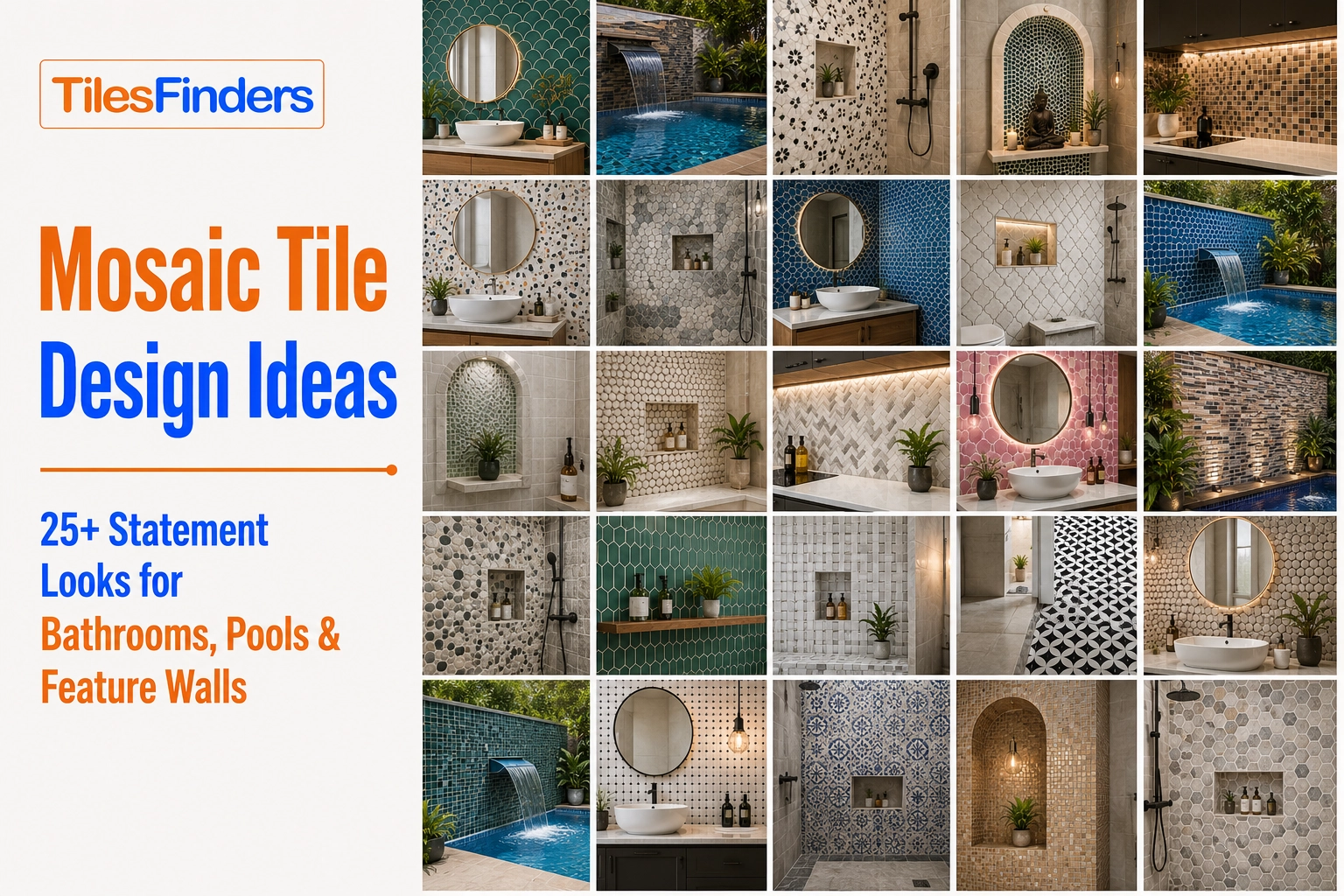
Mosaic Tile Design Ideas: 25+ Statement Looks for Bathrooms, Pools, and Feature Walls
Explore 25+ mosaic tile design ideas for bathrooms, kitchens, pools, feature walls, and living sp...
Read More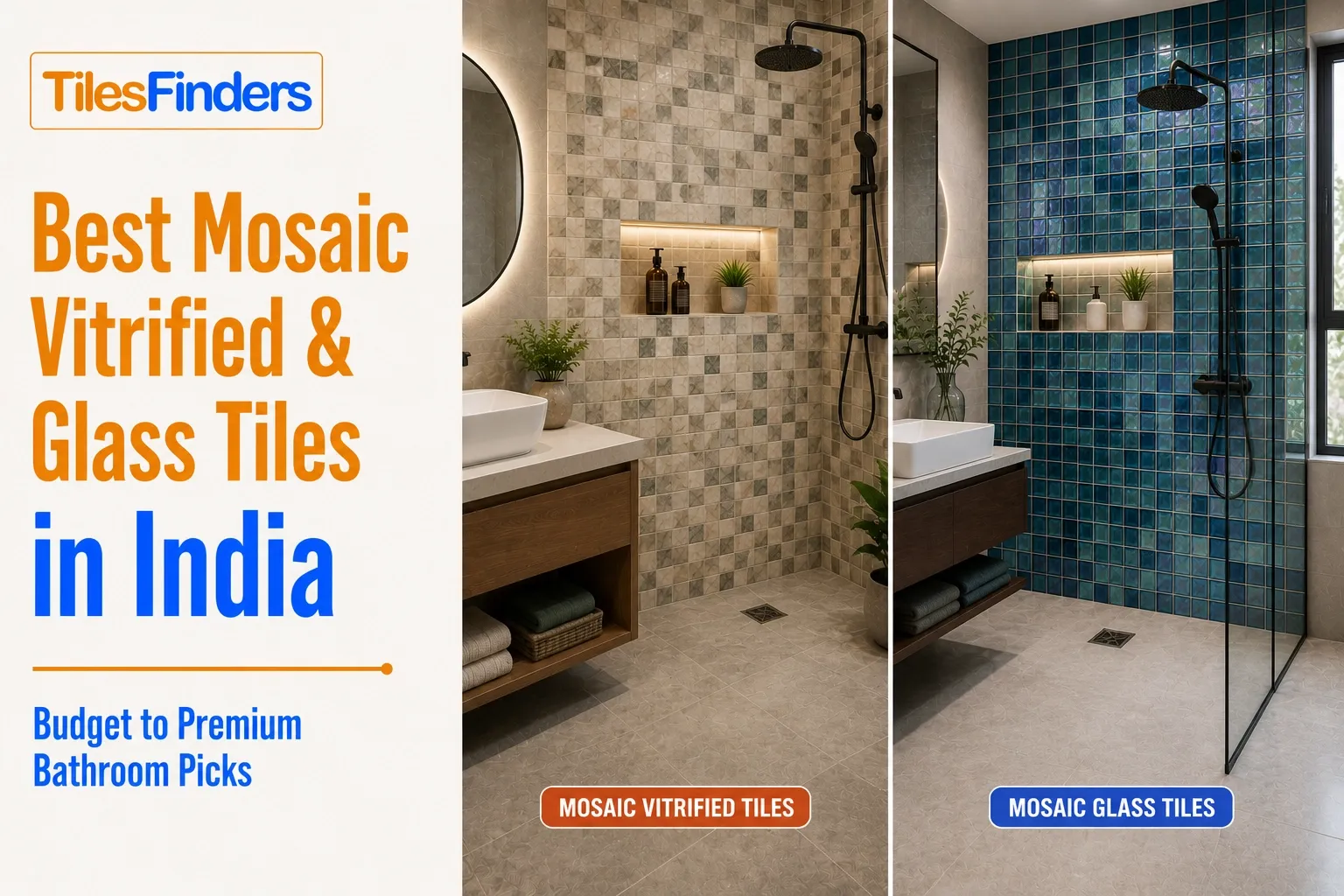
Best Mosaic Vitrified and Glass Tiles in India 2026: Budget to Premium Bathroom Picks
Discover the best mosaic vitrified and glass tiles for Indian bathrooms in 2026. Get budget to pr...
Read More