Matte Tile Cleaning Guide: Why They Stain Easier and How to Fix It
June 15, 2026 10
Learn why matte tiles stain more easily than polished tiles and how to clean them effectively. Discover stain removal tips, safe cleaners, and maintenance methods for Indian homes.
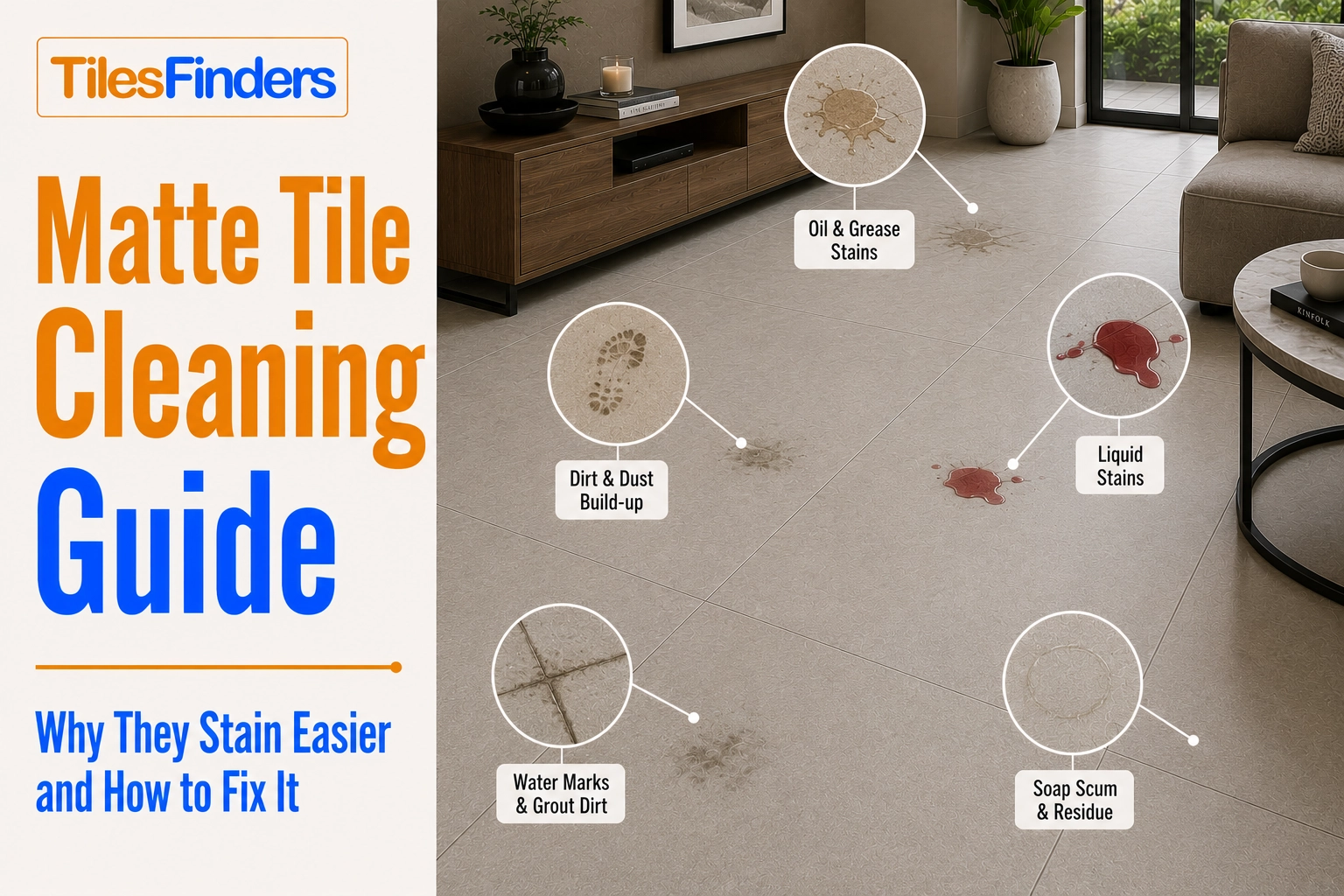
Matte tiles stay beautiful and anti-skid but require proper cleaning because their textured surface traps oil, turmeric, hard water deposits, and dirt more easily than polished tiles. Regular dry sweeping, pH-neutral cleaners, quick spill cleanup, and weekly deep cleaning help keep matte GVT, Posh, and GHR tiles looking new for years.
Matte finish tiles are the most popular floor choice for Indian homes in 2026. The anti-skid surface, the calm visual character, and the contemporary look make matte GVT tiles the first recommendation from most Indian interior designers for living rooms, bedrooms, and kitchens. The maintenance reality is something buyers discover after installation.
Matte tiles stain faster and more visibly than polished tiles in Indian homes. This is not a manufacturing defect or a quality problem. It is a direct consequence of what makes the matte finish what it is. Understanding why this happens is the first step toward a cleaning routine that prevents the problem rather than just reacting to it.
This guide covers the science behind matte tile staining in plain language, the four most common staining agents in Indian homes, the correct daily and weekly cleaning routine, stain-specific removal methods, which products are safe to use, and which methods damage the tile surface. It covers all matte GVT finishes used in India: standard Matte, Posh, and GHR.
Why Matte Tiles Stain More Than Polished Tiles
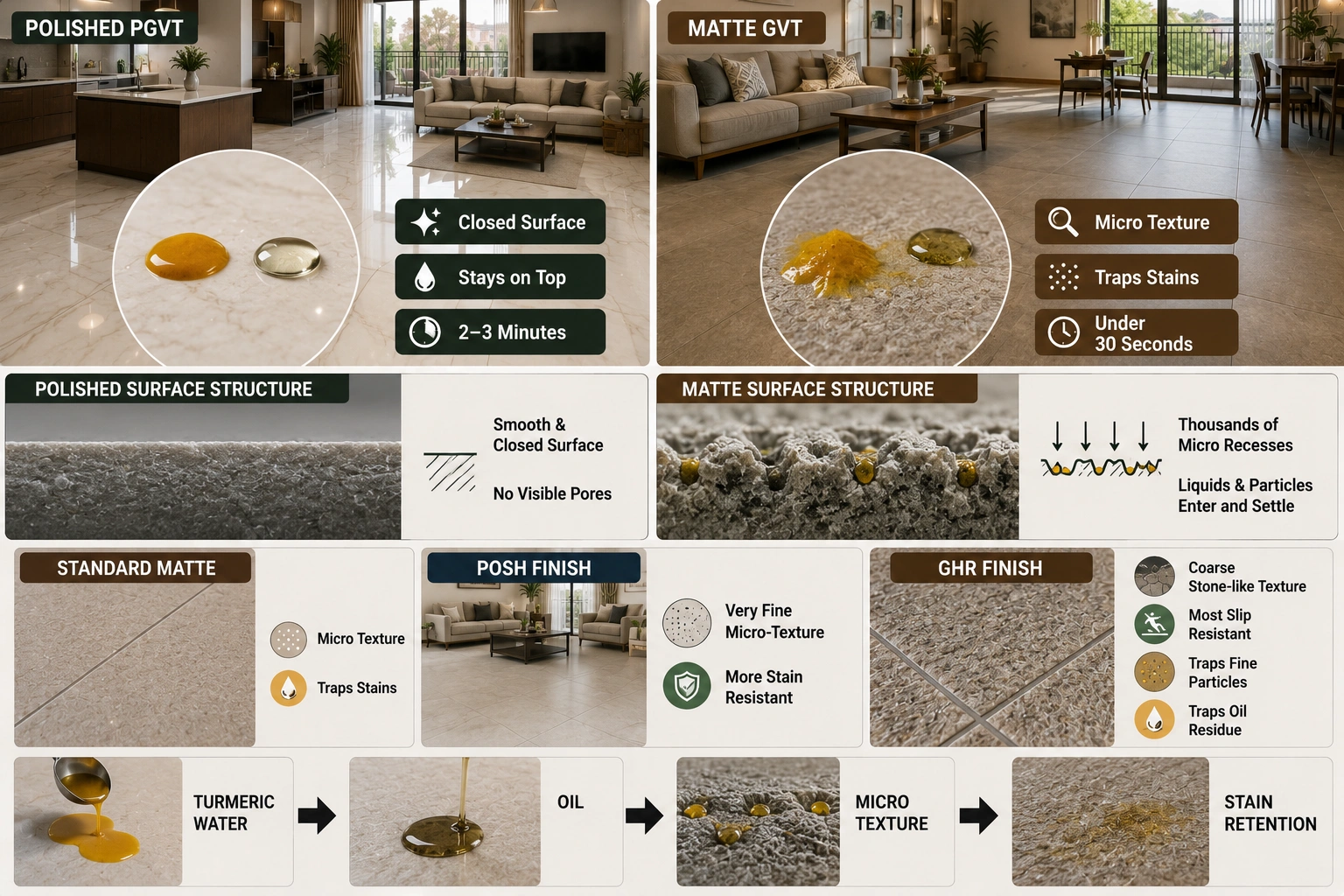
A polished tile surface (PGVT) has been compressed and buffed during manufacturing until the surface pores are essentially closed. The result is a surface with very low micro-porosity. When a drop of oil, turmeric water, or masala falls on a polished tile, it sits on the closed surface and can be wiped away within seconds without penetrating.
A matte tile surface retains its micro-texture deliberately. The manufacturing process stops before surface compression closes the pores. The resulting surface has thousands of micro-scale recesses per square centimetre. These recesses give the tile its non-slip property, its soft visual character, and its contemporary look. They also give liquids, oils, and particles a place to enter and hold.
GVT matte tiles have a water absorption of 0.05 per cent, the same as polished GVT. The technical absorption is not the issue. The micro-surface texture is what captures staining agents and holds them in place long enough for them to bond with the tile body. A drop of turmeric water on a polished tile needs 2 to 3 minutes of contact to stain. On a matte tile, the same drop can penetrate the micro-texture in under 30 seconds.
The Posh finish and GHR finish, which are sub-categories of the matte family, behave differently from standard matte. Posh has a near-zero reflection surface with a very fine micro-texture that is slightly more stain-resistant than standard matte. GHR has a coarser stone-like texture that is the most slip-resistant of all matte finishes,s but also the most prone to trapping fine particles and oil residue. Understanding which matte finissubtypepe you have determines the right cleaning approach. The full comparison between matte finish options is covered in the guide on matte vs polished sugar vs posh finish tiles.
The Four Most Common Matte Tile Stains in Indian Homes
Oil and Cooking Grease
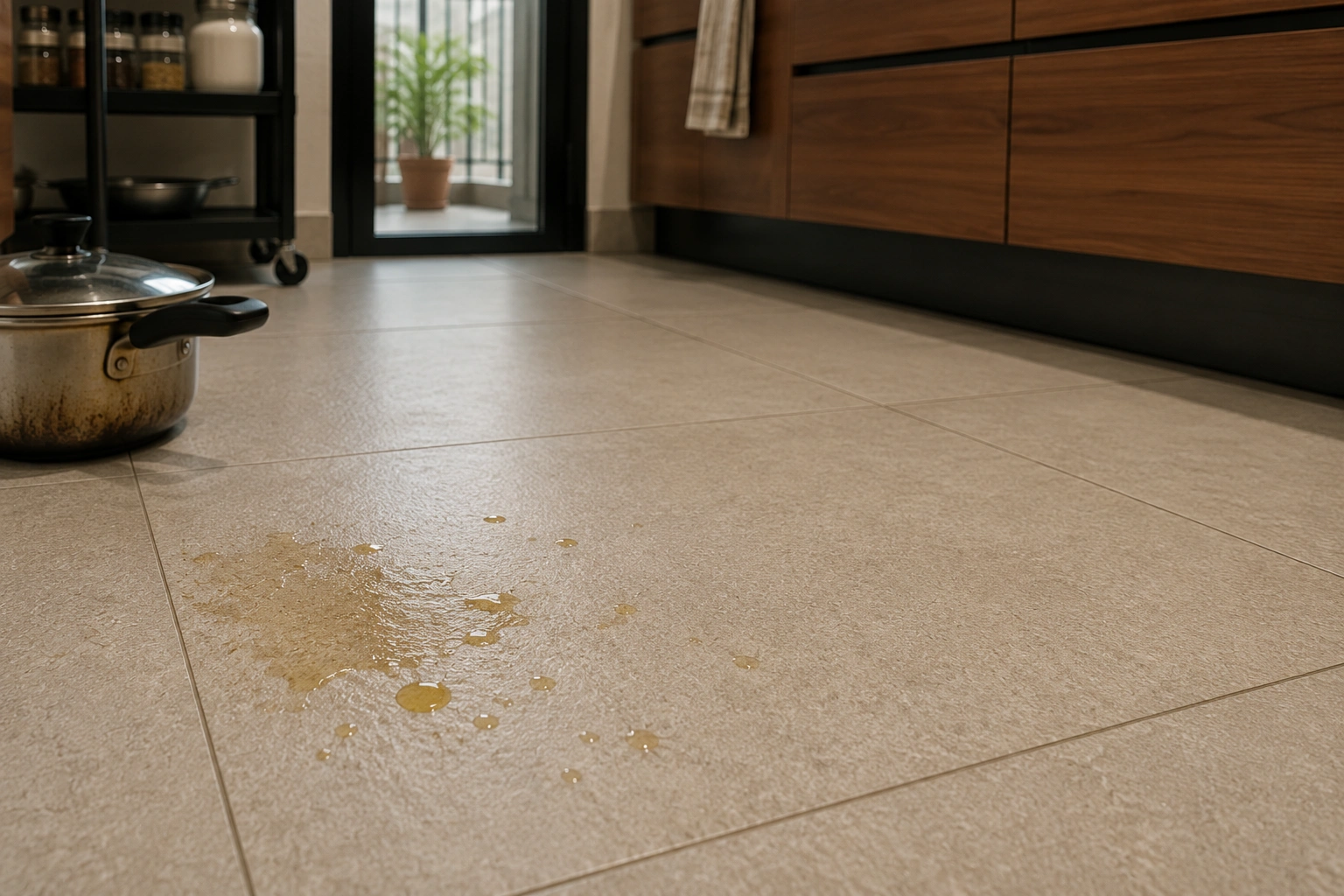
Oil is the most common matte tile stain in Indian kitchens and living rooms near dining areas. Indian cooking uses oil generously, and oil vapour in a kitchen settles on every horizontal surface, including the floor. On matte tiles, oil builds up in the micro-texture over weeks of cooking and creates a progressively darker and stickier surface that regular mopping does not fully remove.
Fresh oil spills on matte tiles are easy to clean. Oil that has been allowed to sit and build up over months, combined with dust and cooking particles, forms a bound layer that requires a degreaser to remove. Prevention is far easier than treatment: wipe fresh oil spills immediately and use a mild degreaser in the weekly cleaning routine for kitchen matte floor tiles.
Turmeric and Masala
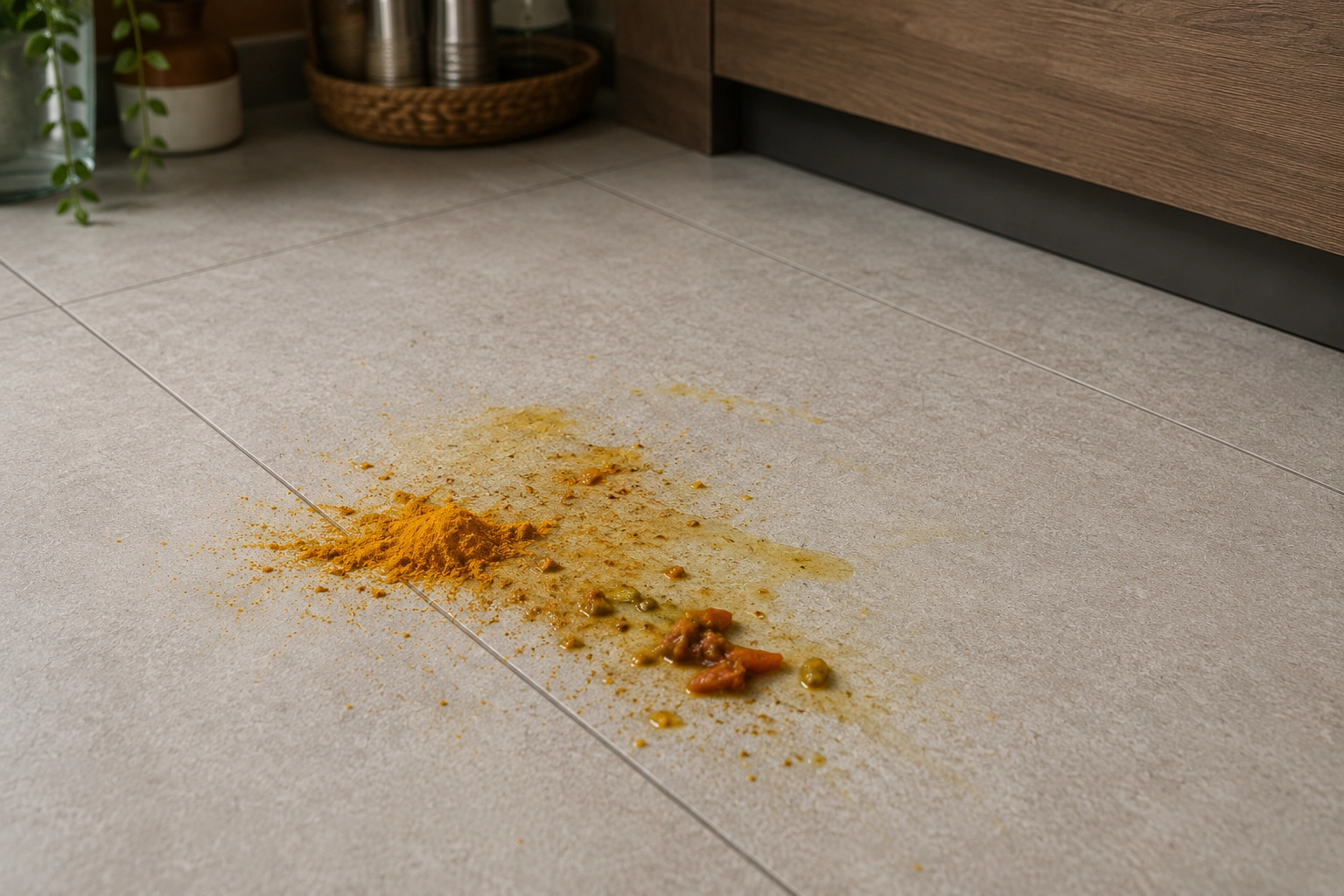
Turmeric (haldi) is one of the most aggressive staining agents on any porous or micro-textured surface. The curcumin compound in turmeric bonds quickly with ceramic and vitrified tile surfaces at the micro-texture level. On matte tiles, a turmeric spill that is not wiped within 60 seconds leaves a yellow stain that requires targeted treatment to remove. On polished tiles, the same spill left for the same time wipes off with a damp cloth.
Masala powders in general (chilli, coriander, cumi, and whensplitt as a wet paste) stain matte tiles in the same way, though usually with less intensity than turmeric. The cumulative effect of daily Indian cooking in kitchens with matte floor tiles is a gradual overall yellowing of the tile surface if routine deep-cleaning is not maintained.
Hard Water and Soap Deposits
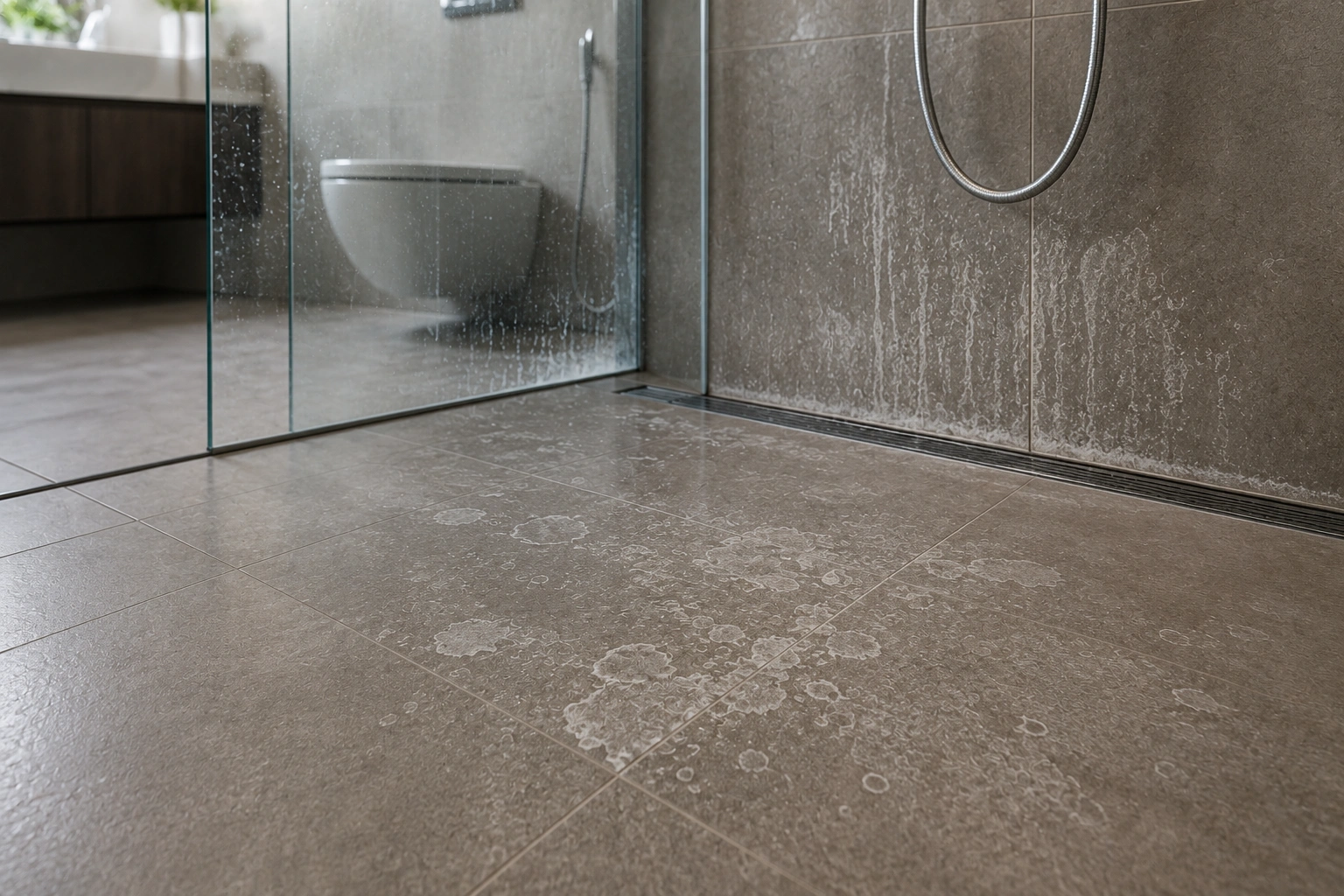
Most Indian cities have hard municipal or borewell water with high Total Dissolved Solids (TDS). Daily mopping with hard water leaves calcium and magnesium deposits in the micro-texture of matte tiles. These appear as a white chalky film or a general dullness that makes clean tiles look dirty. The effect is worse in cities with TDS above 500 mg per litre, which includes most of Delhi, Rajasthan, Gujarat, Haryana, and large parts of Maharashtra.
Soap and detergent residue from mopping compounds the problem. If the mop water is not clean or if too much cleaning product is used per mop cycle, a thin soap film deposits in the micro-texture and attracts dust particles. This creates a progressive dullness on matte tiles that is often mistaken for physical damage when it is actually a deposit problem that can be reversed with the right cleaning method.
Grout Line Darkening
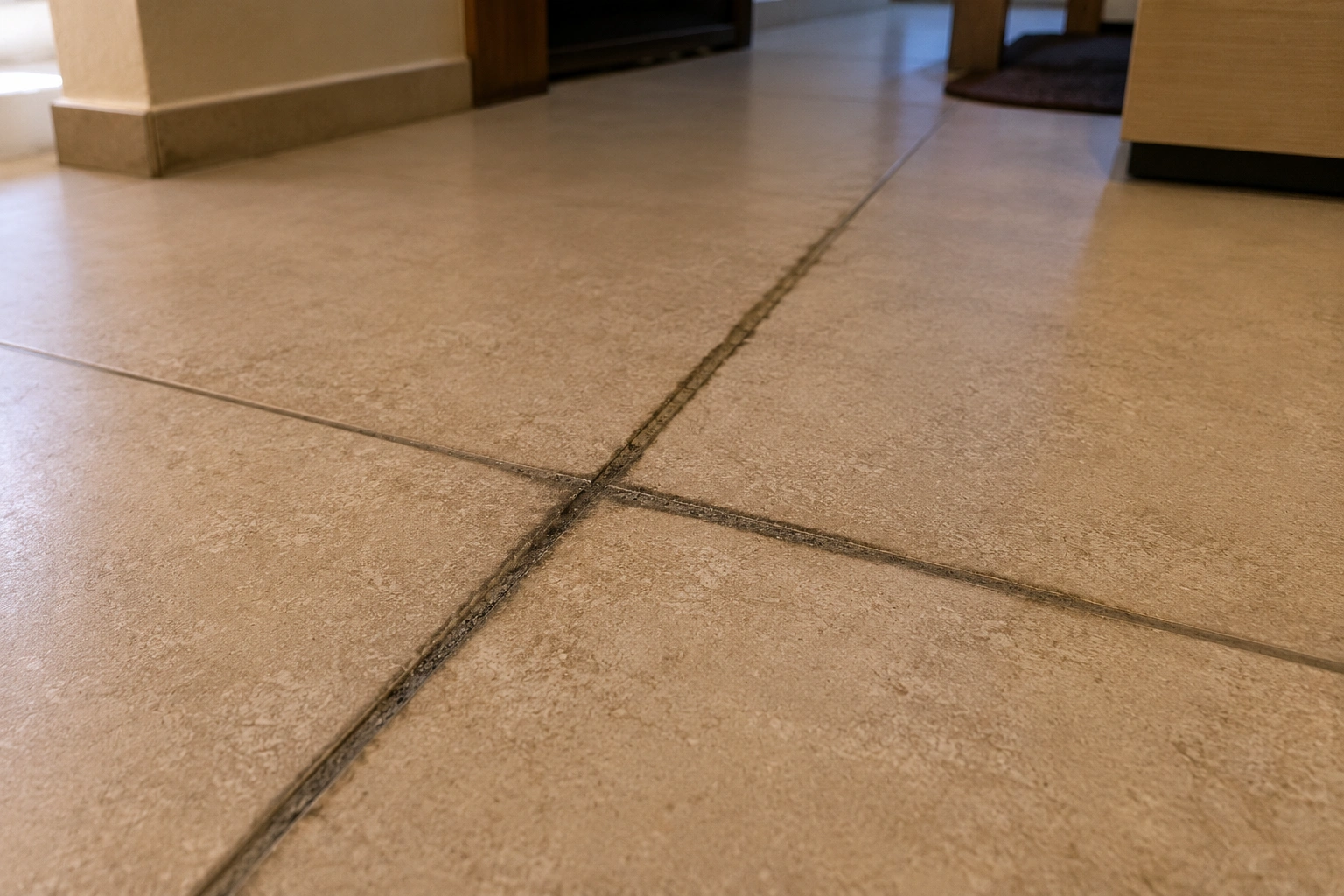
Grout lines in Indian homes accumulate cooking grease, dust, and biological material (mould and bacteria in humid conditions) more rapidly than the tile surface itself. On matte tile floors, the grout lines are particularly vulnerable because mopping pushes dirty water into the joints rather than across a smooth, polished surface. Standard cement grout in Indian kitchens and bathrooms typically shows visible darkening within 6 to 12 months of installation.
Daily Cleaning Routine for Matte Tiles in India
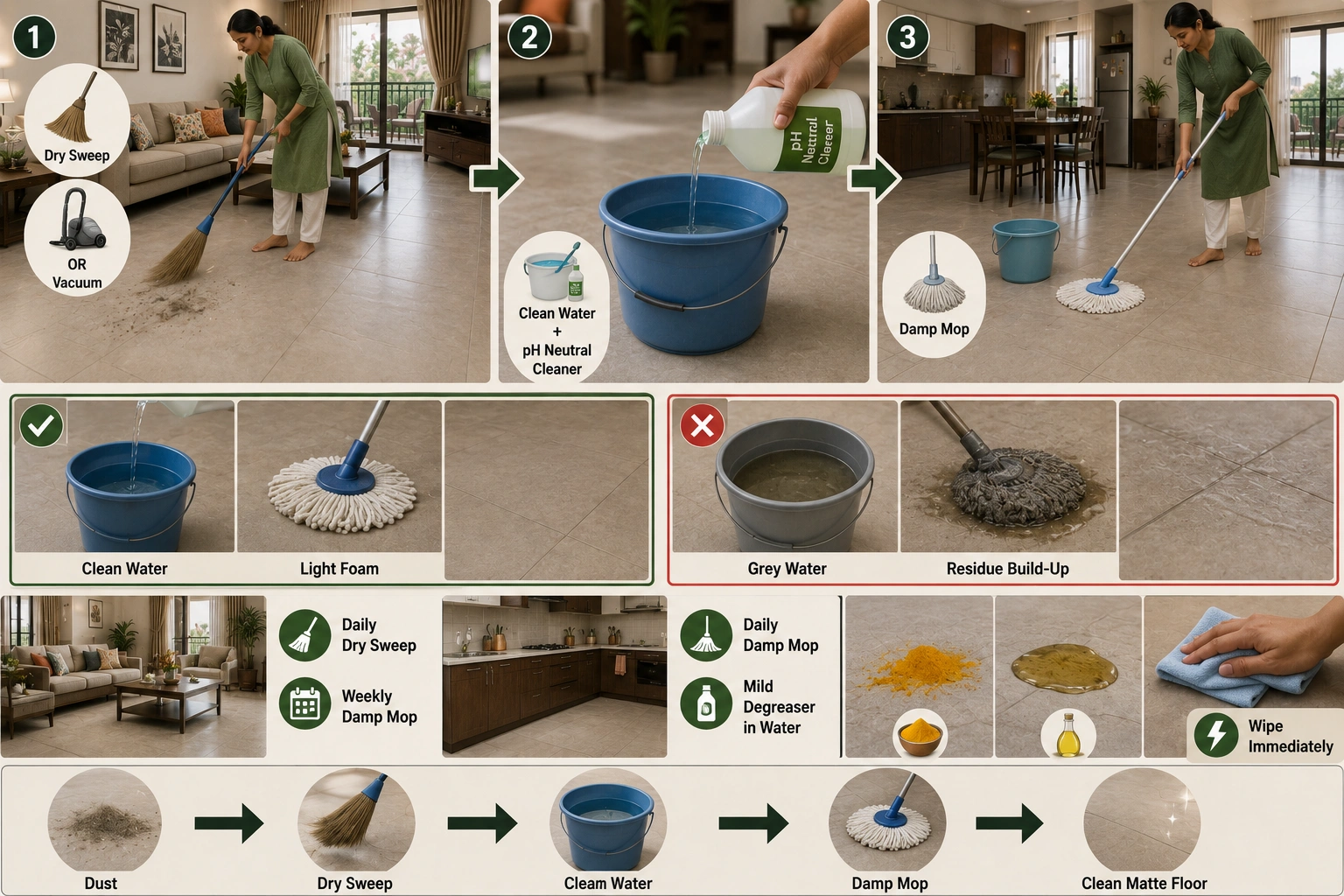
Dry sweep or vacuum before wet mopping. This is the most important step that most Indian households skip. Mopping dry dust and particles over a matte tile surface grinds those particles into the micro-texture. A dry sweep or vacuum pass before any wet cleaning prevents this.
Mop with clean water and a small amount of a pH-neutral floor cleaner. Use the minimum amount of cleaning product that creates a light foam. Excess cleaning product leaves residue in the micro-texture. Change the mop water when it becomes grey. Mopping with dirty water deposits more residue than it removes.
For Indian living rooms, a daily dry sweep and a weekly damp mop is sufficient for matte tiles away from the kitchen. For kitchen matte floor tiles, a daily damp mop with a mild degreaser in the water is the minimum standard. Wipe fresh oil and turmeric spills immediately rather than including them in the next mopping cycle.
Weekly Deep-Clean Method for Matte Floor Tiles
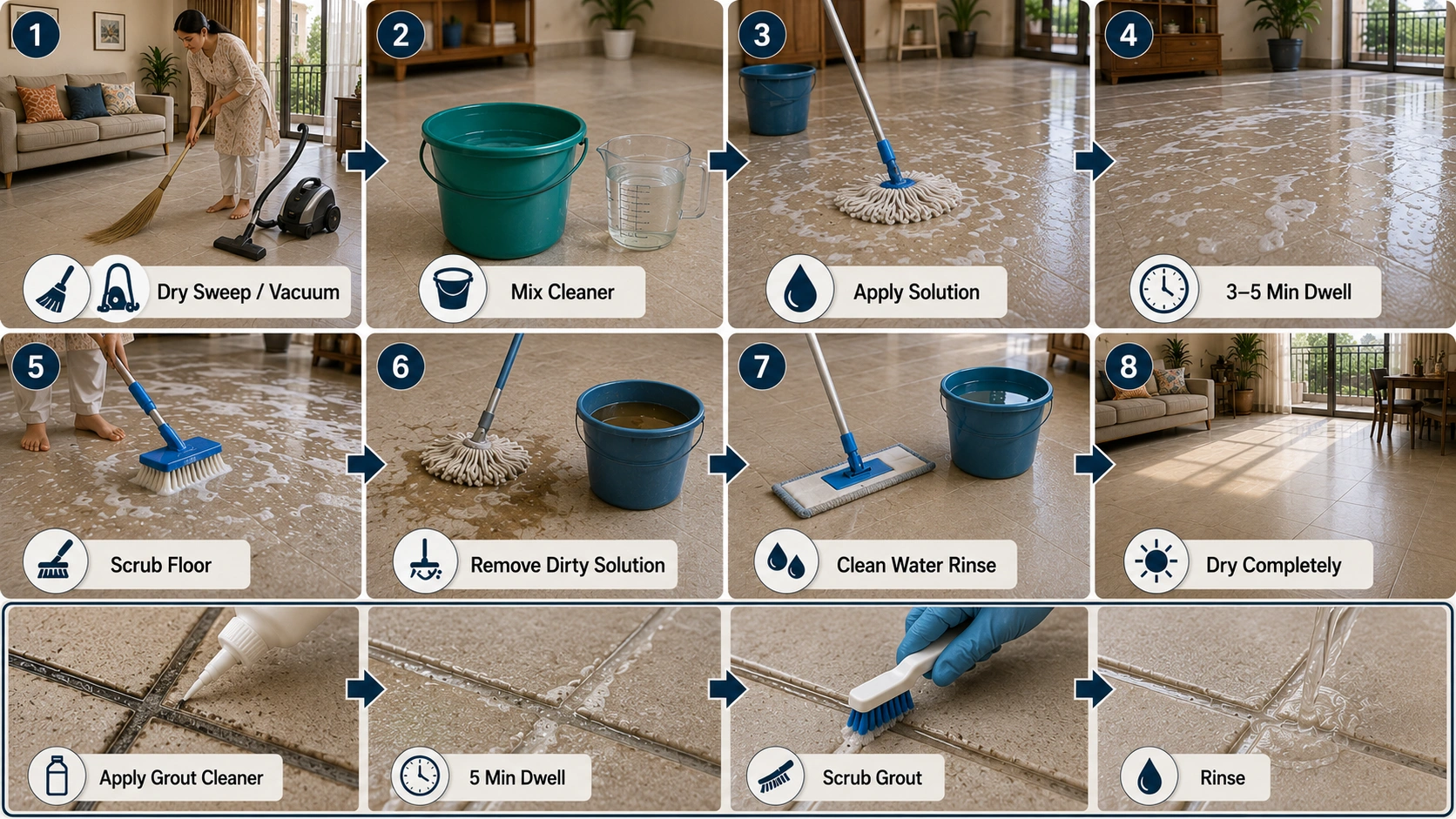
- Dry sweep or vacuum the entire matte tile floor to remove all loose particles
- Mix a mild alkaline tile cleaner or pH-neutral floor cleaner in clean water at the product's recommended dilution.n
- Apply the cleaning solution to the floor and allow it to dwell for 3 to 5 minutes (do not let it dry)
- Scrub the floor with a stiff-bristle floor brush or a microfibre scrub pad, working in sections.ns
- Mop up the dirty solution with a clean mop in fresh water
- Rinse the floor with a second mop pass in plain clean water to remove all cleaning residue
- Allow the floor to dry completely before walking on it
- For grout lines, apply a grout cleaner to stubborn dark joints with a grout brush, dwell 5 minutes, scrub, and rinse
Stain-Specific Removal Guide for Matte Finish Tiles
Removing Oil and Grease Stains
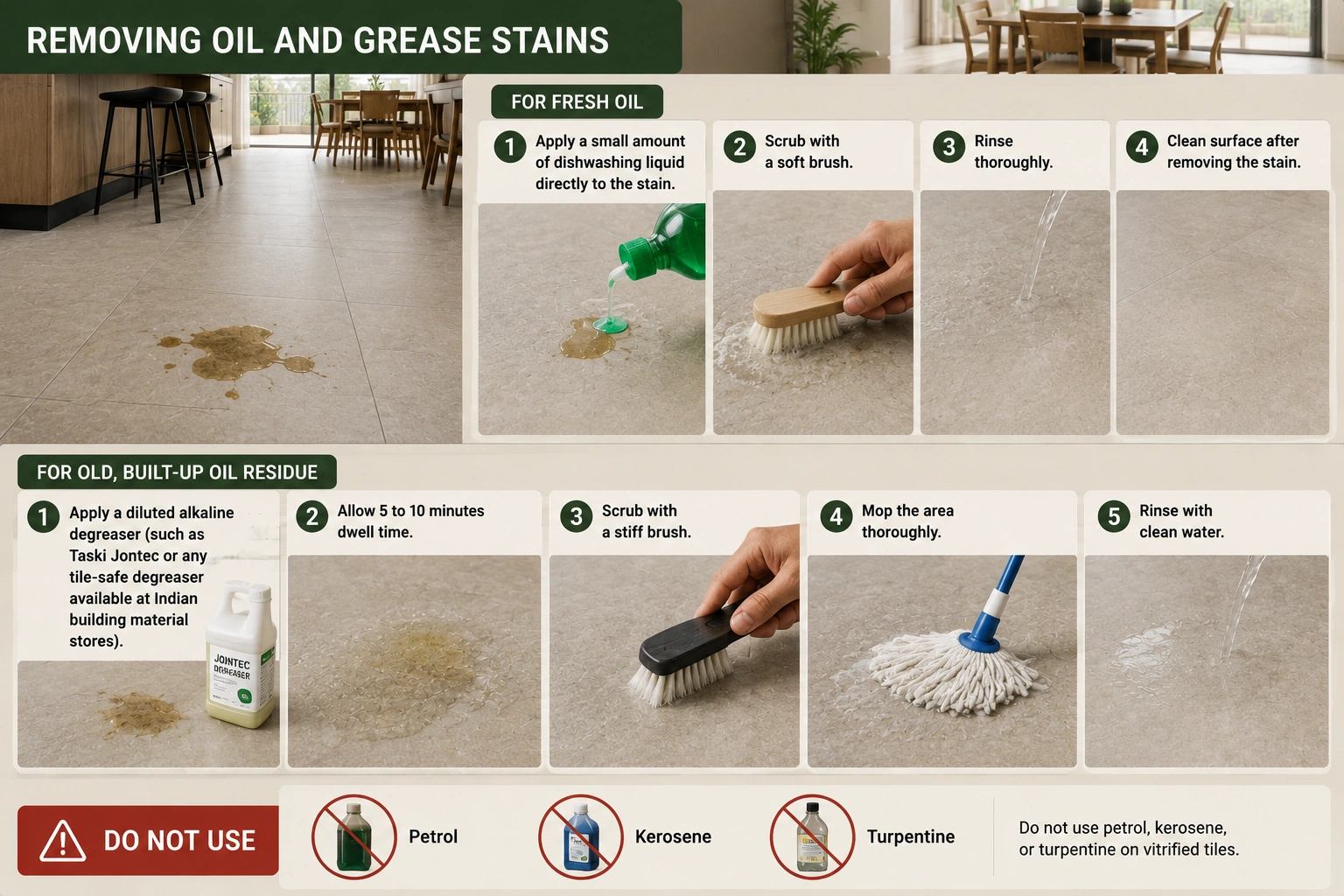
For fresh oil: apply a small amount of dishwashing liquid directly to the stain and scrub with a soft brush. Rinse thoroughly. For old, built-up oil residue: apply a diluted alkaline degreaser (such as Taski Jontec or any tile-safe degreaser available at Indian building material stores). Allow 5 to 10 minutes dwell time, scrub with a stiff brush, mop, and rinse with clean water. Do not use petrol, kerosene, or turpentine on vitrified tiles.
Removing Turmeric Stains
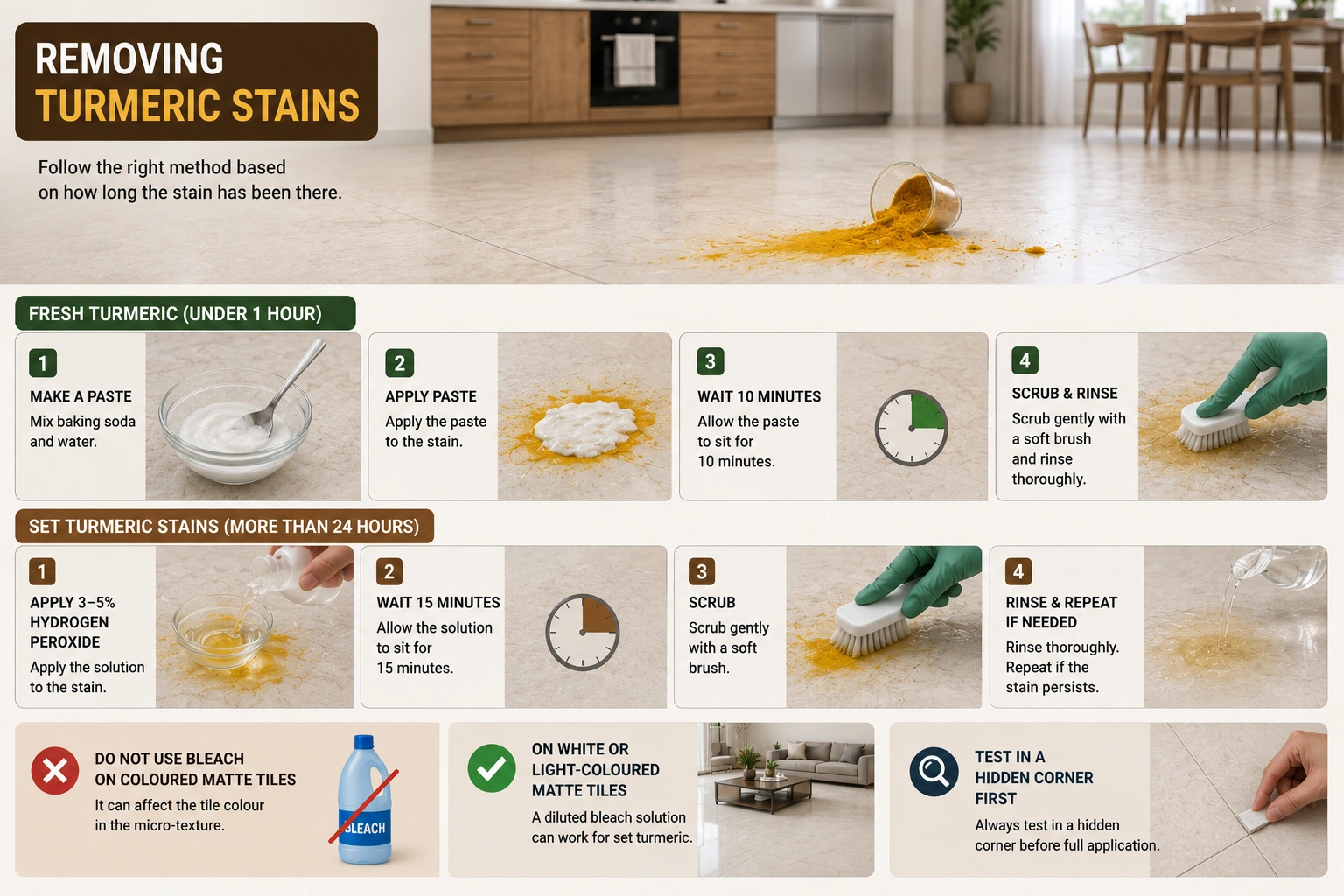
For fresh turmeric (under 1 hour): apply a paste of baking soda and water to the stain, allow 10 minutes, scrub gently with a soft brush, rinse thoroughly. For set turmeric stains (more than 24 hours): apply a 3 to 5 per cent hydrogen peroxide solution to the stain, allow 15 minutes, scrub, and rinse. Repeat if needed. Do not use bleach on coloured matte tiles as it can affect the tile colour in the micro-texture. On white or light-coloured matte tiles, a diluted bleach solution can work for set turmeric, but test in a hidden corner first.
Removing Hard Water Deposits
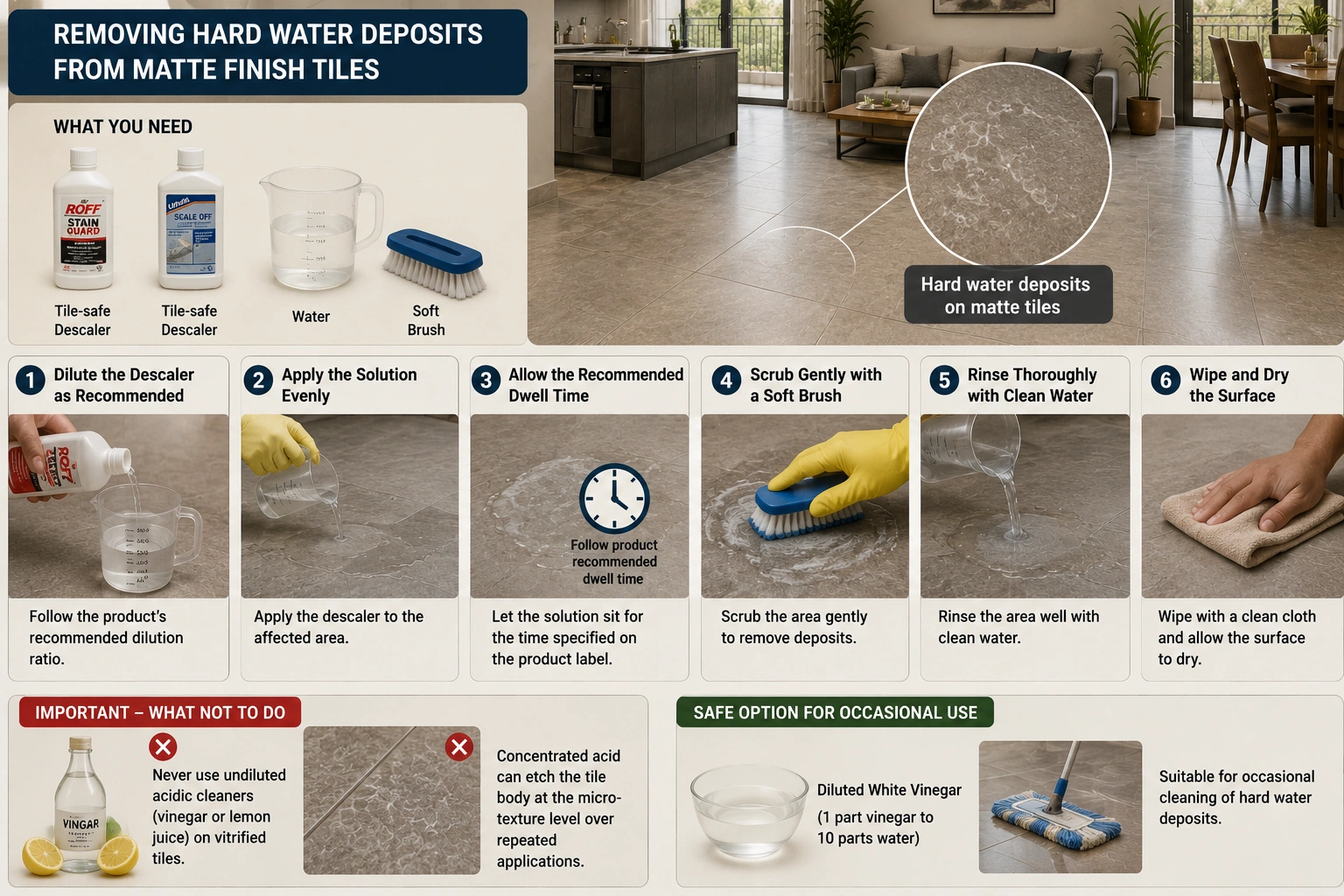
Hard water deposits on matte tiles require a descaling product. Roff Stain Guard, Lithofin Scale Off, and similar tile-safe descalers are available at tile supply stores in India. Apply the descaler at the product's recommended dilution, allow the dwell time specified, and scrub with a soft brush. Never use undiluted acidic cleaners (vinegar or lemon juice) on vitrified tiles without dilution,n as concentrated acid can etch the tile body at the micro-texture level over repeated applications. Diluted white vinegar (1 part vinegar to 10 parts water) is acceptable for occasional use on hard water deposits.
Cleaning Darkened Grout Lines
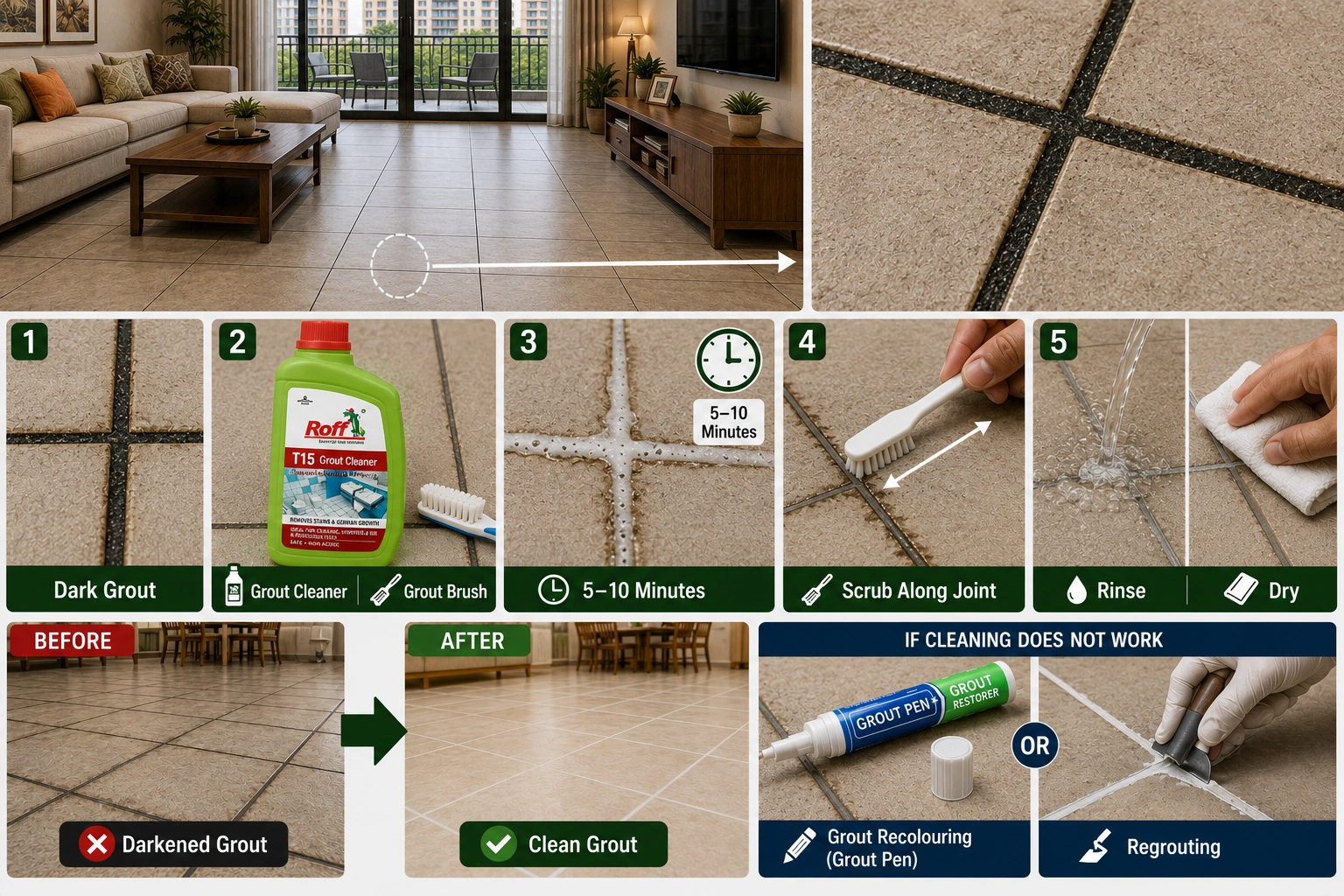
Apply a grout cleaner (Roff Grout CleanerDrr. Fixit Grout Cleaner) directly to the joint with a grout brush or an old toothbrush. Allow 5 to 10 minutes dwell time. Scrub vigorously along the joint direction. Rinse with clean water and wipe dry. For grout that has been dark for months and does not respond to cleaning, grout recolouring with an epoxy-based grout pen or professional grout regrouting is the only reliable solution.
Cleaning Products That Are Safe for Matte Tiles in India
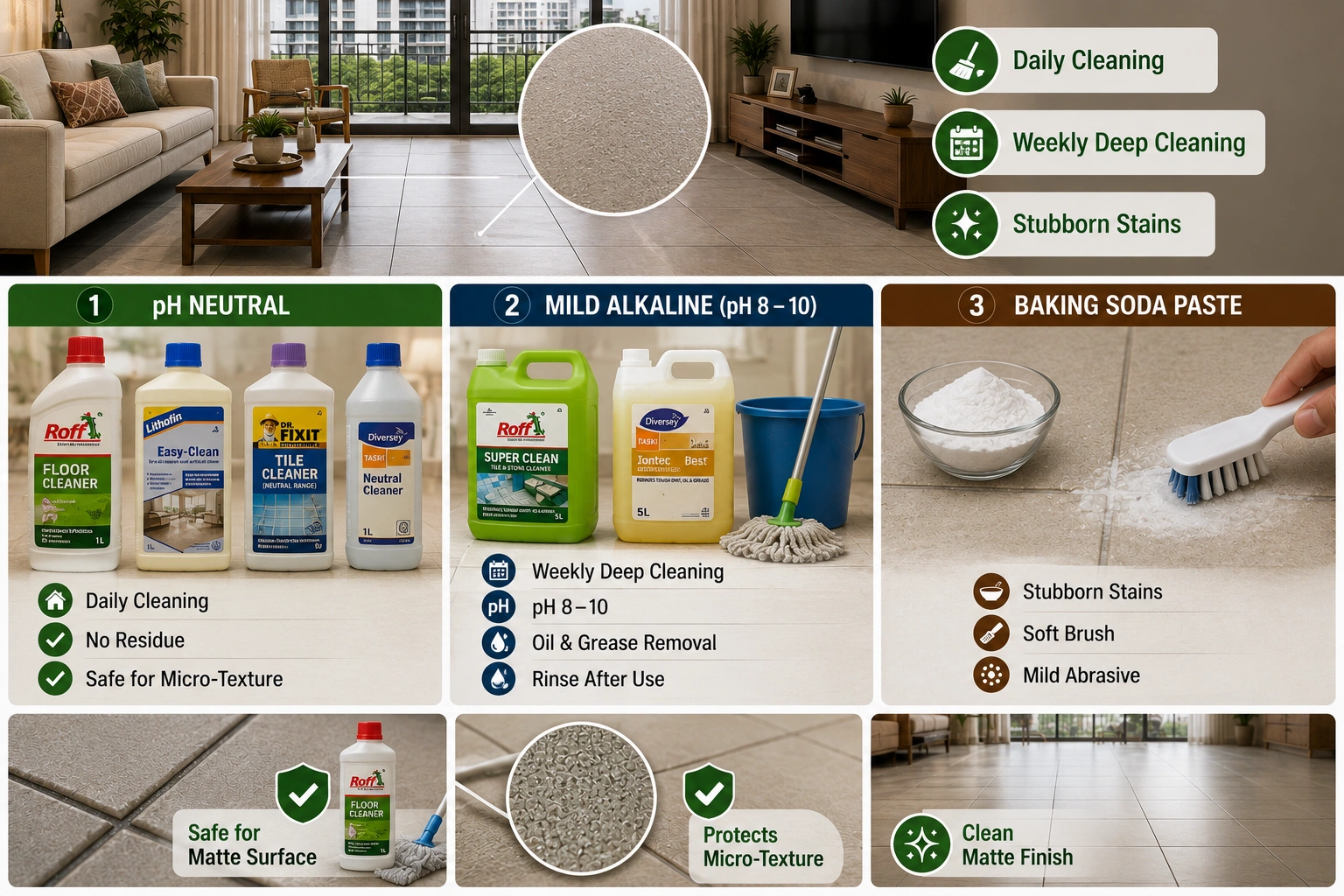
pH-neutral floor cleaners are the safest option for daily matte tile cleaning. These include: Roff Floor Cleaner, Lithofin Easy Clean, Dr Fixit Tile Cleaner (neutral range), and Taski products in the neutral pH range. These clean without depositing residue and without affecting the micro-texture of the matte surface.
Mild alkaline cleaners (pH 8 to 10) are safe for weekly deep-cleaning of matte floor tiles and are effective against oil and grease. They should be diluted per the product instructions and thoroughly rinsed after use. Roff Super Clean and Taski Jontec are examples available in India.
Baking soda paste is a safe, mild abrasive for stubborn stains on matte tiles. The fine particles work within the micro-texture without scratching the tile surface. Use with a soft brush, not a steel wool or abrasive pad.
Products and Methods to Never Use on Matte Tiles
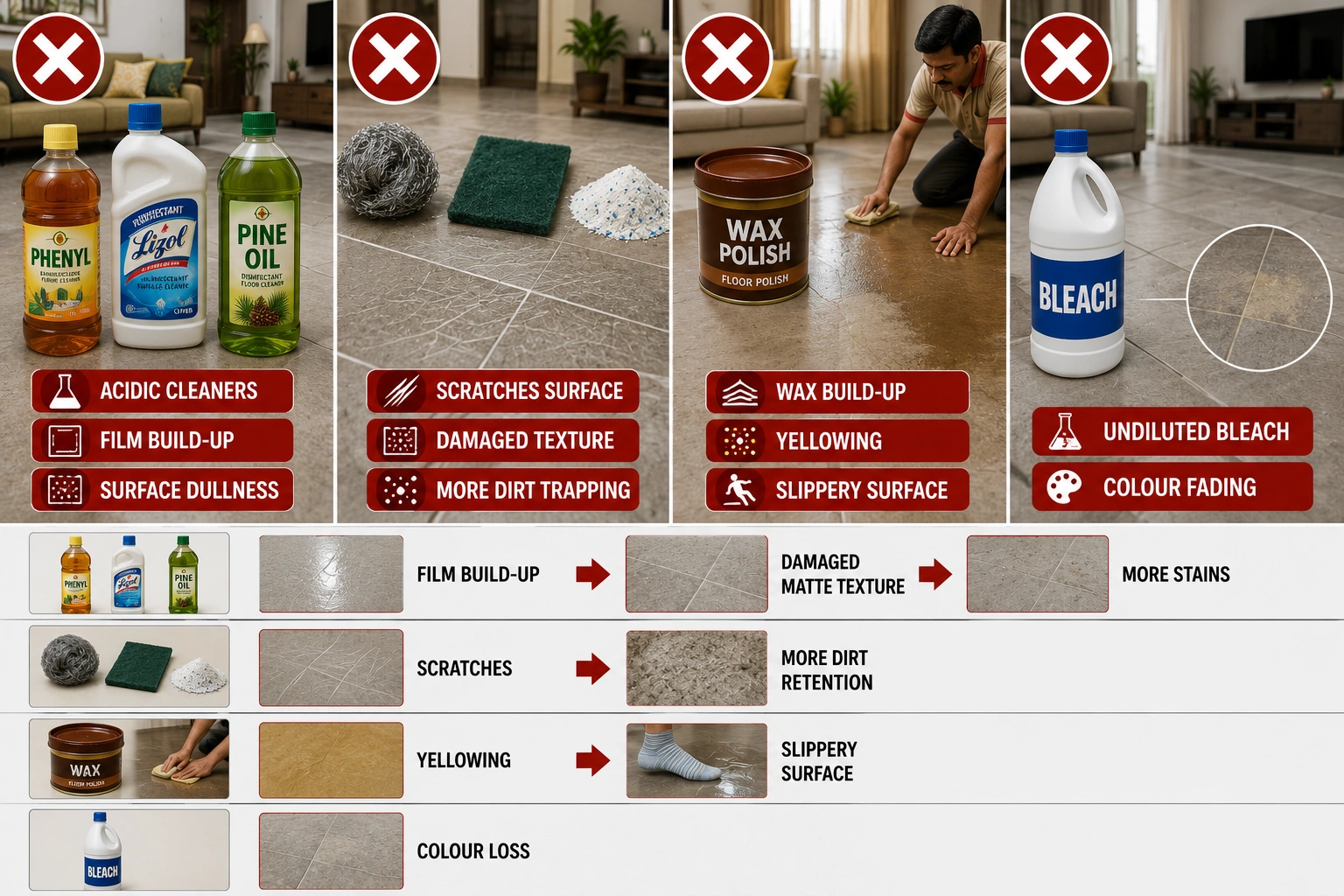
Phenyl, Lizol, and standard Indian floor cleaners with pine oil or acidic actives: these are acidic (pH 4 to 6) and deposit a film in the matte micro-texture over repeated use. They also cause progressive surface dullness on matte vitrified tiles and can affect tile colour over time with daily use.
Steel wool, abrasive scrub pads, and rough scouring powder: the matte surface micro-texture is easily scratched by abrasive materials. Scratching converts a designed matte texture into a randomly damaged surface that traps more debris and stains faster.
Wax and wax-based floor polishes: Some Indian households apply wax polish to matte tiles to restore shine. Wax builds up in the micro-texture, yellows with age and heat, and makes the surface significantly more slippery. Wax on matte tiles defeats both the design intent (matte appearance) and the functional purpose (anti-skid).
Undiluted bleach on coloured matte tiles: bleach can fade the colour pigment in the micro-texture of coloured matte tiles with repeated use. Use only on white or light tiles and always dilute.
Matte Tile Finish Differences: Matte vs Posh vs GHR Cleaning Needs
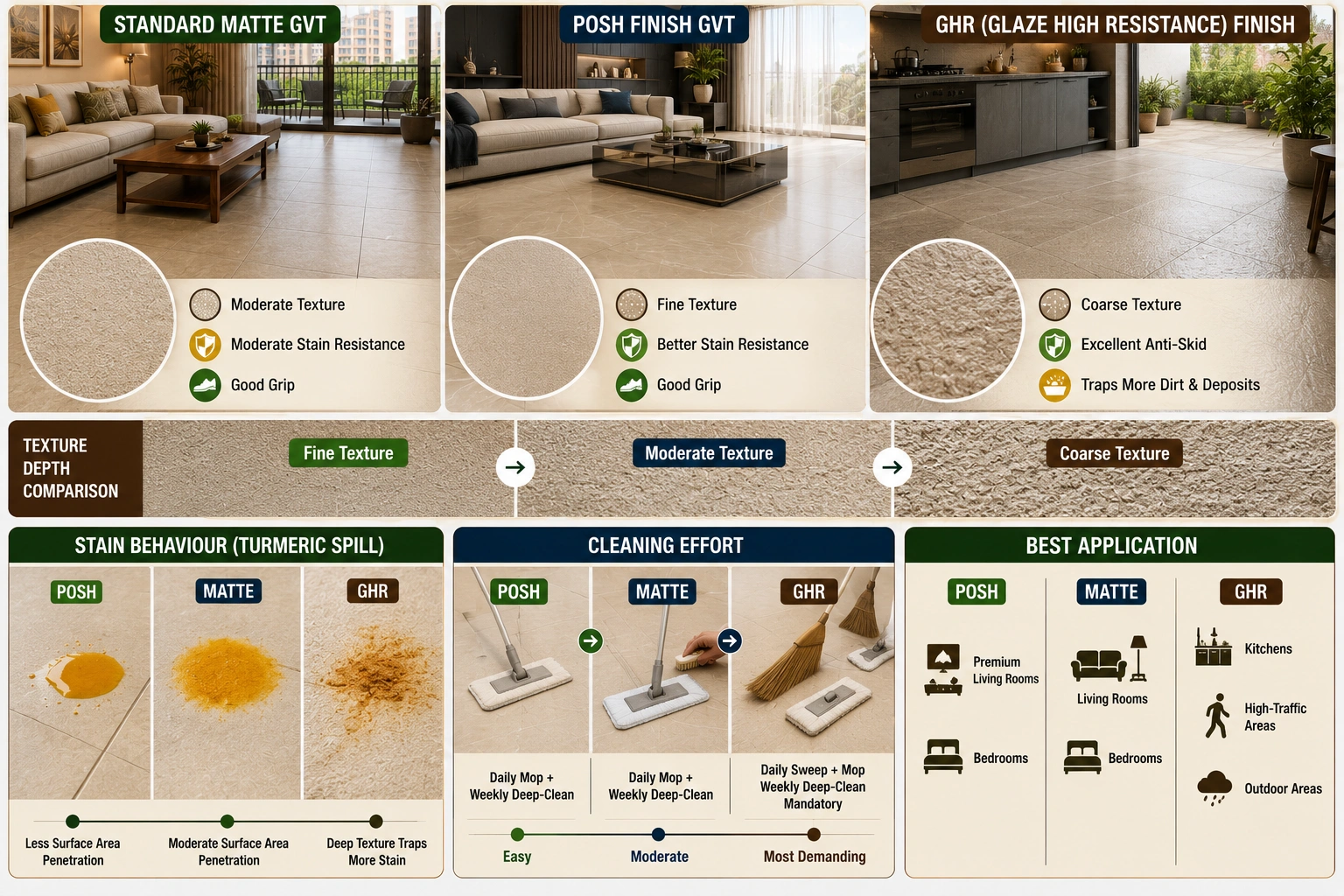
Standard Matte GVT has a moderate micro-texture. It is the most common matte finish in Indian homes and needs the daily cleaning routine described above. It is more stain-prone than Posh but less than GHR because of its intermediate texture depth.
Posh finish GVT has a near-zero-reflection surface with a finer microtexture than standard Matte. Posh is slightly more stain-resistant than standard Matte in Indian conditions because the finer texture gives liquids less surface area to penetrate. The same cleaning routine applies, but fresh spill response time can be slightly longer (up to 60 to 90 seconds for turmeric) before staining occurs.
GHR (Glaze High Resistance) finish has the coarsest texture of the three and is the most anti-skid. It is also the most demanding to keep clean in Indian conditions because the deep stone-like texture traps fine particles, cooking grease, and hard water deposits more aggressively than Matte or Posh. GHR matte tiles in Indian kitchens and bathrooms need daily dry sweeping and weekly deep-cleaning without exception. The coarse GHR texture compensates by being the most durable and outdoor-rated finish in the matte family.
| Finish | Texture Depth | Stain Resistance | Anti-Skid Level | Cleaning Frequency | Best Application |
| Matte | Moderate | Moderate | Good | Daily mop, weekly deep-clean | Living room, bedroom floors |
| Posh | Fine | Good | Good | Daily mop, weekly deep-clean | Premium living rooms, bedrooms |
| GHR | Coarse | Lower (traps more) | Excellent | Daily sweep + mop, weekly deep-clean mandatory | Kitchen floors, outdoor, high-traffic areas |
Matte Tile Manufacturing Standards in India
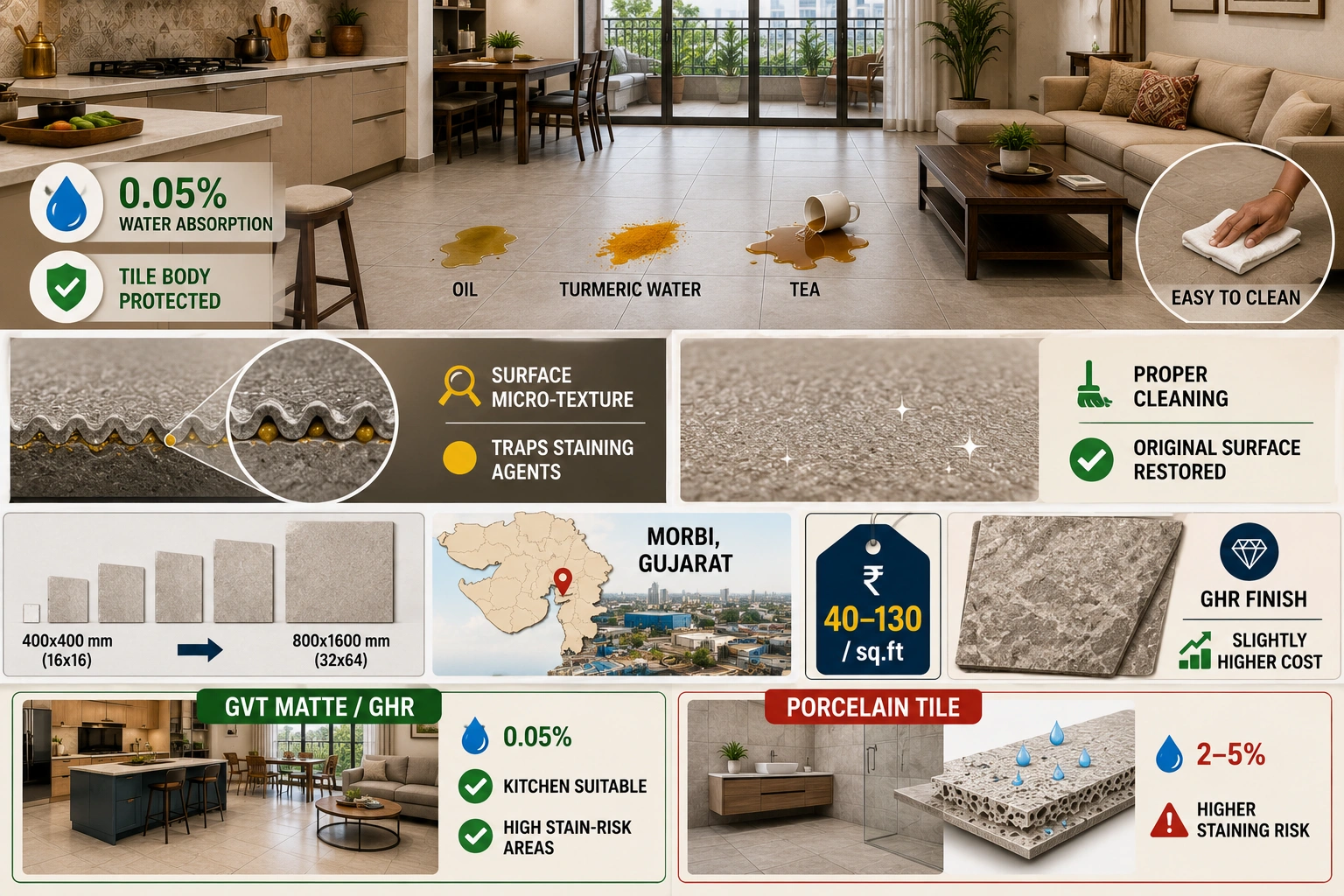
GVT matte tiles manufactured in India, primarily in Morbi, Gujarat, carry a water absorption of 0.05 per cent, meeting IS 15622:2006 for vitrified tiles. This low absorption rate means the tile body does not absorb water or staining agents into its structure. The staining challenge with matte tiles is the surface micro-texture trapping agents before they can be wiped away, not absorption into the tile body. This is an important distinction: properly cleaned matte vitrified tiles in India do not get permanently stained the way natural stone or ceramic does. With the right cleaning routine, the original matte surface can be maintained indefinitely.
Morbi manufacturers produce matte GVT tiles across all standard sizes from 400x400 mm (16x16) through 800x1600 mm (32x64). Prices range from Rs. 40 to Rs. 130 per sq. ft., depending on size, finish sub-type, and design complexity. GHR finish tiles are slightly more expensive than standard matte in the same design because of the additional surface treatment. Porcelain tiles from Morbi, which have a water absorption of 2 to 5 per cent under IS 13630, carry a higher staining risk than GVT because some absorption into the body is possible. For Indian kitchens and high-stain-risk areas, GVT matte or GHR is the better category choice over porcelain.
Compare Matte Tiles Before You Make Your Final Choice
Matte tiles in Indian homes clean well and stay clean when the right routine is in place. The problems that most Indian homeowners encounter with matte tile maintenance come from using the wrong cleaning products, skipping the dry sweep step before mopping, and not addressing spills immediately.
Whether you are choosing matte tiles for a new installation or trying to restore a stained matte floor, the right approach makes a significant difference. Browse matte GVT, Posh, and GHR finish tiles on Tilesfinders across sizes, designs, and price ranges from Morbi manufacturers to compare options before making your next tile decision.
FAQs
Matte tiles retain a micro-textured surface with thousands of tiny recesses per square centimetre. These recesses give the tile anti-skid properties and its visual character, but also allow liquids and oils to enter and hold before they can be wiped away. Polished tiles have a compressed, nearly closed surface where spills sit on top and can be wiped within seconds. Both GVT matte and polished tiles have 0.05 per cent water absorption. The difference is surface micro-texture depth, not body porosity.
PH-neutral tile cleaners are best for daily use. Products like Roff Floor Cleaner, Lithofin Easy Clean, and Dr. Fixit Tile Cleaner neutral range clean without residue and without affecting the matte surface. For weekly degreasing, a mild alkaline cleaner (pH 8 to 10) like Roff Super Clean removes oil build-up. Avoid standard Indian floor cleaners like Phenyl and Lizol as they are acidic and deposit a film in the micro-texture over time.
Yes. Fresh oil on matte tiles cleans with diluted dishwashing liquid and a soft brush. Old built-up oil residue needs a tile-safe alkaline degreaser with a 5 to 10 minute dwell time before scrubbing and rinsing. The key is the dwell time: the degreaser needs time to break the bond between the oil and the micro-texture. Do not try to scrub dry oil off a matte tile as it pushes the oil deeper into the texture.
Three things cause progressive dullness on matte tiles in Indian homes: soap residue from excess cleaning product in mop water, hard water deposits from high-TDS municipal or borewell water, and wax or polish application. Prevent all three by using a minimum amount of pH-neutral cleaner per mop cycle, using a descaler monthly in hard water areas, and never applying wax or floor polish to matte tiles.
Yes, slightly. Posh finish has a finer micro-texture than standard matte and offers marginally better stain resistance in Indian conditions. Fresh spills on Posh tiles have slightly more time before staining occurs. The same cleaning routine applies to both but Posh is somewhat more forgiving in high-use rooms. For the most demanding applications like kitchens, GHR finish provides the best durability despite needing more frequent cleaning.
Yes. Standard cement grout in Indian kitchen floors stains visibly within months from oil, masala, and daily foot traffic. Epoxy grout is non-porous and does not absorb any of these staining agents. The cost premium over standard cement grout is approximately Rs. 10 to Rs. 25 per sq. ft. extra but eliminates the grout darkening problem entirely. In Indian bathrooms and kitchens, epoxy grout is the practical standard for any floor tile installation.
