Best Kitchen Tiles in Hyderabad: Designs, Price and Where to Buy in 2027
Upgrade your Hyderabad kitchen! A 2027 guide to turmeric-resistant epoxy grout, durable floor vs wall tiles, prices from ₹35/sq.ft, and local buying tips.

- The Real Enemy Isn't the Tile, It's the Grout
- What Hyderabadi Cooking Actually Puts a Kitchen Through
- Matching Tile and Grout to This Reality
- Floor vs Wall: Different Demands in the Same Kitchen
- Kitchen Tile Designs Hyderabad Homes Are Choosing in 2027
- Kitchen Tile Price in Hyderabad 2027
- A Grout Routine Built for Heavy Indian Cooking
- Where to Buy Kitchen Tiles in Hyderabad
- Planning a Kitchen That Still Looks Clean in Three Years
In a Hyderabad kitchen, the tile body rarely stains; the porous grout around it does, especially against turmeric and red chilli oil. This guide covers grout and glaze choices built for heavy Telugu cooking, current design trends, 2027 price per sq.ft., and where to buy.
Walk into most Hyderabad kitchens two or three years after a renovation and the tile itself usually still looks fine. What has visibly aged is the grout around it, gone from white or grey to a dull yellow-brown that no amount of mopping seems to fix. This is not a design failure or a bad tile choice. It is chemistry, and understanding it changes what actually matters when picking kitchen tiles.
This guide starts from that reality rather than from a design catalogue, covers what daily Hyderabadi cooking specifically does to kitchen surfaces, and works through tile, grout, current design trends, and 2027 pricing with that in mind.
The Real Enemy Isn't the Tile, It's the Grout
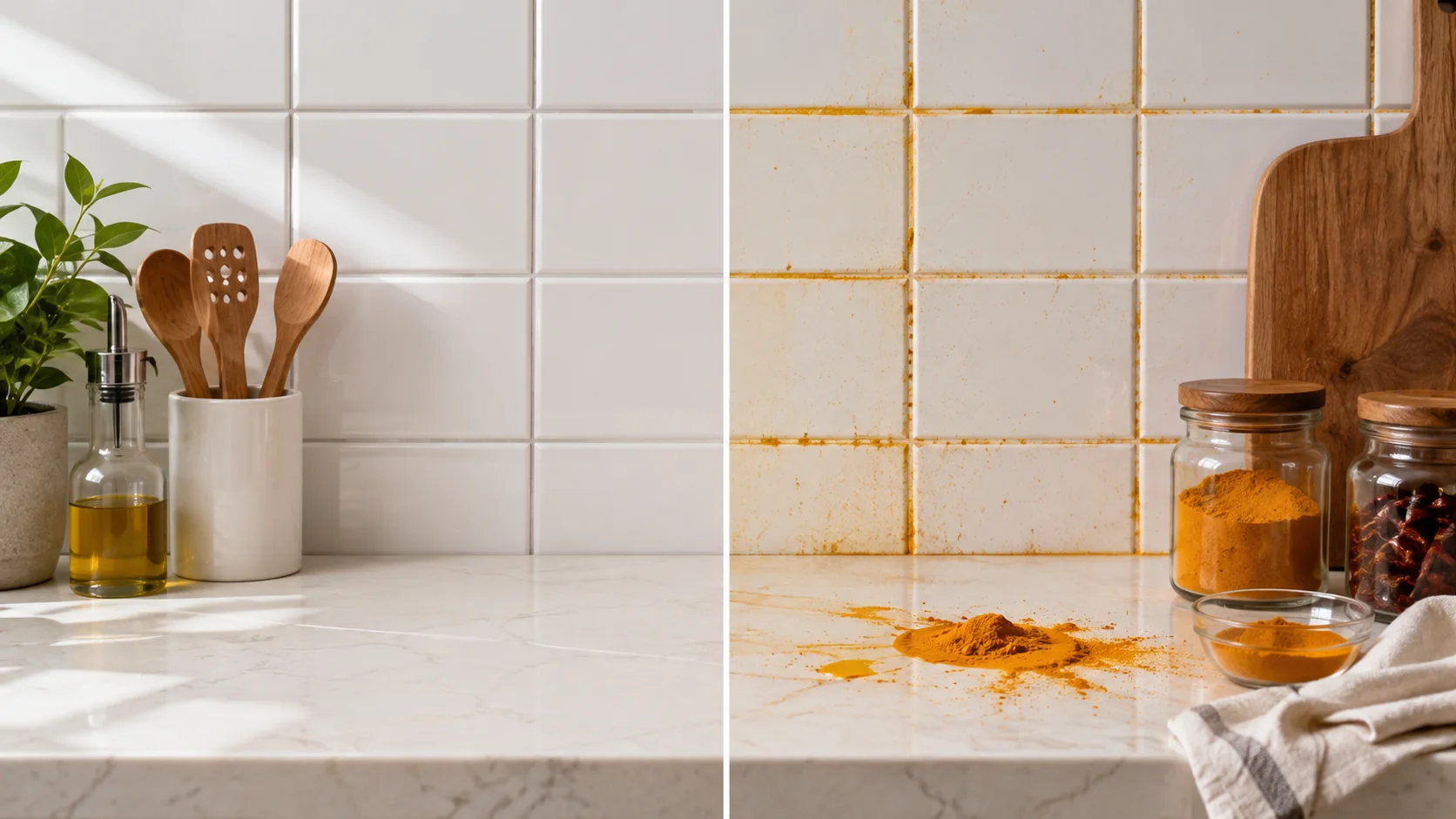
Ceramic, vitrified, and porcelain tile bodies are, on their own, remarkably resistant to staining. Their glazed surface is close to non-porous, which is why a spill wiped up within a reasonable time rarely leaves a permanent mark on the tile itself.
Cement-based grout is a different material entirely. It is porous by nature, and that porosity is exactly what lets pigments and oils bond into it rather than sitting on the surface where a wipe can remove them. Turmeric is the clearest example; its curcumin pigment is a strong dye that penetrates porous grout within minutes and, left untreated, becomes genuinely difficult to fully reverse even with dedicated stain removers.
This single fact reframes the entire kitchen tile decision. The tile design and finish matter for how the kitchen looks. The grout choice is what actually determines how the kitchen looks in three years.
What Hyderabadi Cooking Actually Puts a Kitchen Through
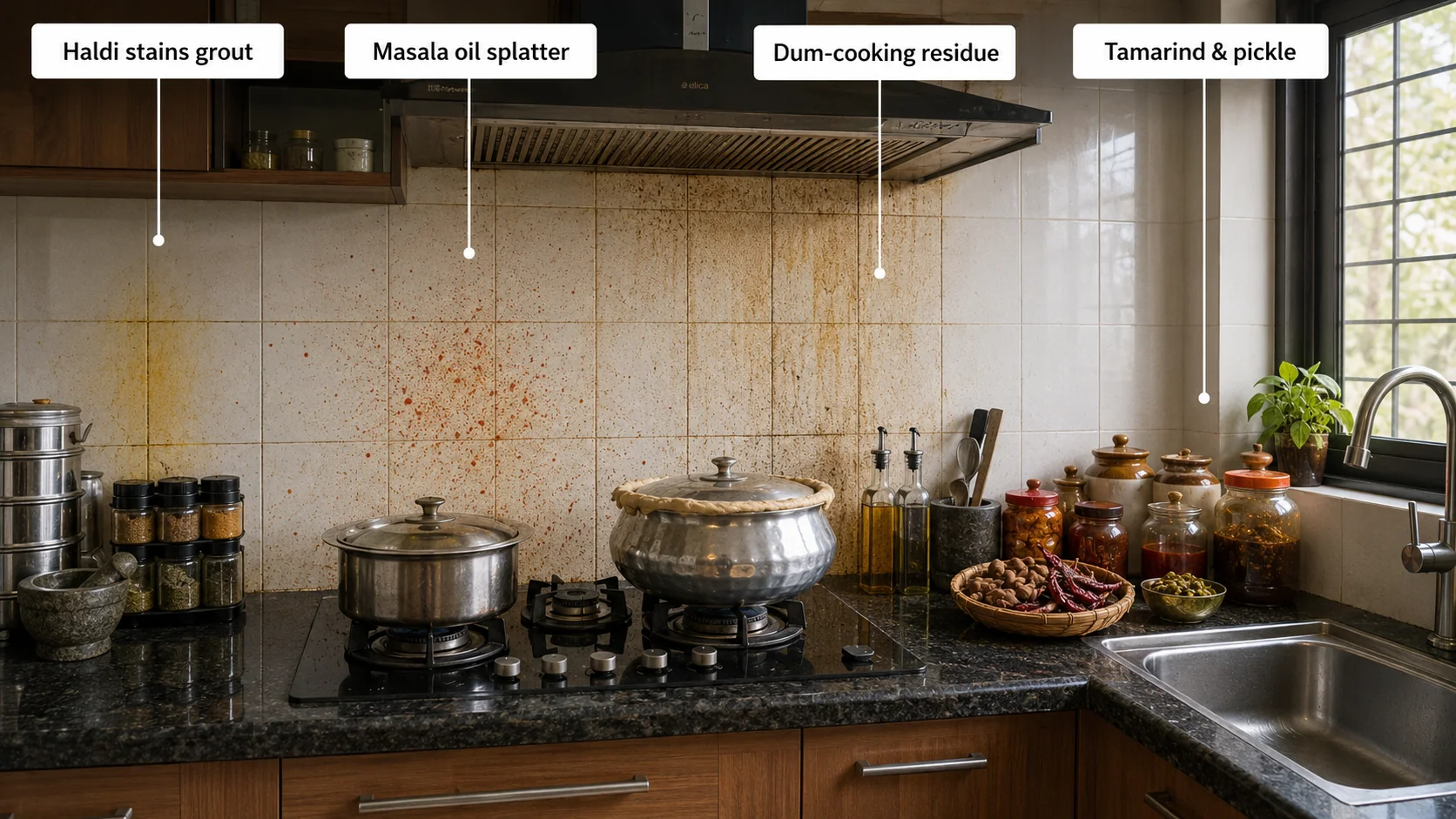
Telugu households cook in a way that is genuinely tougher on kitchen surfaces than many regional cuisines, and it is worth naming the specific culprits rather than a vague reference to spicy food.
- Turmeric (haldi): used daily in almost every curry and dal, its curcuminoid pigment is the single most aggressive grout-staining ingredient in an Indian kitchen.
- Red chilli and masala pastes: common in Andhra and Telangana-style curries and pickles, these leave an oily red residue that stains both from the pigment and the oil carrying it.
- Ghee and oil from dum cooking: biryani and other dum-style dishes involve prolonged sealed cooking with generous ghee or oil, producing more airborne splatter over a longer cooking window than a quick stir-fry would.
- Tamarind and pickle-making: a genuinely common home activity in many Telugu households, involving acidic tamarind pulp and oil in large batches, both of which test grout and any acid-sensitive stone surface nearby.
None of this means a Hyderabad kitchen needs an entirely different tile category from anywhere else in India. It means the grout and finish decisions carry more weight here than a generic kitchen tile guide would suggest.
From The Marketplace
Popular tiles right now
-cf3c0ebc-ac46-4340-85de-6d8a2a7a8ba0.jpg)
-b8850305-ddb1-4f3f-9e5f-5c3acb504a52.jpg)
-3c46e11a-a675-4fbf-a1da-38fc9816cdc2.jpg)
-17d8f441-13a9-44fe-b5a0-5fc5de7baac4.jpg)
-e49475d7-23e5-40d4-b64c-07ed540a9d3e.jpg)
-99607407-bf3b-4347-a7ec-c253f2cb4ab2.jpg)

Matching Tile and Grout to This Reality
| Concern | What Actually Helps | What to Avoid |
| Turmeric staining grout | Epoxy grout, non-porous and dye-resistant | Standard white cement grout in high-turmeric-use zones |
| Chilli oil and masala residue | Glossy, dense glaze on tile surface | Heavily textured or matte tiles near the cooking and prep zone |
| Ghee and oil splatter from dum cooking | Full body vitrified or dense porcelain near the hob | Porous ceramic directly behind or beside the stove |
| Tamarind and pickle-making spills | Non-porous glazed tile, wiped promptly | Unsealed natural stone counters near this activity |
Epoxy grout costs more upfront than standard cement grout, typically a genuine multiple of the price, but for a Hyderabad kitchen handling daily turmeric and regular pickle-making, it consistently proves worth it within the first year of avoided staining and re-grouting.
Floor vs Wall: Different Demands in the Same Kitchen
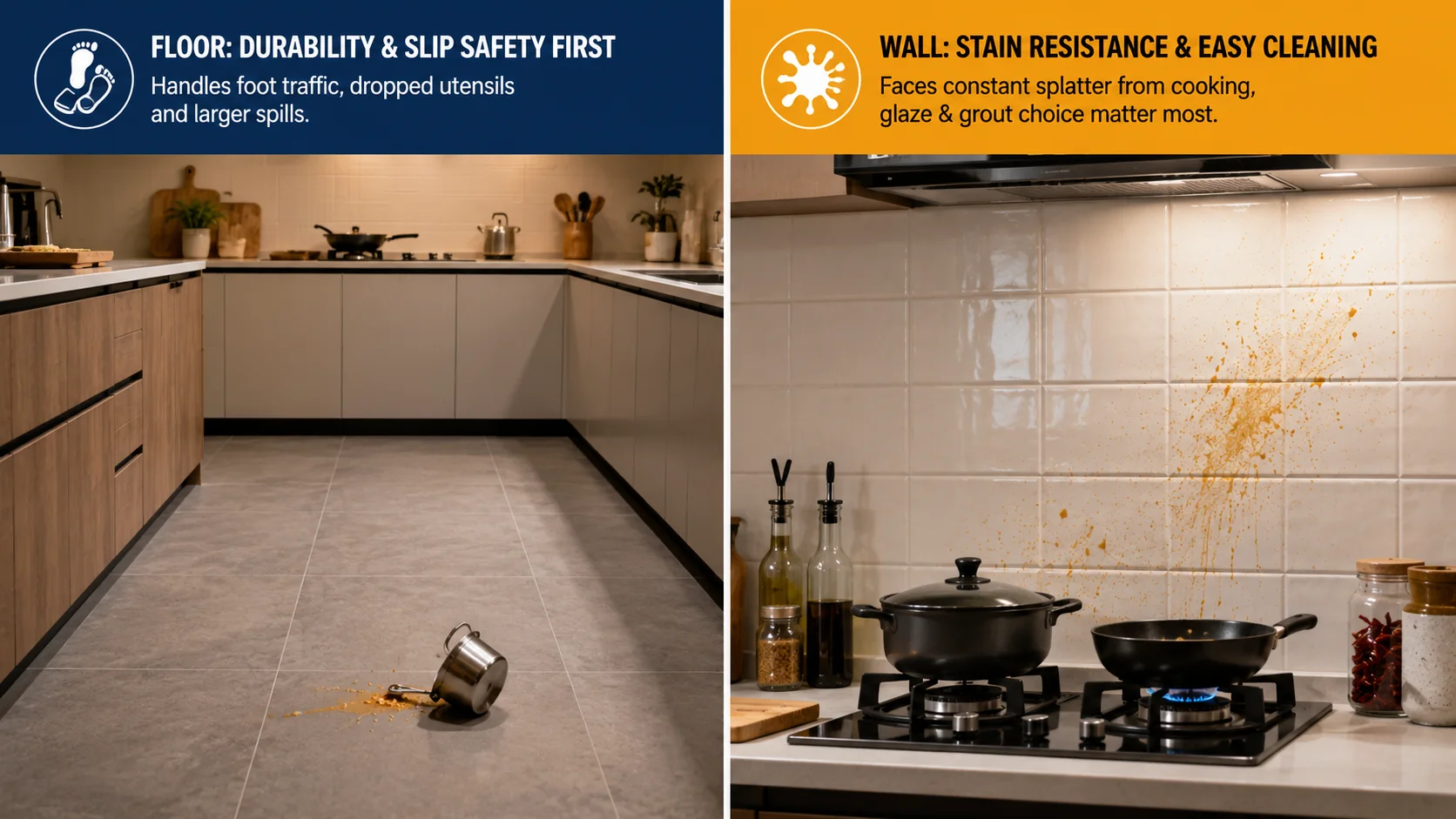
The kitchen floor deals with dropped utensils, foot traffic, and the occasional larger spill, which puts durability and slip safety ahead of stain resistance as the primary concern. A full-body vitrified or dense GVT floor tile in a matte or GHR finish handles this combination well.
The wall area behind the stove and counter faces the opposite priority, near-constant low-level splatter rather than heavy foot traffic, which makes glaze quality and grout choice the more important decision than the tile's structural strength.
Kitchen Tile Designs Hyderabad Homes Are Choosing in 2027
- Large format matte GVT in warm greige and stone tones remains the dominant choice in newer apartment kitchens across Gachibowli, Kondapur, and the wider HITEC City corridor, chosen partly because fewer grout lines mean less turmeric-prone surface area.
- Glossy white or off-white subway backsplash tiles continue to dominate wall choices, since their smooth glaze wipes clean of oil and masala residue more easily than a textured alternative.
- Darker grout in a contrasting or matching charcoal tone is increasingly requested specifically to hide the gradual yellowing that lighter grout shows over time in a heavy-cooking household.
- Older, joint-family Hyderabad kitchens, often larger with dedicated wet-grinding or pickle-prep counters, are seeing renovations that extend the same non-porous, easy-wipe specification into these secondary work areas rather than treating them as an afterthought.
- Traditional Old City homes retain a preference for warmer, patterned ceramic accents, generally confined to a feature strip rather than the full wall, balancing heritage character with practical cleaning demands.
Kitchen Tile Price in Hyderabad 2027
Material pricing depends on category and finish. The ranges below reflect realistic 2027 costs before installation.
| Tile Type | Price Range (Rs. per sq.ft.) | Notes |
| Ceramic wall tile (glossy) | Rs. 35 to Rs. 90 | Best value for backsplash and wall areas |
| GVT floor tile, matte or GHR finish | Rs. 60 to Rs. 150 | Most common choice for Hyderabad kitchen floors |
| Full body vitrified | Rs. 90 to Rs. 220 | Strongest option for hob-adjacent flooring |
| Digital print ceramic accent | Rs. 45 to Rs. 100 | Used for feature strips and pickle-prep zones |
Installation labour typically adds Rs. 35 to Rs. 65 per sq.ft. Epoxy grout adds a further Rs. 15 to Rs. 40 per sq.ft. over standard cement grout depending on the contractor, and for a household that cooks daily with turmeric and regularly makes pickles at home, this is consistently the single highest-value upgrade in the entire kitchen tiling budget.
A Grout Routine Built for Heavy Indian Cooking
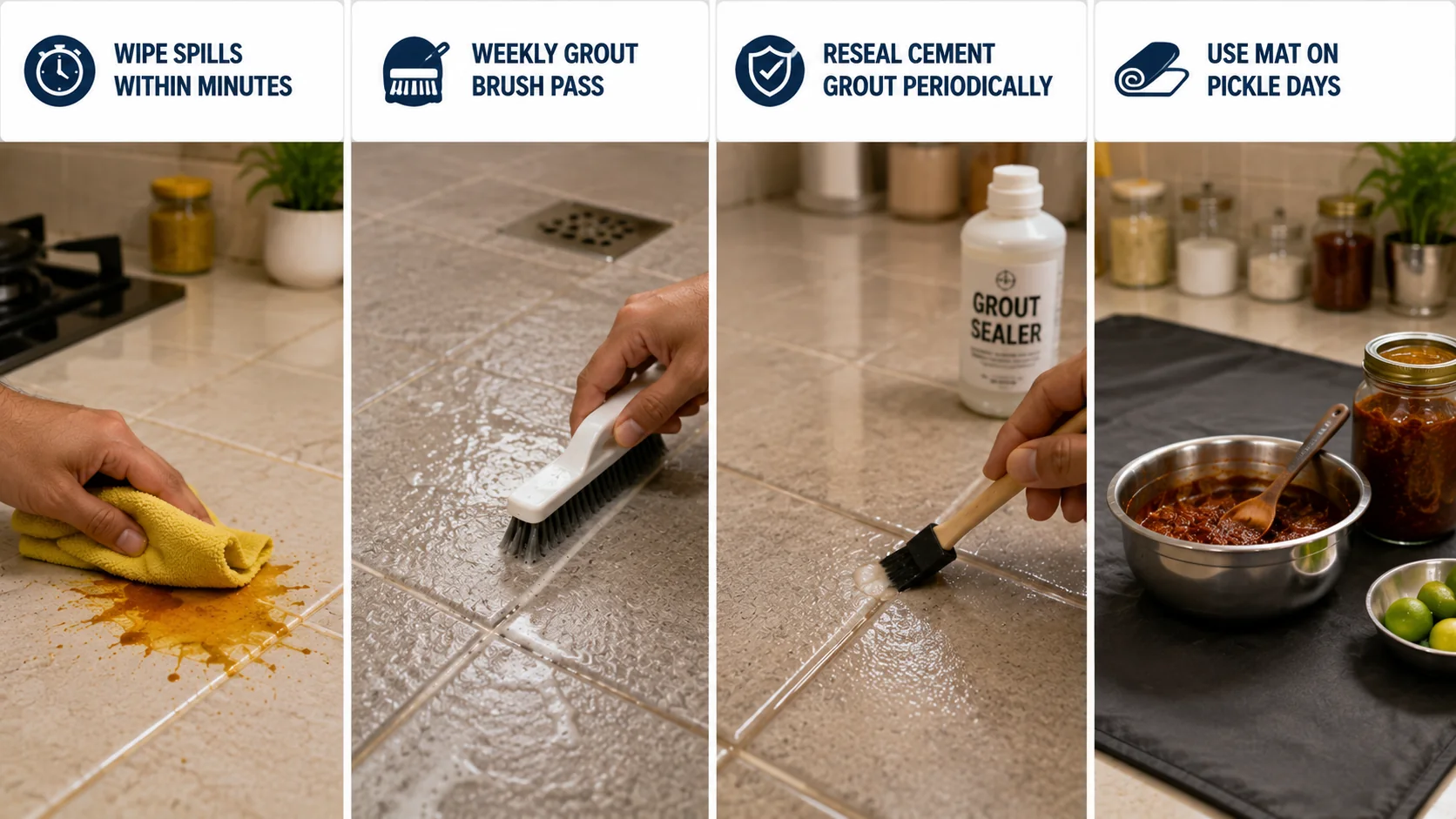
- Wipe turmeric and masala spills within minutes rather than at the end of cooking, since curcumin pigment bonds into porous grout quickly and becomes far harder to fully remove once set.
- Run a weekly grout brush pass along kitchen floor joints specifically, a five-minute habit that prevents the slow oil buildup that turns grout permanently grey over months.
- If using standard cement grout rather than epoxy, reseal it periodically, since an unsealed cement grout absorbs oil and pigment considerably faster than a freshly sealed one.
- For pickle-making days specifically, lay down a mat or cover over grout-heavy prep areas, since a single large batch of tamarind and oil handling produces more concentrated exposure than weeks of regular cooking.
Where to Buy Kitchen Tiles in Hyderabad
Hyderabad's tile dealers stock a wide range of GVT and ceramic kitchen tile options, though epoxy grout availability and pricing vary more between dealers than the tile itself, making it worth asking about specifically rather than assuming every supplier stocks it as standard.
TilesFinders is a tile discovery and dealer directory that helps Hyderabad buyers compare kitchen tile designs, check indicative pricing across ceramic, GVT, and vitrified categories, and connect with verified dealers on a quote basis. Given how much grout choice matters for this city's cooking habits specifically, it is worth confirming epoxy grout availability and cost directly with any shortlisted dealer before finalising an order.
Planning a Kitchen That Still Looks Clean in Three Years
A Hyderabad kitchen that holds up well is less about finding a stain-proof tile design and more about accepting that the grout is the actual battleground, and specifying it accordingly from the outset.
If you are planning kitchen tiles for a Hyderabad home, you can browse designs across ceramic, GVT, and vitrified categories, compare indicative pricing, and connect with verified dealers on TilesFinders.

FAQs
Tile glaze is close to non-porous and resists staining well, while cement-based grout is porous by nature and allows pigments like turmeric's curcumin, along with oils, to bond into it rather than wipe away.
Epoxy grout, since it is non-porous and resists both dye pigments and oil absorption far better than standard cement grout, which is the material actually responsible for most visible kitchen staining over time.
Ceramic wall tiles start around Rs. 35 per sq.ft., GVT floor tiles range from Rs. 60 to Rs. 150 per sq.ft., and full body vitrified runs from Rs. 90 to Rs. 220 per sq.ft., excluding labour and grout.
For a household that cooks with turmeric daily and makes pickles at home regularly, yes. The added upfront cost is consistently recovered within the first year in avoided staining and re-grouting work.
Not necessarily a different tile, but the same non-porous, glossy, easy-wipe specification used for the main cooking zone should be extended to any dedicated pickle-prep or wet-grinding counter, since these activities involve concentrated acid and oil exposure.
Yes, a darker or charcoal-toned grout visually hides gradual yellowing better than white or light grey grout, though it does not prevent the underlying staining the way epoxy grout does.


Handpicked for You
See our tile guides first
Set TilesFinders as a preferred source and our buying guides surface ahead of the rest for you.
Add as preferred sourceTakes one tap. Nothing to install.
What Readers Say
I was about to redo my parking area with the wrong tile size until I read this. The layout comparisons saved me from a costly mistake.
We reference TilesFinders guides while briefing clients on material selection. The size and pattern breakdowns are accurate and easy to explain visually.
On site, I get asked about grout spacing all the time. This article gave me a solid reference I now share with my team before every job.
Finally a guide that doesn't just push generic advice. The oil stain removal steps actually worked on our clubhouse driveway tiles.
I run a small construction firm and now send this link to clients directly when they ask about entrance tile sizing. Saves me an hour of explaining.
Good practical detail, though I wish there were more examples for compact apartment entrances specifically, not just villas.
My mother-in-law wanted marble, I wanted vitrified. This blog gave us the neutral comparison we needed to actually decide together.
Detailed without being overwhelming. I appreciated that it covered both cost and maintenance, not just the aesthetics.
Used the algae and hard water removal tips on our terrace tiles after the monsoon. Worked better than what our regular cleaner was doing.
As someone who sources tiles for multiple builder projects, I find these comparisons genuinely useful for vendor conversations, not just consumer content.
Recommended this to a client who kept second-guessing the entrance design. The small vs large layout section settled the debate instantly.
Straightforward and honest, no unnecessary jargon. Would like to see a similar breakdown for outdoor pool-deck tiles next.
We've bookmarked several TilesFinders guides for our design handbook. Reliable source when clients want data, not just opinions.
Two paths, one marketplace.
Get free quotes from verified suppliers.
Share your room, budget, and style. Suppliers in Morbi respond within hours.
Get Free QuotesList your business, reach real buyers.
Put your showroom in front of homeowners searching for tiles right now.
List Your BusinessMore Blogs
See all
Kitchen Backsplash Tile Design Ideas: 25+ Trending Looks for Indian Homes 2027
Discover 25+ kitchen backsplash tile ideas for Indian homes in 2027. Compare subway, marble-look,...
Read More
Best Multi-Colour Mosaic and Decor Tiles India 2027: Statement Kitchen and Bathroom Picks
Compare the best multi-colour mosaic and decor tiles for Indian kitchens and bathrooms, from affo...
Read More
Hexagon Tiles in India: Complete Shape Guide for Bathrooms, Kitchens and Feature Walls
A 2027 guide to hexagon tiles in India, covering wet-zone grip, room-by-room sizing, 15–20% wasta...
Read More