Kitchen Backsplash Tiles: How to Choose the Perfect One for Your Home
May 19, 2026 51
Choose the best kitchen backsplash tiles for your Indian home with expert tips on tile sizes, finishes, colours, grout choices, pricing, and easy-to-clean designs for 2026.
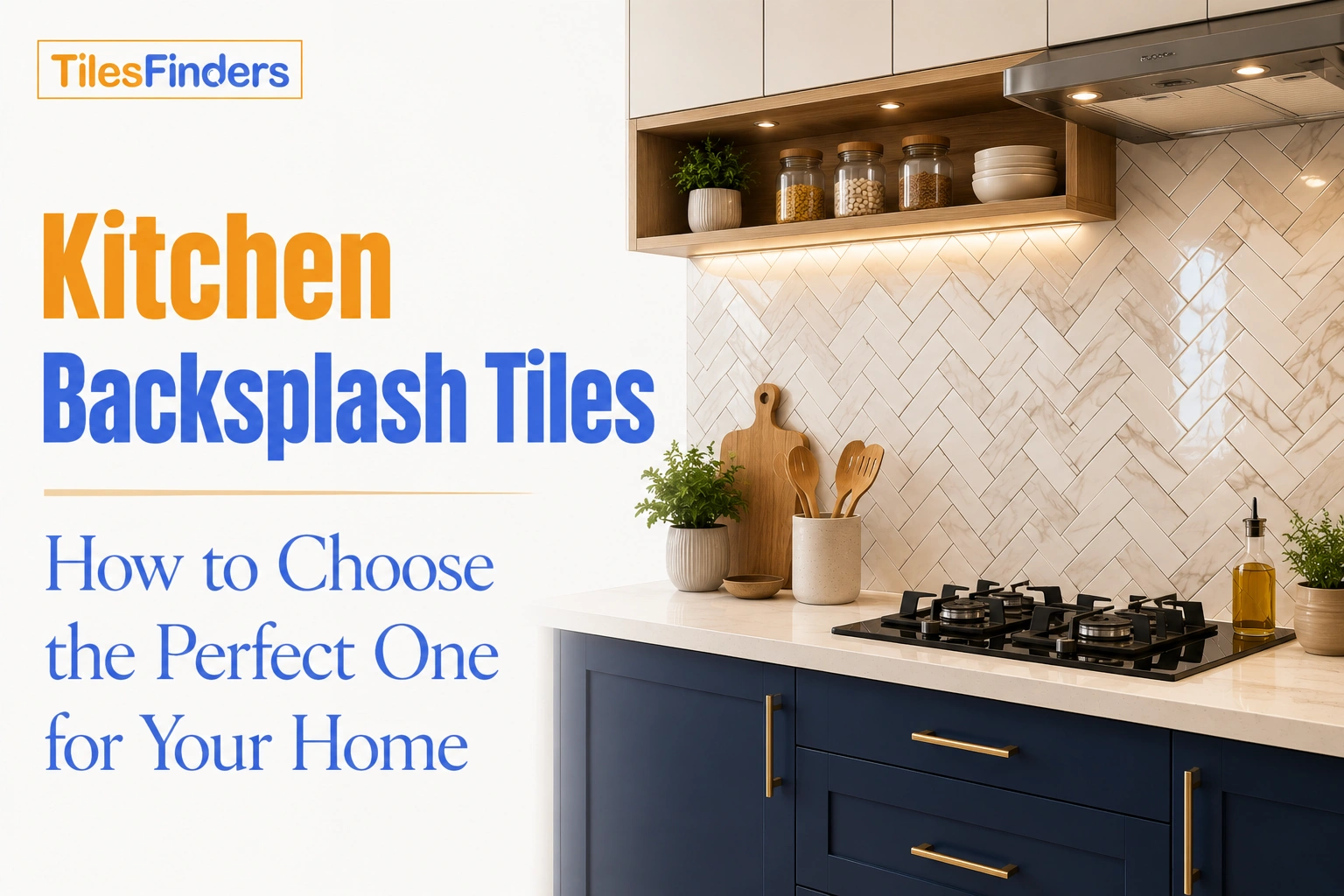
The backsplash is the hardest-working wall in any Indian kitchen. It sits directly behind the hob and sink, taking daily hits from masala splatter, cooking oil, steam, and hard water. Most homeowners pick it last, after cabinets and flooring are already decided, and spend the least time on it.
That order of priority tends to go wrong. A backsplash tile in the wrong finish becomes a daily cleaning burden. The wrong size in a small kitchen makes the wall feel heavy. Light grout near the hob turns permanently yellow within months.
This guide covers everything you need to pick the right kitchen backsplash tiles for an Indian home, including categories, sizes, finishes, colour combinations, and specific mistakes to avoid.
Why the Kitchen Backsplash Tile Decision Matters
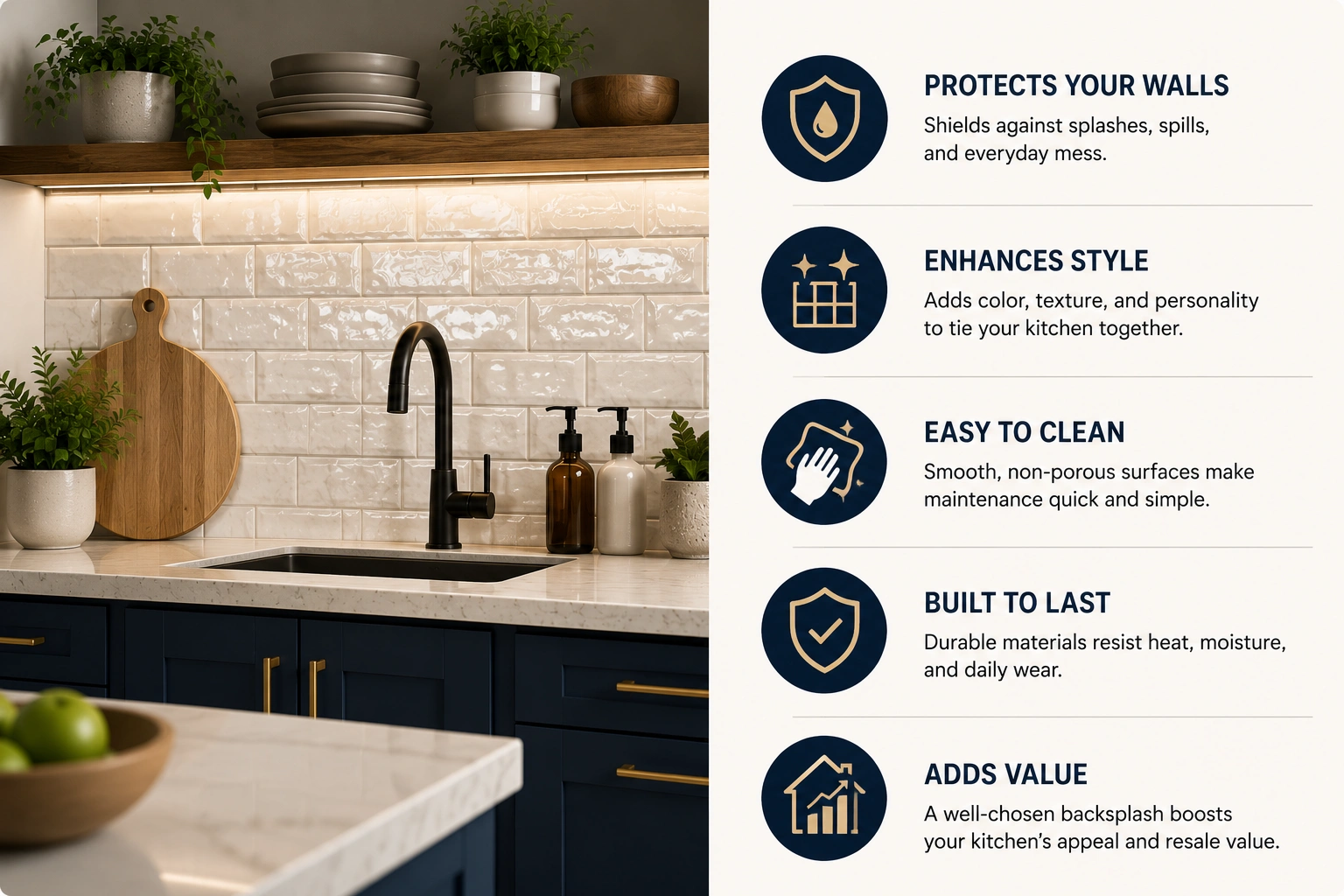
The backsplash wall in an Indian kitchen sees conditions that no other interior wall in the home deals with. Turmeric and masala are added to it during the first use. Cooking oil vapour coats the surface for months, especially near the hob. The chimney above the hob creates heat and airflow that dries oil onto the tile surface faster than in Western kitchens, where cooking temperatures tend to be lower.
Hard water is another daily challenge. Cities like Jaipur, Ahmedabad, Delhi, and Bangalore have hard water with high calcium content. On a glossy backsplash tile, calcium deposits leave white patches that need regular acid cleaning. On a textured or deeply grooved tile, those deposits collect in the grooves and are nearly impossible to remove without scrubbing.
Beyond the practical side, the backsplash is also the most visible design surface in a modular kitchen. It sits at eye level, directly behind the cooking counter and is often visible from the dining area in open-plan homes. Choosing well here has a bigger visual impact than the floor tile in many layouts.
Best Tile Categories for Kitchen Backsplash
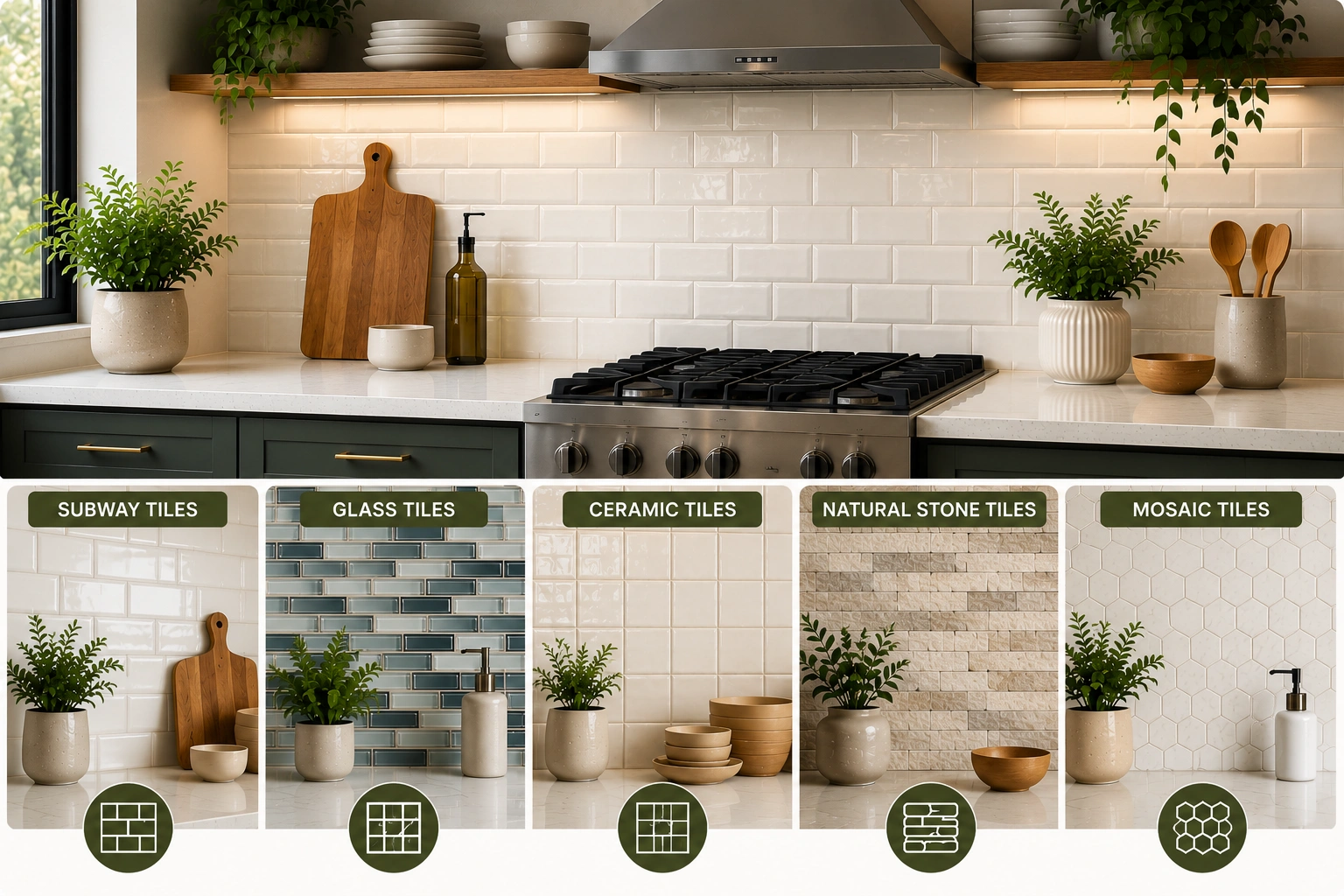
The backsplash is a wall application. This means floor-rated tile categories are not required here. What matters is stain resistance, ease of cleaning, heat tolerance near the hob, and moisture resistance near the sink.
If you're confused about tile usage, read our guide on Kitchen Wall vs Floor Tiles before choosing backsplash materials.
Ceramic Tiles
Ceramic tiles are the most commonly used material for kitchen backsplash in India, and they earn that position. They are available in 300x450 mm (12x18) and 300x600 mm (12x24) sizes, both wall-only formats that fit backsplash heights cleanly. The design range is wide: plain glossy whites, hand-painted patterns, stone-look prints, geometric designs, and subway-format layouts.
The glossy finish on most ceramic wall tiles makes the backsplash zone easier to wipe. Turmeric and masala oil sit on the smooth surface rather than seeping in, and a damp cloth cleans the wall in seconds. This is a real daily advantage in an Indian kitchen.
Price range: ceramic kitchen backsplash tiles run from approximately ₹30 to ₹80 per sq. ft. They are the most accessible option for budget-conscious renovations and rental properties.
GVT and PGVT for Backsplash Walls
GVT (Glazed Vitrified Tiles) in 600x600 mm (2x2) and 600x1200 mm (2x4) sizes work well on kitchen backsplash walls when the design calls for a large-format, seamless look. Fewer grout lines mean less area where cooking grease can collect, which is a real maintenance advantage in the cooking zone.
PGVT (Polished Glazed Vitrified Tiles) is a strong choice for kitchen feature walls away from the cooking zone, such as the refrigerator side wall or the wall visible from the dining area in an open kitchen. Its high-shine polished surface makes marble-look and solid-colour designs look expensive. In the cooking zone directly behind the hob, however, a glossy ceramic or matte GVT tiles is easier to maintain than a high-shine PGVT, which shows every water mark and requires more frequent polishing.
Price range: GVT and PGVT backsplash tiles range from approximately ₹60 to ₹160 per sq. ft. If you also want a broader understanding of materials, flooring, maintenance, and tile selection, read our complete kitchen tiles guide for Indian homes.
Kitchen Backsplash Tile Design Ideas for 2026
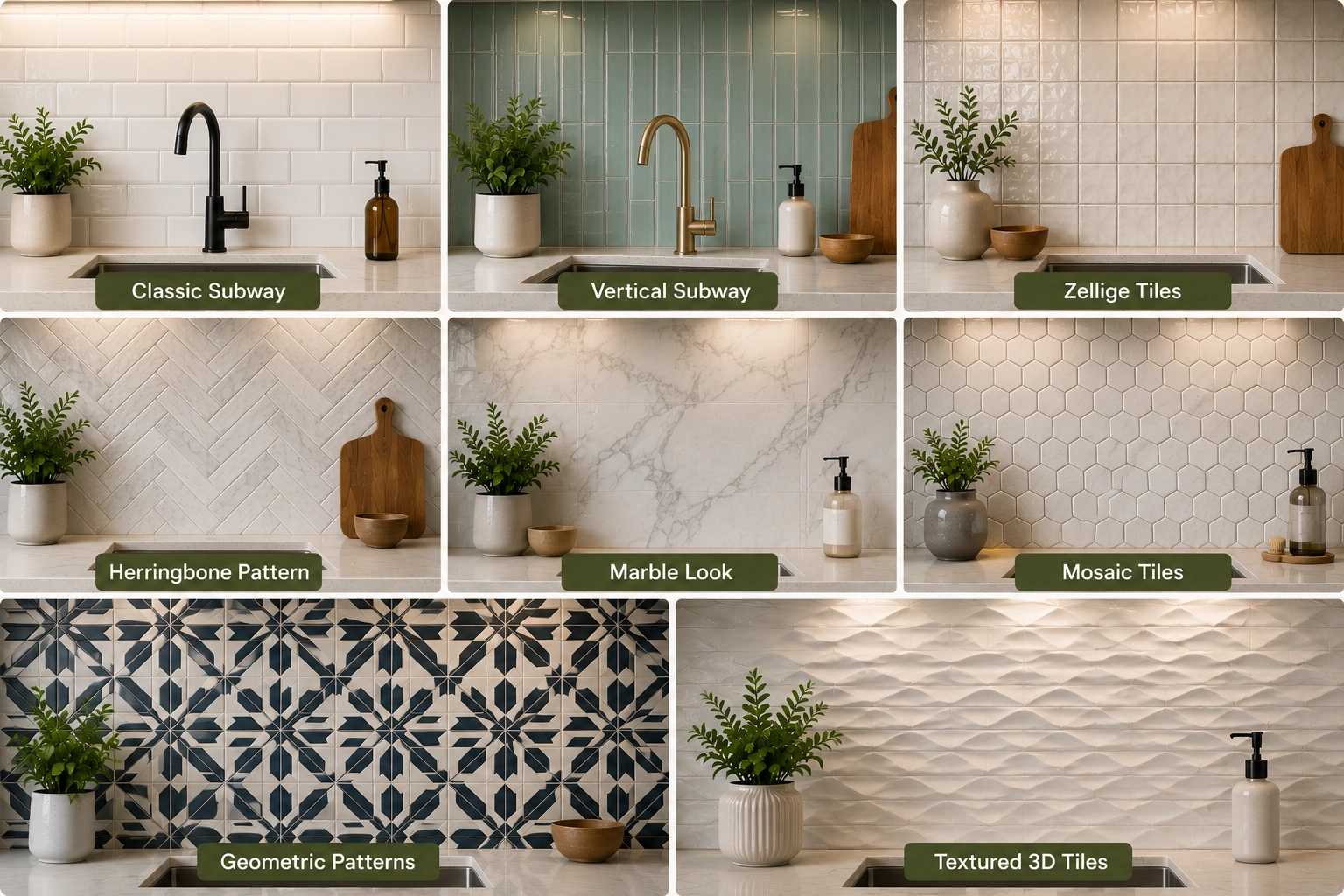
Classic Subway Pattern
The subway backsplash continues to be the most versatile choice for Indian kitchens because it adapts to almost every cabinet colour and kitchen style. White glossy ceramic in a brick-bond layout with charcoal grout works with everything from all-white modular kitchens to dark navy lower cabinets. The pattern reads as clean, modern, and timeless without chasing a specific trend.
Full Slab Look with Large Format Tiles
Large format GVT tiles in 600x1200 mm (2x4) or slab sizes in 800x2400 mm (32x96) used as a backsplash create an almost seamless wall surface. With minimal grout lines, the kitchen wall looks like a continuous panel of stone or marble. This works well in open kitchen layouts in newer 3BHK and 4BHK flats where the kitchen is visible from the living area.
A marble-look GVT in a 2x4 format on the backsplash, matched to the same tile on the kitchen floor in a matte finish, gives a coordinated look that feels expensive without using natural stone.
Geometric and Patterned Tiles
Hexagonal, chevron, and encaustic-pattern tiles add graphic interest to kitchen backsplash walls. In Indian homes, these appear most often as a full backsplash wall in compact kitchens where the patterned tile becomes the visual centrepiece, or as a feature panel behind the hob in an otherwise plain kitchen.
For patterned tiles, keep the rest of the kitchen visual simple. Plain cabinet fronts, a solid colour countertop, and a neutral floor let the backsplash pattern read clearly without the kitchen feeling busy.
Textured and 3D Backsplash Tiles
Textured ceramic and third-fired tiles with raised relief patterns add depth to kitchen walls that flat tiles cannot. These look particularly good behind open shelving in Scandinavian or contemporary Indian kitchen styles. The texture catches light differently throughout the day, giving the wall a quality that photographs well and holds visual interest at close range.
Limit textured tiles to zones away from direct oil splatter. Behind the hob, a smooth, glossy tile is far more practical. The textured tile can go on the adjacent wall or as a border accent.
Bold Colour Backsplash Statements
Dark coloured backsplash tiles are one of the strongest design directions in 2026. Bottle green, deep navy, slate grey, and warm terracotta ceramics on the backsplash wall paired with white or light wood cabinetry create high contrast that makes the kitchen feel designed rather than assembled.
Dark tiles have a practical advantage in Indian kitchens: masala stains and oil marks are far less visible on a dark green or navy backsplash than on a white one. A quick wipe is all it takes, and the surface looks clean between cleaning cycles.
For more inspiration beyond backsplash styles, explore these Modern Kitchen Tile Ideas for Indian homes in 2026.
Choosing the Right Size for Your Kitchen Backsplash
The backsplash area in most Indian kitchens runs from the countertop to the bottom of the overhead cabinets, usually 450 mm to 600 mm in height. The right tile size fills this height cleanly with minimal cutting, and reads proportionately in the kitchen's overall scale.
| Tile Size | Preferred Name | Best For | Notes |
| 300x450 mm | 12x18 | Small kitchens, compact backsplash zones | Wall only. Fits standard backsplash height with one tile and minimal cut. |
| 300x600 mm | 12x24 | Most Indian kitchens, subway and plain formats | Wall only. Most versatile backsplash size. Horizontal and vertical layouts both work. |
| 600x600 mm | 2x2 | Larger kitchens, open-plan layouts | Wall and floor. Square format; fewer grout lines than smaller tiles. |
| 600x1200 mm | 2x4 | Open kitchens, full slab look | Wall and floor. Minimal grout lines; works as a near-seamless backsplash. |
| 800x2400 mm | 32x96 slab | Premium open kitchens, feature walls | Wall only for backsplash. Continuous slab look with near-zero grout lines. |
For compact Indian kitchens below 80 sq. ft., the 12x18 or 12x24 tile is the most practical backsplash size. The smaller format keeps the backsplash wall proportionate and avoids large tiles that need heavy cutting around outlets and switches. For open kitchens and modular kitchen-dining layouts, the 2x4 GVT gives a cleaner, more continuous surface with fewer visible grout lines.
Finish Guide: Glossy vs Matte on the Kitchen Backsplash
The backsplash is a wall surface, which means the anti-skid requirements that apply to floors do not apply here. The final decision is entirely about cleaning ease, light reflection, and appearance in your specific kitchen.
| Finish | Cooking Zone Backsplash (Behind Hob and Sink) | Non-Cooking Wall (Side and Refrigerator Wall) | Verdict |
| Glossy Ceramic | Good. Smooth surface wipes clean in seconds. | Good. Reflects light, brightens the kitchen. | Best choice for backsplash behind the hob |
| High Glossy GVT | Works but shows watermarks more. Needs polishing. | Excellent. Mirror-like finish on feature walls. | Use on feature walls away from the cooking zone |
| PGVT Polished | Not recommended behind the hob. Shows oil film and water marks. | Strong choice. Premium look for feature walls. | Feature walls only |
| Matte | Good. Does not show watermarks. Slightly harder to wipe oil. | Good. Low-reflection, calm look. | Good all-round choice |
| Glossy Carving | Avoid. Grooves collect oil and are hard to clean. | Works as an accent. Mostly decorative. | Accent panels away from the cooking zone only |
| Third Fired / Raised Relief | Avoid near the hob. Grooves trap grease fast. | Works well as an accent or feature panel. | Away from direct oil splatter only |
| Sugar | Acceptable. Small glossy drops on a matte surface. | Works well for decorative walls. | Good for side walls and accent areas |
The simplest decision framework for most Indian kitchens: use a smooth, gloss,y or matte finish directly behind the hob and sink where cleaning is frequent, and save decorative textured or high-gloss PGVT finishes for the walls that are not in the direct splatter zone.
Colour Combination Ideas for Indian Kitchen Backsplash
The backsplash colour sits between the countertop and overhead cabinets. It connects both and sets the visual tone for the entire kitchen. These combinations work well in Indian homes across different kitchen sizes and cabinet colours.
| Backsplash Tile Colour | Cabinet Colour | Countertop Colour | Overall Mood |
| White glossy ceramic | Light wood or white | Black granite or grey quartz | Clean, modern, timeless |
| Sage green subway | White or cream | Light beige or off-white stone | Warm, organic, contemporary |
| Dark navy ceramic | White or natural wood | Light grey or white quartz | Bold, urban, high contrast |
| Terracotta or rust | Cream or off-white | Warm beige stone or concrete look | Earthy, warm, Indian-rooted |
| Marble-look GVT (white-grey veins) | Dark grey or charcoal | White quartz or light marble | Luxurious, editorial, premium |
| Off-white or ivory matte | Olive green or teal | Grey or black | Calm, balanced, contemporary |
| Slate grey textured | White or light wood | Light beige | Industrial-minimal, strong texture |
A useful rule for Indian kitchens with limited natural light: choose a backsplash tile that is at least one shade lighter than the cabinet colour. A backsplash that reads slightly lighter than its surroundings reflects more ambient light and makes the kitchen feel more open, even in north-facing or single-window layouts.
Expert Tips Before Buying Kitchen Backsplash Tiles
1. Choose Dark or Mid-Tone Grout Near the Hob
White grout on the backsplash wall behind the hob stains from turmeric and cooking oil within weeks of use. No cleaning product fully removes those stains once they bond. Charcoal, mid-grey, or a grout tone that matches the tile itself will stay clean-looking through years of daily cooking. This is a small decision that affects how the kitchen looks every single day.
2. Account for Outlet Positions Before Ordering Tiles
Indian kitchen backsplash walls almost always have electrical outlets for the mixer, chimney, or refrigerator. Large-format tiles (2x4 and above) require cutting around these, which wastes tile and adds to installation time. Confirm the outlet positions and switch-box locations before choosing your tile size. Smaller formats like 12x18 or 12x24 need less cutting and waste less material around obstacles.
3. Take a Physical Sample Home Before Confirming
Backsplash tiles sit at eye level in the kitchen. The colour you see under a showroom's LED spotlights can look different under your kitchen's tube lights or under the warm recessed lighting of a modular kitchen. Ask for a sample tile, hold it against your actual cabinet colour and countertop in your own kitchen light, and confirm the combination before ordering.
4. Buy 10 to 15% Extra for Cutting Wastage
Kitchen backsplash walls have more cuts than most tiling jobs because of outlets, switches, chimney mounting points, and the top trim line below overhead cabinets. Budget for 10 to 15% additional tiles beyond your measured area. Keep the extra tiles stored flat in case you need replacements later, and the current production lot is discontinued.
5. Confirm the Tile is Wall-Rated Before Buying
All standard ceramic tiles in 12x18 and 12x24 are wall-rated and suitable for backsplash use. GVT and PGVT tiles in 2x2 and 2x4 are also wall-suitable. Confirm with the dealer that any tile you choose is rated for wall application. Third Fired decorative tiles are wall-only and not suitable for floors, but they work well as backsplash accents.
Common Mistakes When Choosing a Kitchen Backsplash Tile
Using white grout with white tiles near the hob. The backsplash behind the cooking counter in an Indian kitchen faces direct masala and oil splatter daily. White grout in this zone stains fast and stays stained. Use grey or charcoal grout regardless of the tile colour.
Choosing deep-textured tiles for the cooking zone. High-depth punch tiles and deeply textured ceramics look beautiful as sample pieces. In the cooking zone of a working Indian kitchen, the grooves and ridges collect turmeric, oil residue, and hard water deposits that require intensive scrubbing. Reserve textured tiles for side walls and accent panels.
Picking PGVT or high-gloss vitrified for the backsplash behind the hob. These finishes show every watermark, oil film, and calcium deposit. The kitchen looks dirty within days of cooking, even after cleaning. A smooth, glossy ceramic or a matte GVT is far more practical in this zone.
Not accounting for the chimney or exhaust hood placement. Many homeowners tile the full backsplash wall before the chimney is installed. The chimney mounting bracket then covers some tiles or falls exactly on a grout line, leaving an uneven cut. Confirm the chimney position and mark it on the wall before tiling starts.
Choosing very large format tiles in a small kitchen without checking the backsplash height. A 2x4 tile needs a backsplash height of at least 600 mm to fit without cutting the top edge. In kitchens where the overhead cabinets are set lower, a 12x24 or 12x18 ceramic fits the space without waste or awkward cuts at the top.
Matching the backsplash tile exactly to the countertop. When the backsplash tile and countertop are the same material and colour with no contrast between them, the kitchen loses visual depth. A slight contrast in tone or texture between the counter and the backsplash makes both surfaces read more clearly.
Final Tips for Choosing the Right Kitchen Backsplash Tile
A well-chosen kitchen backsplash tile is one of those decisions that pays off every day. The right finish means a quick wipe after cooking rather than scrubbing. The right size means clean, proportionate walls without awkward cuts. The right colour ties the cabinetry, countertop, and floor together without looking like they were chosen separately.
Before finalizing, take a sample of your shortlisted backsplash tile home, hold it against your actual cabinet colour under your kitchen's lighting, and check it at the time of day you cook. Confirm the grout colour at the same time.
You can browse kitchen backsplash tiles by material, finish, size, and colour on TilesFinders to compare options from Indian manufacturers before visiting a showroom.
FAQs
Glossy ceramic tiles in 300x450 mm (12x18) or 300x600 mm (12x24) sizes are the most practical choice for kitchen backsplash in Indian homes. They have a smooth surface that wipes clean after oil and masala splatter, come in a wide design range, and are available from ₹30 to ₹80 per sq. ft. For a more premium look, GVT tiles in 600x600 mm (2x2) or 600x1200 mm (2x4) in a glossy or matte finish are strong alternatives, especially in open kitchen layouts.
The 300x600 mm (12x24) size is the most popular and practical for Indian kitchen backsplash walls. It fits standard backsplash heights cleanly, requires minimal cutting around outlets, and works in both horizontal subway layouts and vertical stacked patterns. For larger open kitchens, a 600x1200 mm (2x4) GVT tile creates a near-seamless surface with fewer grout lines. In compact kitchens below 80 sq. ft., the 300x450 mm (12x18) size keeps the backsplash proportionate.
Glossy tiles are generally the better choice for the backsplash zone directly behind the hob and sink in Indian kitchens. The smooth surface wipes clean after oil and masala splatter faster than matte. Matte tiles work well on the backsplash too, but show slightly more water marks near the sink and require a little more cleaning effort in the cooking zone. PGVT polished tiles, while visually strong, show oil film and calcium marks more visibly and are better suited to kitchen feature walls away from the cooking counter.
Technically, yes, since some tile categories like GVT are rated for both walls and floors. However, floor-specific tiles in heavier formats are unnecessary on a backsplash wall. Ceramic tiles in 12x18 and 12x24, which are wall-only, are specifically made for backsplash-style applications and are lighter and easier to adhere to walls. Using a floor tile on a wall is not wrong if the category supports wall use, but it adds unnecessary weight and cost without a performance benefit.
For glossy ceramic backsplash tiles, a damp cloth or sponge with a mild kitchen cleaner removes fresh oil and masala splatter easily. For dried turmeric stains on grout, a paste of baking soda and water left for ten minutes before scrubbing works without damaging the tile surface. Avoid abrasive scrubbers on glossy tiles as they can dull the finish over time. For hard water calcium deposits, a diluted white vinegar solution wiped on the tile surface and left for a few minutes loosens the deposits before wiping clean.
For the cooking zone backsplash directly behind the hob, charcoal or dark grey grout is the most practical choice for Indian kitchens. Turmeric and cooking oil stain white and light grout permanently within weeks of daily use. A dark grout conceals these stains and stays clean-looking without intensive scrubbing. For backsplash areas away from the cooking zone, a grout tone that is one shade darker than the tile itself reads cleanly and does not create excessive contrast that makes the grout lines the dominant visual.
Ceramic kitchen backsplash tiles in standard 12x18 and 12x24 sizes cost approximately ₹30 to ₹80 per sq. ft. GVT tiles in 2x2 and 2x4 formats run from approximately ₹60 to ₹150 per sq. ft. PGVT polished tiles range from approximately ₹70 to ₹160 per sq. ft. Decorative Third Fired accent tiles and imported mosaic options can go from ₹120 to ₹350 per sq. ft. All prices are approximate and vary by brand, dealer, and city. GST is charged separately on tile purchases in India.
