Best Tiles for House Exterior Wall: Climate-Wise Recommendations
June 06, 2026 45
Explore the best exterior wall tiles for Indian climates. Compare GVT, ceramic, terracotta, and stone-finish options with pricing, durability, and weather-resistance insights.
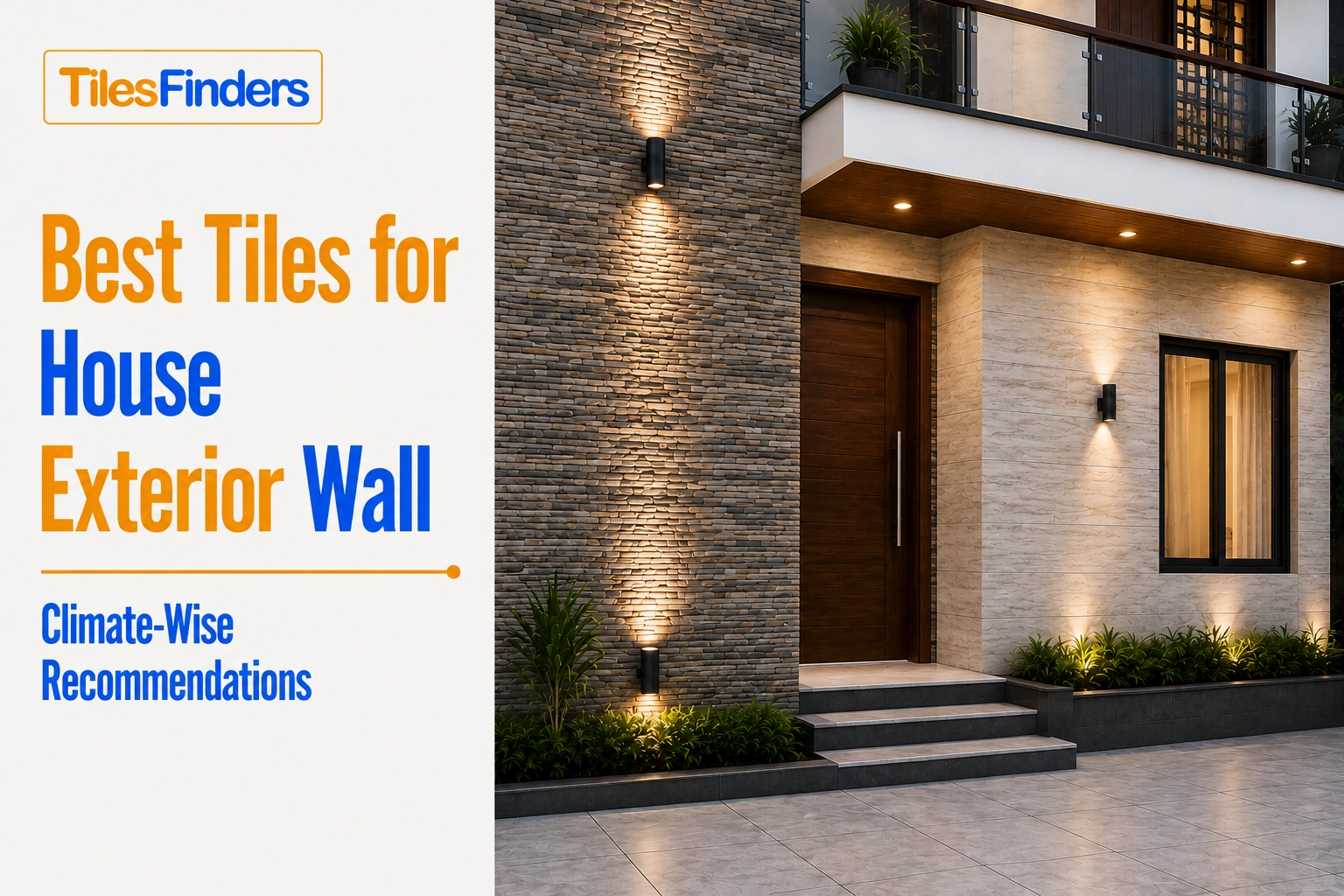
The exterior wall of a house in India takes a beating that no interior surface ever faces. In Mumbai, it absorbs monsoon rain for four straight months. In Jaipur, it bakes under 45-degree summer heat, then contracts in near-zero December nights. In Chennai, it handles both intense UV and salt-laden sea wind. One tile does not fit all of these conditions equally well, and picking the best tiles for the house exterior wall in India starts with understanding which climate your home actually sits in.
Most homeowners choose exterior tiles based on what looks good at the showroom. That approach works fine for interiors. On a facade, it fails. A tile that looks beautiful in a temperature-controlled display can develop cracks, colour shift, or debonding after two monsoons if the category, finish, or water absorption rate is wrong for the local weather.
This guide matches tile categories and finishes to Indian climate zones, so you can make a technically sound choice along with an attractive one.
Why Exterior Wall Tiles Fail Faster Than People Expect
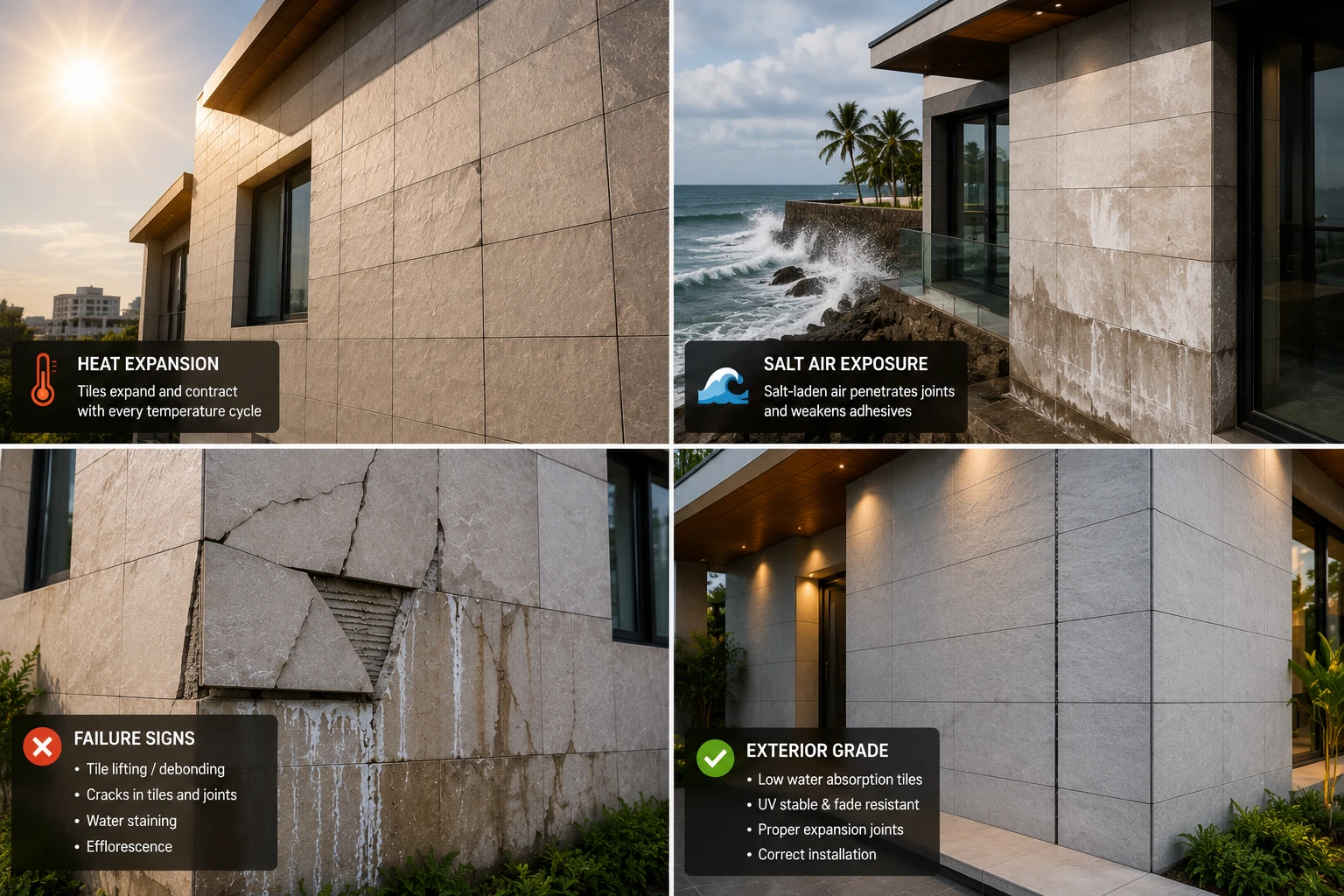
Exterior tile failures in India almost always come back to one of four causes: wrong tile category for the exposure level, wrong finish for the climate, poor substrate preparation, or missing expansion joints during installation. Most guides cover design and aesthetics. Very few walk through the failure reasons, which is exactly the information that saves you from redoing a facade three years after completion.
The Climate Variable Most Homeowners Ignore
Thermal cycling is the most overlooked factor. In Nagpur, the temperature swing between summer afternoon and winter night can exceed 30 degrees Celsius across a single day. Tiles expand and contract with every cycle. Over five years, that repeated movement stresses grout joints and adhesive. Tiles with high water absorption absorb moisture during the monsoon, which then freezes or expands during thermal cycles, accelerating failure. This is why water absorption rate matters as much as design.
Coastal cities (Mumbai, Kochi, Visakhapatnam, Mangalore) add salt air to this equation. Salt penetrates grout lines and attacks tile adhesives and cement mortar behind the tile. An exterior tile that performs perfectly in Ahmedabad can debond within three monsoons in Kochi if it is not rated for salt-air exposure.
What 'Exterior Grade' Actually Means on a Product Sheet
When a tile catalogue says 'suitable for exterior use', it means the tile has been tested for: water absorption below a stated percentage, UV colour stability (no significant fade under prolonged sun), frost resistance (for hilly regions), and slip resistance for any surfaces that double as walkways. For wall-only cladding, UV stability and water absorption are the two numbers that matter most. Ask your dealer to show you the technical data sheet, not just the catalogue page.
India's Climate Zones and What Each Demands from Exterior Tiles
India has five broad climate categories that affect exterior tile specification differently. Mapping your city to the right zone tells you which properties to prioritise.
| Climate Zone | Cities | Key Challenge | Priority in Tile Choice |
| Hot & Dry | Jaipur, Jodhpur, Nagpur, Ahmedabad interiors | Thermal cycling, UV, dust | UV stability, matte finish, low thermal expansion |
| Warm & Humid | Bangalore, Hyderabad, Pune | Moderate rain, mild heat | Water absorption below 3%, matte or GHR finish |
| Hot & Wet (Monsoon Belt) | Mumbai, Goa, Surat coast | Heavy rain, humidity | Water absorption below 0.5%, anti-efflorescence grout |
| Coastal | Kochi, Chennai, Visakhapatnam, Mangalore | Salt air, humidity, cyclones | GVT or full body tiles, water absorption below 0.1% |
| Cold & Hilly | Shimla, Mussoorie, Ooty, and Darjeeling outskirts | Frost, freeze-thaw cycles, and rainfall | Frost-rated tiles, full-body vitrified |
This table is the starting point. Pick your climate zone first, then select a tile category that meets the stated priority. The sections below describe each category with technical details matched to these zones.
Best Tile Categories for House Exterior Walls
Five tile categories cover the vast majority of exterior wall cladding projects in Indian residential construction. Each has a distinct technical profile that makes it right or wrong for specific climate conditions.
GVT (Glazed Vitrified Tiles) with High Depth Finish
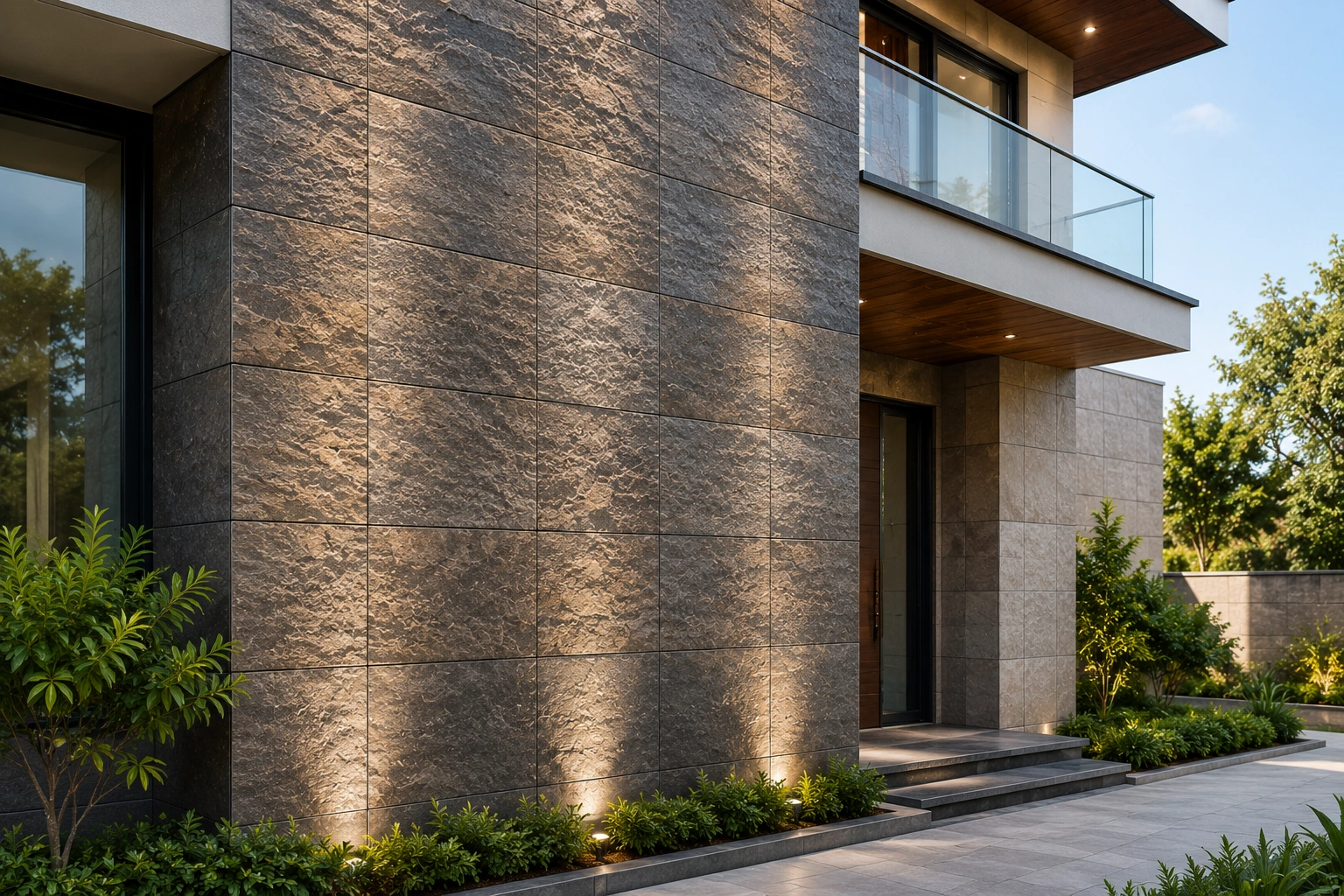
GVT is the most specified category for residential exterior cladding across India. Water absorption sits below 0.1%, which handles monsoon exposure comfortably in Mumbai, Surat, and Goa. The High Depth punch finish gives the tile surface a physical 3D texture that reads as stone or brick without the maintenance of real natural materials.
Available sizes for elevation use: 300x450 mm (12x18 inch) and 300x600 mm (12x24 inch). Both are wall-only and not suitable for flooring. GVT High Depth tiles work in hot-dry, warm-humid, and monsoon-belt zones. For coastal cities with salt air, confirm the specific product is tested for salt resistance before ordering.
Planning a new façade or renovation? Explore our Elevation Tiles Guide to compare materials, textures, and design options that enhance your home's exterior while standing up to Indian weather conditions.
Price: approximately Rs. 120 to Rs. 350 per sq. ft., depending on design and brand.
Full Body Vitrified Tiles
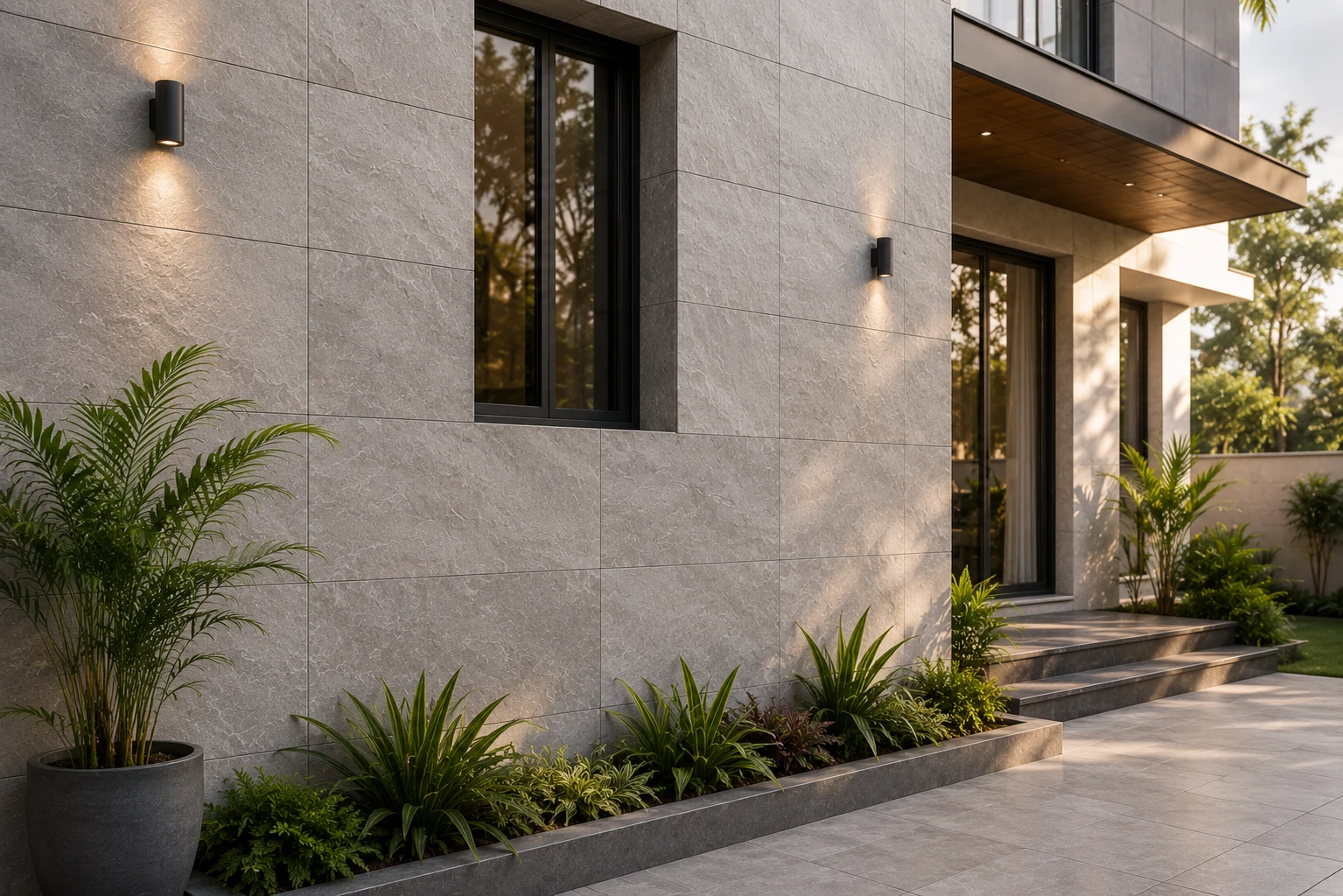
Full body tiles have colour running through the entire tile body, not just the surface glaze. This matters on an exterior wall because chips and edge nicks (common during installation and from stones hitting the wall) show the same colour rather than a white ceramic body underneath. For projects in hilly regions prone to freeze-thaw cycles, full-body tiles hold up better than GVT because there is no surface glaze to crack or delaminate.
Available sizes: 600x600 mm (2x2), 600x1200 mm (2x4), and larger slab formats. Water absorption is very low, comparable to GVT. Full-body tiles are the recommended choice for cold-hilly climate zones and for commercial or upscale residential projects where edge appearance after installation matters.
Price: approximately Rs. 90 to Rs. 200 per sq. ft.
Ceramic Elevation Tiles
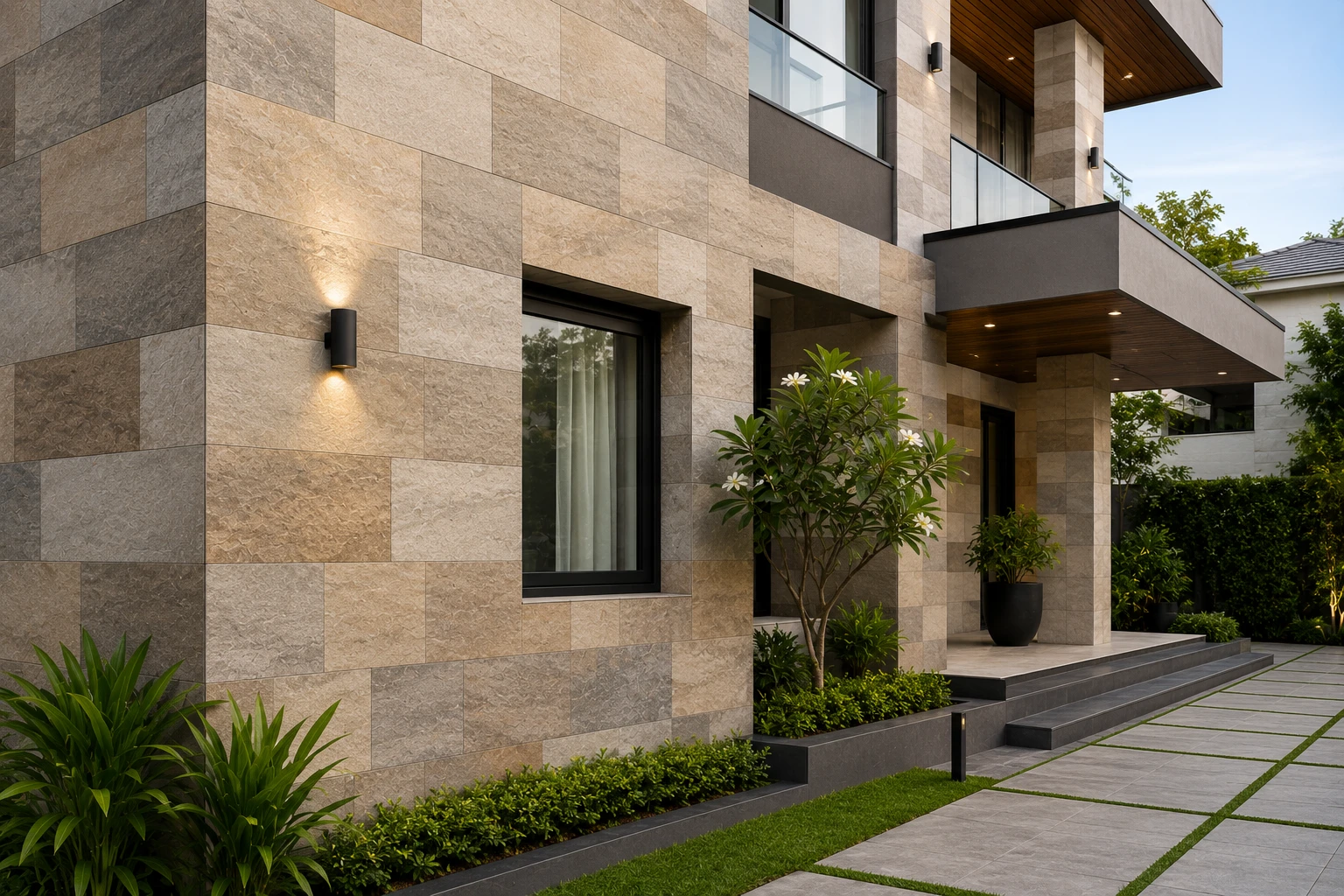
Ceramic tiles for exterior walls cost less than vitrified options and work well for partially sheltered surfaces: compound boundary walls with roof coverage, covered entrance porches, balcony walls under a deep slab overhang. Water absorption in ceramic runs from 12 to 16%, which is too high for a fully rain-exposed facade in a monsoon-belt or coastal city.
In hot, dry regions like Rajasthan and the Gujarat interior, where rainfall exposure is lower, and humidity remains manageable, ceramic elevation tiles perform adequately on primary facades when installed with proper adhesive and expansion joints. Available in 300x450 mm and 300x600 mm sizes, both wall-only. Price: Rs. 30 to Rs. 80 per sq. ft., making them the most budget-friendly option for outside wall tiles for Indian homes on restricted project costs.
Terracotta Tiles
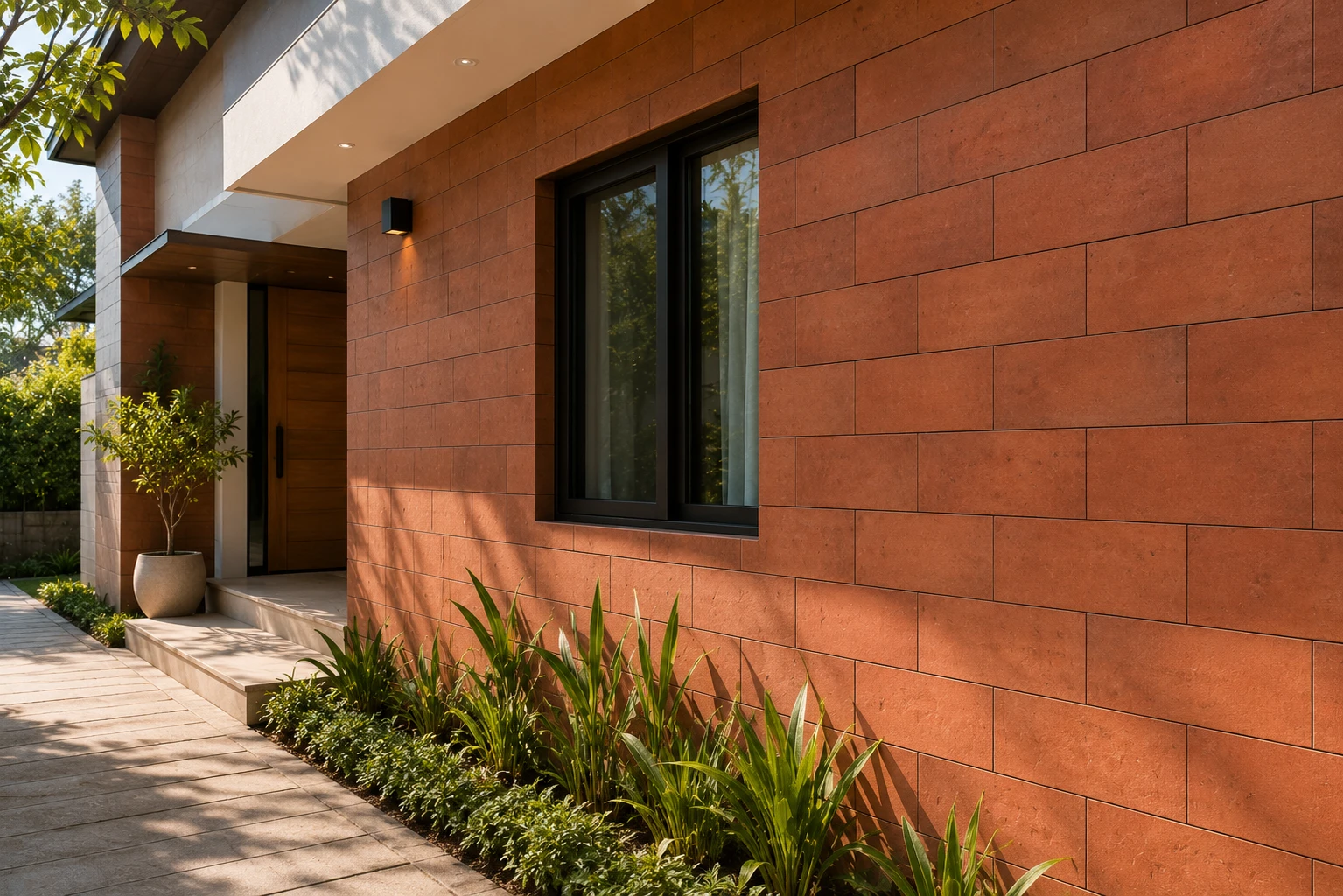
Terracotta cladding tiles are made from natural clay and fired at high temperatures. They age gracefully, developing a slightly deeper tone over the years rather than fading. This is a popular material in heritage bungalows, Kerala-style homes, and farmhouses in Rajasthan and Maharashtra. The natural clay body breathes, which gives walls in hot-dry climates a slight thermal buffering effect.
Water absorption in terracotta varies from 6 to 12% depending on the firing temperature. For humid or coastal cities, terracotta requires a penetrating sealer to be applied after installation and reapplied every three to four years. Without sealing, monsoon moisture enters the clay body and can cause surface bloom or salt deposits over time. Best used in hot-dry, warm-humid, or sheltered positions in monsoon-belt cities.
Price: Rs. 60 to Rs. 180 per sq. ft. for terracotta cladding tiles from Indian manufacturers. Handmade artisan terracotta costs more.
Stone-Finish GVT in GHR Finish
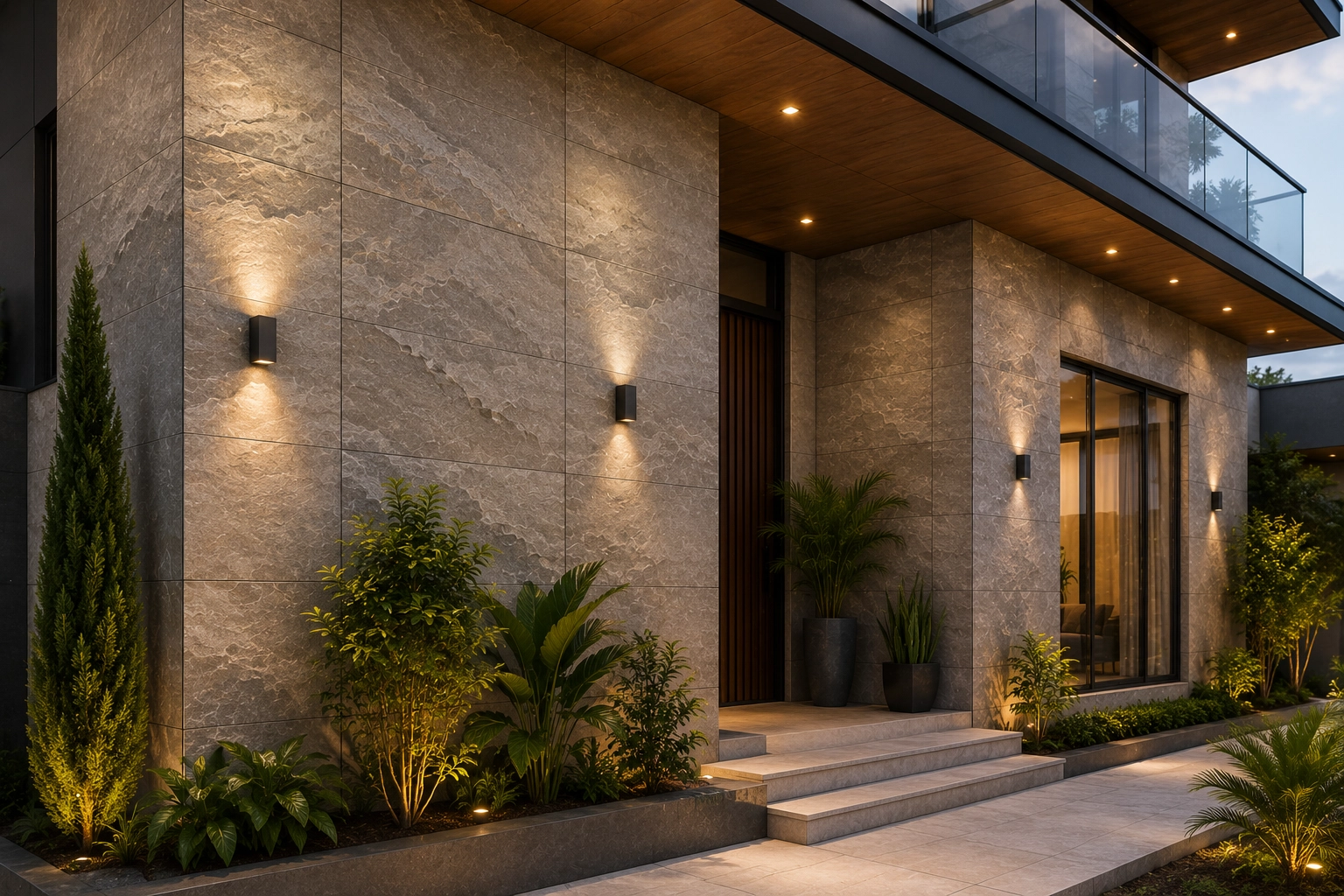
GHR (Glaze High Resistance) finish gives a tile a stone-textured surface with high scratch resistance and anti-skid properties. Stone-finish GVT in GHR is one of the most practical choices for primary facade walls because it combines the low water absorption of vitrified tiles with a surface texture that hides dust and rain marks better than a plain matte tile. It reads as natural stone from a distance, which suits both contemporary and traditional Indian architecture.
Modern homes often use large-format vitrified, stone-finish, and textured cladding tiles to create clean, sophisticated facades. Explore our Modern Elevation Tiles Design guide for architect-approved ideas, trending patterns, and contemporary exterior concepts suited to Indian homes.
Available in 300x450 mm and 300x600 mm for elevation walls. Works across all Indian climate zones except cold-hilly, where a full body is preferable. Price: Rs. 80 to Rs. 250 per sq. ft.
Finish Guide for Exterior Tiles in Indian Conditions
The tile finish determines how the wall looks, how it ages, and how much it needs cleaning. On an exposed Indian exterior, the wrong finish creates problems within one monsoon.
| Finish | Outdoor Suitability | Climate Match | Key Note |
| Matte | Good | All zones | Hides dust and rain marks best; safest all-round choice |
| GHR (Glaze High Resistance) | Excellent | All zones | Stone-like texture; highest scratch resistance |
| High Depth (Embossed) | Good | All zones (avoid coastal spray zones) | Grooves collect dust; needs periodic brush cleaning |
| Matte Carving | Good | Hot-dry, warm-humid | Glossy veins show water marks in monsoon belts |
| Glossy | Avoid on exposed walls | Covered/sheltered only | Reflects the sun harshly; water marks are visible after rain |
| Sugar / Rain Drops | Moderate | Boundary walls, semi-exposed | Better than plain glossy outdoors; not for the primary facade |
A glossy finish on a south-facing or west-facing wall creates glare for neighbours and shows every water streak after rain. Most builders and architects in India now default to matte or GHR finish for any primary facade surface. Reserve glossy tiles for covered entrance porches or interior feature walls.
Tile Sizes That Work for Exterior Walls
Matching tile size to wall scale affects both aesthetics and practical performance. Very large tiles on small facades look heavy. Very small tiles on tall facades look fussy and create many more grout lines where water can enter.
| Size (mm) | Common Name | Wall-Only? | Best Climate Use | Typical Application |
| 300x450 | 12x18 inch | Yes | All zones | Feature panels, compound walls, entrance niches |
| 300x600 | 12x24 inch | Yes | All zones | Primary facade cladding, balcony walls |
| 200x1200 | 8x48 (plank) | Yes | Warm-humid, hot-dry | Wood-plank elevation panels, columns |
| 600x600 | 2x2 | Wall + floor | All zones | Contemporary flat facades, large wall areas |
| 600x1200 | 2x4 | Wall + floor | Warm-humid, hot-dry | Large-format contemporary cladding |
The 300x600 mm (12x24 inch) format is the most commonly used size across Indian residential elevation projects. It suits most house scales, gives clean proportions, and is available in the widest range of textures and designs. For wood-plank looks, 200x1200 mm (8x48 inch) is the standard.
The right Front Elevation Tiles can completely change your home's curb appeal. Discover trending designs, colour combinations, and styles that are popular across modern Indian residences.
Exterior Wall Tiles Price Range in India (2026)
The cost below covers tile material only. Installation adds Rs. 40 to Rs. 80 per sq. ft., depending on wall height, complexity, and scaffold requirement. GST at 18% applies to all tile purchases.
| Category | Size | Approx. Price (per sq. ft.) | Climate Fit |
| Ceramic elevation tiles | 300x450, 300x600 | Rs. 30 to Rs. 80 | Hot-dry, sheltered positions |
| GVT High Depth elevation | 300x450, 300x600 | Rs. 120 to Rs. 350 | All zones, especially monsoon + coastal |
| Full body vitrified tiles | 600x600, 600x1200 | Rs. 90 to Rs. 200 | All zones, cold-hilly preferred |
| Stone-finish GVT (GHR) | 300x450, 300x600 | Rs. 80 to Rs. 250 | All zones except cold-hilly |
| Terracotta cladding | Varies | Rs. 60 to Rs. 180 | Hot-dry, warm-humid (sealing needed for monsoon) |
| Wood-plank GVT (8x48) | 200x1200 | Rs. 90 to Rs. 220 | Hot-dry, warm-humid |
Prices vary by brand, dealer city, and order volume. Morbi-manufactured GVT High Depth tiles at the entry price point start from Rs. 120 per sq. ft. and go higher with design complexity. For a standard 3BHK independent home with 300 to 400 sq. ft. of primary facade wall, the material cost alone for GVT High Depth tiles runs from Rs. 36,000 to Rs. 1,40,000 before GST, depending on the tile chosen.
Buying Tips Before You Order Exterior Tiles
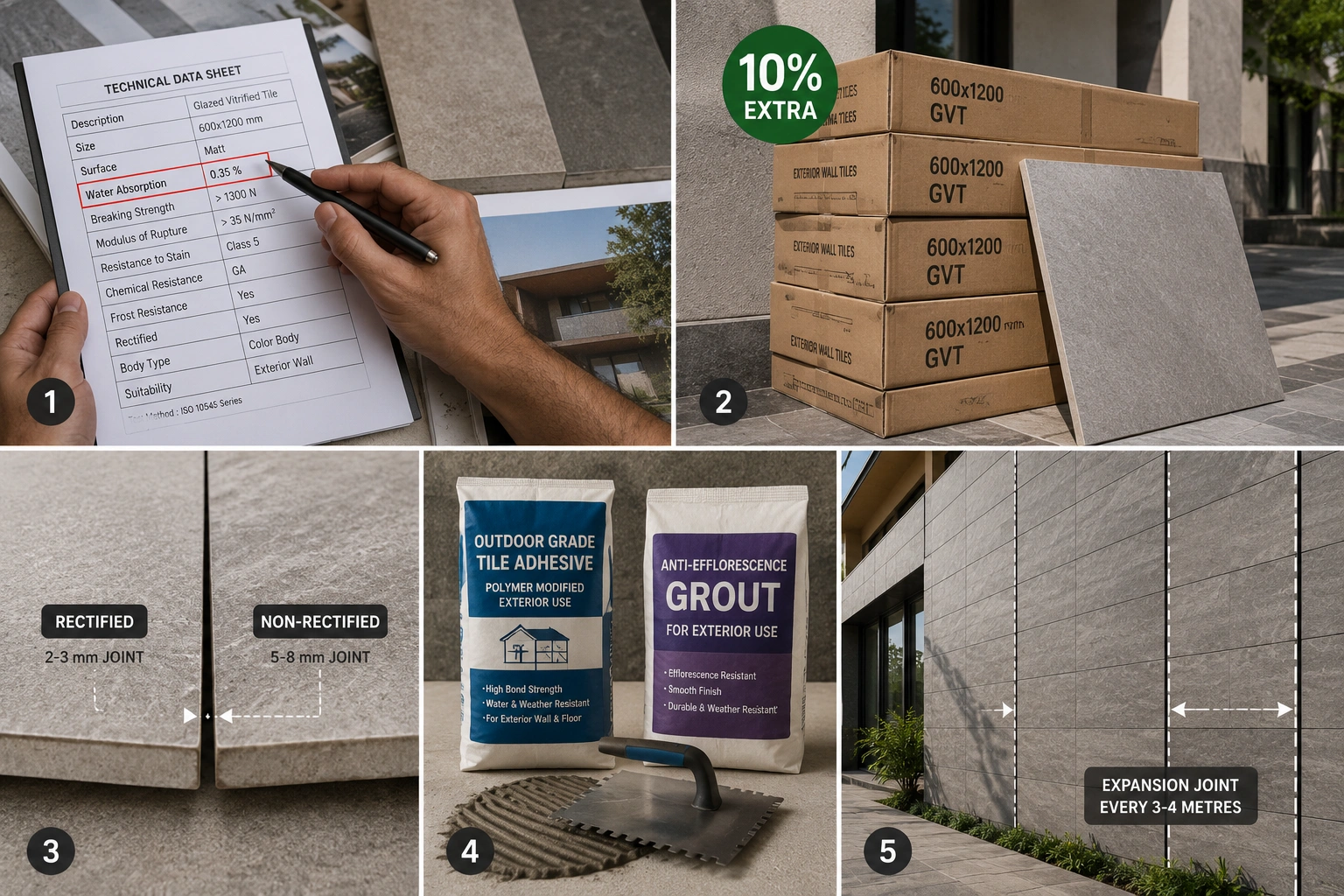
1. Get the Water Absorption Rate in Writing
Ask your dealer for the product's technical data sheet. For any wall exposed to direct rain, confirm water absorption below 3%. For fully exposed facades in Mumbai, Goa, Kochi, or other high-rainfall cities, target below 0.5%. This number is not on the catalogue photo; it is in the specification sheet, and reputable dealers have it.
2. Order 10% More Than Your Wall Measurement
Corner cuts, window border cuts, and breakage during installation consume material. Ordering 8 to 10% extra protects against a situation where you need five more cartons from a batch that is no longer available. Tile colour varies between production batches; a late order from a different batch rarely matches perfectly.
3. Ask About Rectified Edges
Rectified exterior tiles have machine-cut edges with very consistent dimensions. They allow 2 to 3 mm grout joints on an elevation, which looks much cleaner than the 5 to 8 mm joints that non-rectified tiles need. The price difference is small; the finished wall appearance is noticeably better.
4. Use Outdoor-Grade Adhesive and Anti-Efflorescence Grout
Standard interior tile adhesive is not rated for outdoor thermal cycling and moisture. Ask your contractor to use a polymer-modified adhesive rated for exterior use. For grout, specify an anti-efflorescence product, especially in areas with hard groundwater. Efflorescence (white mineral streaks on joints) is difficult to remove once it forms and makes a facade look neglected within one to two years.
5. Insist on Expansion Joints Every 3 to 4 Metres
Tiles expand in heat and contract in cold. Without expansion joints, this movement has nowhere to go, and tiles start cracking or pushing off the wall. On any large exterior wall section, expansion joints filled with a flexible sealant every 3 to 4 metres are not optional. This is a contractor standard that homeowners rarely know to ask for, and skipping it is a common reason for facade failures within three to five years.
Common Mistakes with Exterior Wall Tiles in India
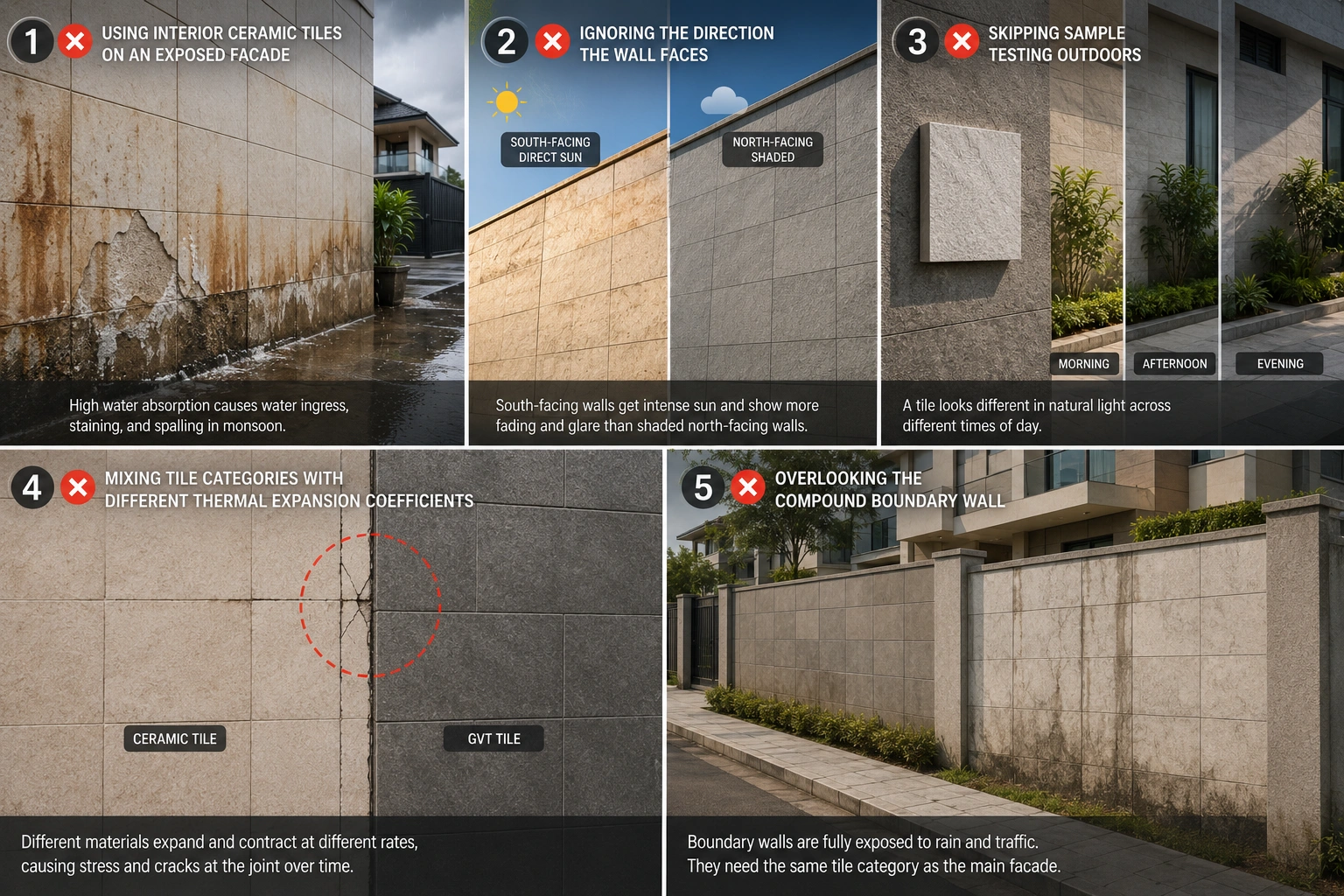
Using interior ceramic tiles on an exposed facade: Standard interior wall tiles have a water absorption of 12 to 16%. On a facade that faces monsoon rain directly, this causes rapid water ingress, staining, and eventual spalling. Many homeowners choose interior tiles for the front wall to save cost, then spend more on remediation two monsoons later.
Ignoring the direction the wall faces: A south-facing wall in Rajasthan gets six to eight hours of direct, intense sun daily. A glossy or lightly coloured tile on this wall will show more fading and glare than the same tile on a north-facing shaded wall. Match tile UV resistance and finish to sun exposure, not just to aesthetics.
Skipping sample testing outdoors: Showroom lighting is warm and directional. A tile that looks warm and rich indoors can look cold or flat on an exterior wall in morning or afternoon light. Always ask for a sample, fix it to the actual wall, and observe it across different times of day before placing the full order.
Mixing tile categories with different thermal expansion coefficients: Using ceramic and GVT tiles side by side on the same wall creates a problem. The two materials expand and contract at different rates, which stresses grout joints at the boundary over time. If combining tile types on an elevation, use an expansion joint between sections of different materials.
Overlooking the compound boundary wall: Many homeowners put most of their tile budget on the main house facade and use low-grade tiles on the boundary wall. The compound boundary wall is fully exposed to rain and traffic, often more so than the house wall itself. It deserves the same category specification as the primary facade.
Choosing the Right Exterior Tile Without Second-Guessing Yourself
Picking the best tiles for house exterior walls comes down to three decisions in sequence: identify your climate zone and its primary challenge, choose a tile category whose water absorption rate and finish match that challenge, and confirm size and budget before ordering. Everything else, colour, texture, pattern, follows from these three.
Looking for fresh façade inspiration? Browse these Exterior Wall Tiles Design ideas to see how textures, patterns, and finishes can create a distinctive and long-lasting exterior.
Before finalising, take a sample tile to the actual wall. Observe it in morning light, afternoon sun, and under any planned exterior lighting. That ten-minute test catches more problems than an hour in a showroom.
You can browse GVT High Depth elevation tiles, full body vitrified options, stone-finish tiles, and terracotta cladding across leading Indian brands on TilesFinders, where filters for size, finish, and category make it easy to narrow down options before visiting a dealer or placing a bulk order.
FAQs
GVT tiles with High Depth finish are the most reliable choice for cities like Mumbai, Goa, Surat, and Kochi. Their water absorption sits below 0.1%, which handles sustained monsoon exposure without water ingress or surface damage. Stone-finish GVT in GHR finish is a close second. Ceramic tiles are not suited for fully rain-exposed facades in high-rainfall cities; their 12 to 16% water absorption causes deterioration within a few monsoons.
GVT (Glazed Vitrified Tiles) are denser with water absorption below 0.1%, making them suitable for fully exposed exterior walls across most Indian climate zones. Ceramic tiles have 12 to 16% water absorption and work best on sheltered or semi-covered exterior positions. GVT also has better UV colour stability, holds its surface finish longer under the sun, and comes in the High Depth punch format that gives exterior walls a genuine three-dimensional texture. Ceramic costs less upfront but requires more careful placement on an outdoor wall.
Start by identifying your climate zone: hot-dry (Rajasthan, Gujarat interior), warm-humid (Bangalore, Pune, Hyderabad), monsoon-belt (Mumbai, Goa, Surat coast), coastal (Kochi, Chennai, Visakhapatnam), or cold-hilly (Shimla, Ooty, Darjeeling). For monsoon-belt and coastal zones, choose tiles with water absorption below 0.5% and use anti-efflorescence grout. For hot-dry zones, UV stability and matte finish matter most. For cold-hilly zones, specify frost-rated full-body vitrified tiles explicitly.
Yes, many GVT High Depth and stone-finish tiles are specified for both exterior elevation walls and interior feature walls like living room accent panels or entrance lobby walls. The same tile running from outside to inside gives a home design continuity that feels considered and intentional. Just confirm the finish suits both applications: GHR finish is practical both outdoors and indoors, while some glossy or decorative finishes work better kept to interior positions.
Terracotta cladding in coastal cities like Kochi, Chennai, or Mumbai requires a high-quality penetrating sealer to be applied immediately after installation and reapplied every three years. Without sealing, the clay body absorbs salt air and monsoon moisture, leading to surface bloom and colour changes. In these cities, GVT or full-body tiles are the lower-maintenance choice. Terracotta makes more sense in dry-climate cities like Jaipur, Indore, or inland Pune, where rain exposure is lower and sealing intervals are less demanding.
